

[비즈한국] Amid SSG.com's emphasis on strengthening its delivery competitiveness, concerns are growing over the operational practices of CJ Logistics000120, which handles its dawn delivery. Citing cost efficiency, CJ Logistics is operating SSG's dawn delivery through a multi-level subcontracting structure, leading field drivers to point out declining earnings and deteriorating working conditions. In some regions, problems with payment delays have even emerged, raising concerns about delivery reliability.
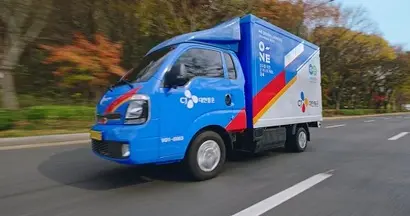
From SSG to CJ Logistics, and Sub-subcontracting to Small Firms
Recently, SSG.com announced a customer-centric declaration for its 12th anniversary, aiming to expand its market influence by focusing on delivery, quality, and membership. What catches the eye is the push to strengthen delivery competitiveness. SSG.com revealed a plan to secure a leading position in the online grocery market by upgrading its delivery service based on a logistics alliance with CJ Logistics. However, some are voicing concerns regarding SSG.com's strategy, pointing out that the dawn delivery system, operated through a multi-level subcontracting structure, carries structural risks.
SSG.com and CJ Logistics have been expanding their delivery cooperation since signing a logistics agreement in June 2024. Currently, CJ Logistics handles SSG.com's dawn delivery and Traders delivery. However, these SSG deliveries are not typically handled by the well-known CJ Logistics agency drivers. The operation uses a subcontracting method where CJ Logistics hands over the volume to external transport companies. A CJ Logistics official explained, "SSG dawn delivery is handled by separate transport partners, not regular courier drivers. Because regular courier drivers primarily work during the day, they have difficulty performing dawn deliveries, and this structure also considers cost efficiency."
The problem is that a multi-level subcontracting structure is formed during this process. A company that receives volume from CJ Logistics passes it on to other transport firms or freight brokers, who then reassign it to individual drivers or small transport companies, creating a repeating structure of two to three or more stages of subcontracting. An industry insider said, "As re-subcontracting repeats, it takes many stages to reach the actual driver performing the delivery, and various problems arise in that process."
Distortion of the profit structure is cited as a primary issue. An industry insider explained, "Since fees are deducted at each stage, field drivers have no choice but to receive low unit prices. As the number of re-subcontracting stages increases, employment stability also declines."
One driver performing SSG dawn deliveries pointed out, "Currently, dawn delivery drivers are paid a per-household fee. Even if I deliver multiple boxes to one house, the commission is around 2,540 won per household. However, it is known that the original contractor sets the fee based on the number of boxes. Ultimately, the drivers' share is significantly reduced as it passes through intermediate stages."
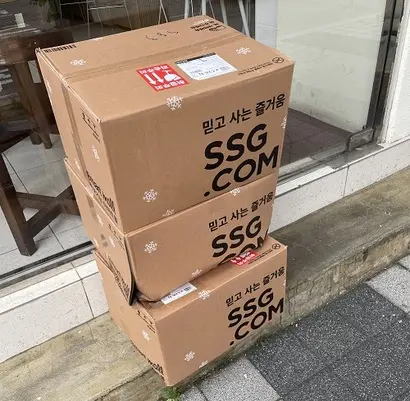
Drivers Refuse Vehicle Entry Due to Payment Delays... CJ Says It's an "Operational Issue"
It is also pointed out that the multi-level subcontracting structure is worsening working conditions in the field. Since delivery delays are reflected in the transport company's performance evaluations, the companies have no choice but to strongly demand that drivers keep to their schedules, which increases time pressure on the drivers.
An SSG delivery driver said, "We have to deliver even in bad weather like heavy snow, and if an accident occurs, the driver has to bear the cost personally. Even the cost of hiring a temporary external vehicle because we couldn't deliver on time comes out of the driver's pocket. We usually have to finish deliveries within four to four-and-a-half hours. We work under significant pressure because we get penalized if we don't keep the time."
It is reported that the number of drivers quitting has recently increased due to low unit prices and poor working conditions. Although the field is increasing the use of temporary vehicles to fill manpower gaps, the burden caused by this is also growing. An industry insider noted, "Because temporary vehicles are short-term labor, they have to be paid a higher unit price than regular drivers (usually around 5,000 won per household). But the reality is that there are more temporary drivers than regular ones. As the share of temporary vehicles increases, the transport company's costs rise, leading to worsening profitability."

Amid this, the problem of payment delays has become a reality in some regions recently. The SSG delivery driver complained, "Transport companies keep changing, and payment delays are occurring. There was even a situation where drivers refused to enter the loading dock at dawn because the current operator failed to pay last month's fees. There is still unpaid money."
The industry views these cases of payment delays as a warning sign of the multi-level subcontracting structure. It is pointed out that in a structure where subcontracting stages are layered, delays in payments or operational instability occur, which in turn is highly likely to lead to delivery disruptions. Consequently, fears are growing that even delivery competitiveness could be weakened.
A CJ Logistics official stated, "We have confirmed that the fee for February was not paid by one of our delivery partners due to operational problems. We have grasped the situation and urged a prompt resolution, and we plan to continuously manage the matter until it is resolved."
Although voices in political circles have called for regulating the multi-level subcontracting structure, it was not reflected in the final legislation. In November 2024, Representative Yoon Jong-oh of the Progressive Party proposed an amendment to the Living Logistics Service Act that would limit re-subcontracting in the courier industry. However, the clause intended to restrict re-subcontracting was excluded during the National Assembly's discussion process and was not included in the final version passed by the plenary session in November 2025.
Representative Yoon Jong-oh's office stated, "There was an opinion that a blanket ban on re-subcontracting could have side effects because there are cases where small businesses share volume in local areas or in the field. Although there are voices in the field saying that this structure occurs frequently, there has been no significant progress in related discussions since then."