

[비즈한국] Samsung Electronics005930 held its 57th Annual General Meeting of Shareholders at the Suwon Convention Center in Gyeonggi Province on the 18th, passing a resolution to increase the limit on directors' remuneration from 36 billion won to 45 billion won. Starting from this shareholders' meeting, the Samsung Electronics board will shift from a nine-member system to an eight-member system. This change follows the resignation of directors Yoo Myung-hee and Song Jae-yeol, and the new appointment of President Kim Yong-kwan as an executive director.
Unlike last year, which was marked by a heavy atmosphere due to poor performance and sluggish stock prices, this year's meeting was held in an encouraging mood. Amid record-breaking revenue and a recovery in stock prices, the management shared their future vision with shareholders and reviewed growth engines.
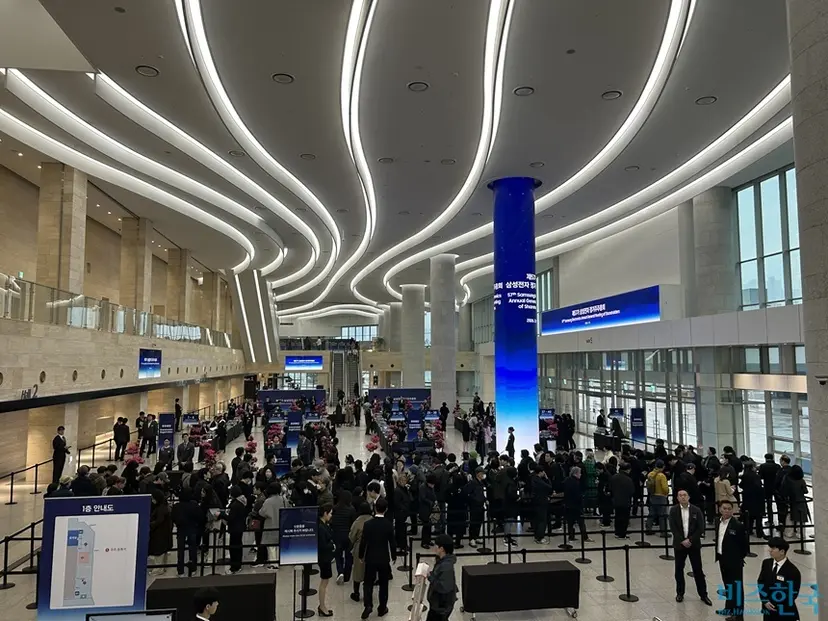
From Encouragement for 'All-time High Performance' to 11.1 Trillion Won in Dividends and 16 Trillion Won in Treasury Stock Cancellation
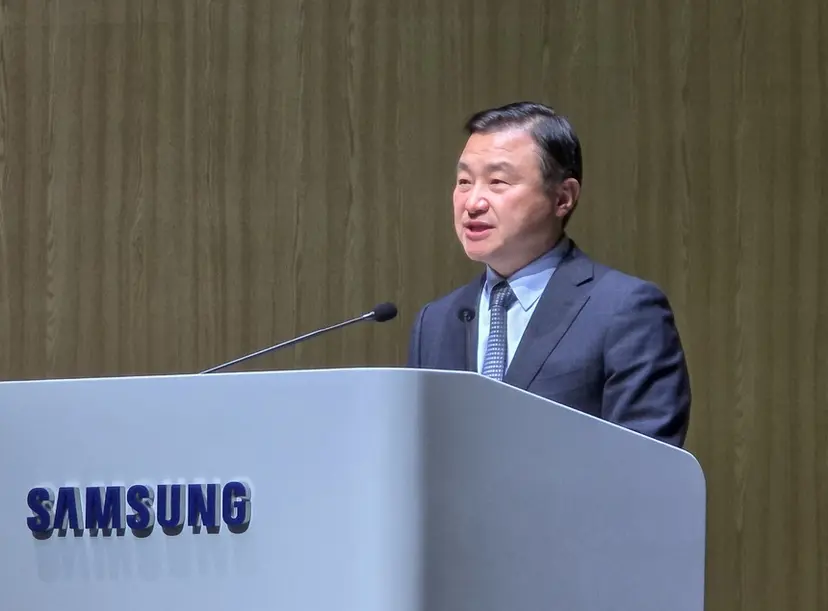
Chairman Jun Young-hyun, who presided over the meeting, presented last year's business achievements and said, "We are continuing to invest in facilities to meet AI demand and in R&D to secure future technologies. We will secure leadership in the AI semiconductor market through one-stop solutions encompassing logic, memory, foundry, and packaging."
Samsung Electronics achieved its highest-ever performance last year, posting 333.6 trillion won in consolidated revenue. Its stock price also rose significantly, making it the first Korean company to exceed a market capitalization of 1,000 trillion won. Park Soon-chul, Executive Vice President of Corporate Management, reported during the operating report that the company recorded 238 trillion won in separate revenue and 24 trillion won in operating profit in 2025. The company maintains a sound financial structure with total consolidated assets of 567 trillion won and a debt-to-equity ratio of 30%.
A key point of interest for this year's shareholders' meeting was enhancing shareholder value. Concrete plans were presented, with the company scheduled to pay 9.8 trillion won in regular dividends along with an additional 1.3 trillion won in dividends. The dividend will be paid on the 17th of next month. Previously, the company had completed a 10 trillion won treasury stock buyback. It was also emphasized that the remaining balance of approximately 6 trillion won in treasury stock that has not yet been cancelled will be fully cancelled within the first half of this year.
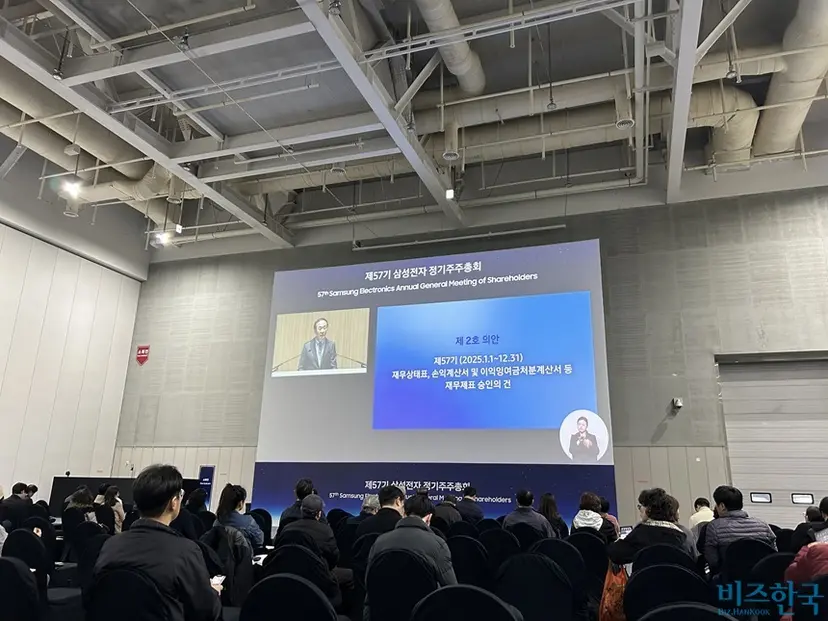
When asked by a shareholder about the potential sustainability of the policy following the deletion of the treasury stock cancellation clause in the articles of incorporation, Chairman Jun reaffirmed, "It is merely organizing unnecessary clauses since the 2011 amendment of the Commercial Act allowed cancellation through a board resolution alone," adding, "We will proceed with the cancellation of approximately 16 trillion won in treasury stock in the first half of the year as planned without any setbacks."
Remuneration Limit Increase Due to 'Deferred Incentives'
The size of the board of directors also changed as of the date of the shareholders' meeting. Chairman Jun explained, "Although not officially announced, I would like to say that Director Yoo Myung-hee and Director Song Jae-yeol will resign as of today," adding, "The board will operate with 8 members instead of 9."
On this day, Samsung Electronics newly appointed Kim Yong-kwan, President of Business Strategy at the DS Division, as an executive director. President Kim will play a role in supporting strategic investment and decision-making based on his global capabilities in the semiconductor industry.
Following the resignations of Directors Yoo and Song, the board will be reorganized into an eight-member structure, consisting of 3 executive directors and 5 outside directors. Responding to a shareholder question about the board composition, Chairman Jun added, "Even with the reduction in the size of the board, outside directors still hold a majority, fully satisfying the requirements of the Commercial Act."
Regarding the resolution to increase the limit for directors' remuneration by 25% from 36 billion won to 45 billion won, some shareholders expressed concern, asking, "Dividends haven't changed much, so aren't you prioritizing management compensation?"
Of the 45 billion won limit, 25 billion won is for general remuneration and 19 billion won is for long-term performance incentives. While general remuneration remains the same as last year, long-term performance incentives have increased by 9 billion won compared to last year (10 billion won). Chairman Jun explained, "The increase in the limit was inevitable as the stock-based payments from 2024 performance incentives (OPI) and 2025 long-term incentives (LTI) were deferred to 2026," adding, "We are maintaining a structure similar to last year, with some one-time factors like retirement compensation reflected." However, the actual payout amount may be lower than the limit depending on performance evaluation results.
"Samsung is Back": Emphasizing Will to Lead the Market
The second part of the meeting, following the agenda deliberation and voting, featured the sharing of business strategies by division and a dialogue with shareholders. Roh Tae-moon, head of the DX Division, stated, "We will lead the popularization of AI by increasing the number of Galaxy AI devices—including smartphones, wireless earphones, watches, tablets, notes, and PCs—from 400 million units last year to 800 million by 2026, and actively expanding into new AI companion devices."
Concerns over whether the semiconductor boom will continue and the AI bubble theory are major market interests. Chairman Jun, head of the DS Division, emphasized, "The Samsung Electronics DS Division is the world's only semiconductor company capable of one-stop solutions encompassing memory, foundry, logic design, and advanced packaging." He continued, "We are pushing for multi-year supply contracts of 3 to 5 years with major clients. We believe this will secure predictable business stability and visibility for both our clients and ourselves."
Regarding Samsung Electronics' semiconductor capabilities compared to competitors, he mentioned the results of the 'GTC 2026' that ended yesterday, expressing confidence by saying, "Jensen Huang, CEO of Nvidia, personally called it an 'Amazing HBM4' and even signed the wafer as encouragement. In the industry, we are receiving positive feedback that 'Samsung is Back'." In the foundry sector, President Han Jin-man mentioned collaboration with Tesla on a 2-nanometer process and detailed the plan for mass production at the Taylor plant in the second half of next year.
Plans to strengthen the competitiveness of the home appliance and TV business were also discussed. Yong Suk-woo, head of the VD Business Division, responded to the pursuit by Chinese home appliance makers, stating, "We will focus on selling premium products centered on Micro RGB and Neo QLED, while simultaneously leading the AI screen era with differentiated customer experiences through AI TVs."
To voices concerned about sluggish orders in the System LSI sector, Park Yong-in, head of the System LSI Business Division, replied, "We are the only company that can provide total solutions for on-device AI," adding, "We will focus on leading the next-generation AI device market with specialized new products suited for the on-device generative AI era."
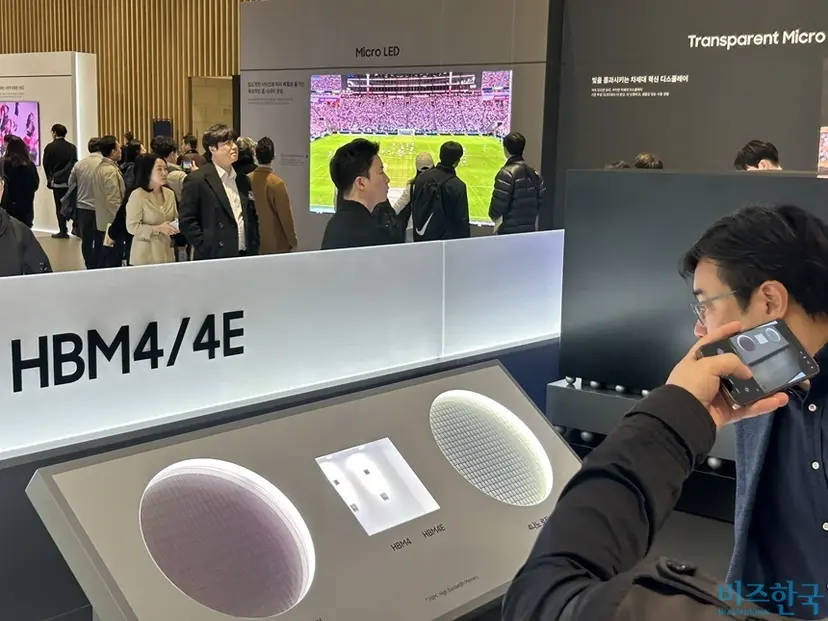
In addition, questions were raised about the brain drain amidst the intense competition for talent in the global semiconductor industry. Chairman Jun promised, "It is true that our wage competitiveness weakened as performance bonus payout rates dropped during the period of poor semiconductor performance, but the gap will narrow with the recent recovery in earnings," adding, "We will secure excellent talent through various compensation systems such as individual incentives and additional awards."
Samsung Electronics signaled an aggressive stance on medium- to long-term investments in the semiconductor sector. It plans to maximize profitability by strengthening its response centered on high-value products for AI and servers, such as HBM4. Regarding new shareholder return policies until 2027, the plan is to discuss directions that will increase value in the long term.
President Kim Yong-kwan, who was named as an executive director on this day, emphasized, "As AI demand continues, CAPEX investment this year is expected to increase significantly compared to last year," adding, "We will execute aggressive investments for new site expansion and preemptive securing of core facilities to further solidify our technical leadership."