

[비즈한국] “Aren't you investing in stocks?”
Kim (23) is often asked by those around them, “Don't you do stocks?” When they say they don't, the response is, “Why are you still not doing it?” Kim said, “There’s an atmosphere where investing is forced upon us like it’s a necessity, not a choice.” Among young people, stock investing has been accepted as a kind of ‘new normal.’”
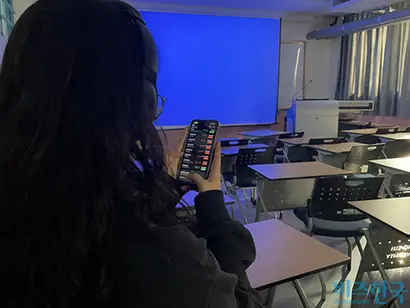
“Why aren't you investing?” A society pushing for investment
As the number of active domestic stock trading accounts has surpassed 100 million, the ‘era of universal investment’ has begun in earnest. According to a survey by the Korea Economic Daily, young people in their teens to 30s account for half (50.9%) of the newly opened accounts at three major securities firms (Mirae Asset, KB, and NH).
Various online communities and social media platforms have become flooded with posts boasting about investment returns, saying, “I earned this much.” This atmosphere leads to intense ‘investment pressure’ among the youth generation. Oh (26), an office worker, said that it is not uncommon for people around them to jump into the market because they are swept up in the trend. They recalled a recent case where an acquaintance started trading stocks because they felt like “the only one being left behind,” only to buy at the peak and suffer losses.
This phenomenon stems from anxiety over rising asset values. Shin (26), a newcomer to the workforce, initially had no intention of starting stocks. They didn't have initial capital saved up and were not interested in the stock market. However, their thinking changed after seeing the rapidly rising real estate prices. “I realized that I couldn't afford a home just by saving my salary,” they said, explaining why they ultimately felt forced to enter the market.
In fact, as of the beginning of this year, the average transaction price of an apartment in Seoul exceeded 1.5 billion won. According to the Korean Statistical Information Service (KOSIS), as of 2024, the number of non-homeowning households headed by people aged 39 or younger reached 3,612,321, the highest level since 2015. For young people who find home ownership impossible through labor income alone, stocks are effectively being perceived as the ‘last ladder’ to climb.
However, even amidst this frenzy, there are young people who do not jump into the stock market. Kim (23), who is about to graduate from college, is busy preparing for their teaching practicum. Since they will soon be heading to an elementary school for training, they have a lot of work to do, including lesson preparation and organizing materials. Kim did not enter the stock market in order to focus on their studies. “I feel like if I start trading stocks, all my focus will shift to the fluctuations of the charts and it will disrupt my daily life,” they said. “I think it’s better to focus entirely on my work and life right now.”
Ko (24), a job seeker, is preparing for a refrigeration and air conditioning certificate and the TOEIC exam. On top of that, they have an upcoming interview for a second-class train operator license. Aiming to find a job within this year, Ko said they want to focus on studying, judging that the mental and time-related costs would be too high. “Stock trading and gambling look like two sides of the same coin to me,” they said. “Above all, there is no reason for me to jump into the stock market with an unstable income source,” they added, stating, “I would rather choose safe assets like bank interest instead of risking the loss of my principal.”
Meanwhile, some young people have chosen self-development over stocks. Jung (25), a newcomer to the workforce, visits an English academy after work instead of checking a stock app. When their colleagues are swayed by the ups and downs of the charts, Jung has decided to spend time raising their own ‘market value.’ “Instead of losing money through amateurish investments, it’s better to build professional expertise and increase the level of my labor income,” they determined. Some young people are choosing to prepare for the future through stable income and self-development rather than volatile asset markets.

What’s needed is not ‘investment opportunities’ but a ‘plannable environment’
The fact that some young people are focusing on safe assets and self-development is not simply due to conservative tendencies, but is a realistic choice to protect their assets. Kwon (22), a medical student living alone near campus and focusing on their studies, remains unshaken by the investment recommendations from those around them. “I don't want to jump into the stock market in a state where I’m not prepared,” Kwon explained.
On the other hand, such avoidance by young people raises concerns that it could lead to a serious asset gap in the future. Im Na-yeon, a research fellow at the Korea Capital Market Institute, pointed out in a report titled ‘Characteristics of Financial Assets of the Youth Generation and the Reality and Implications of Income-based Gaps’ that “Differences in the scale of financial assets formed and management methods during youth can lead to more serious asset inequality in the future,” adding that “effective asset formation systems must be supported to ensure that young people do not experience economic alienation.”
Ultimately, what young people need is not simple investment opportunities or temporary support measures, but a ‘predictable structure’ where effort can lead to wealth. In a conversation with the reporter, Kwon diagnosed the current society by saying, “The previous generation could afford a home just by saving, but today, it’s a structure where it’s difficult to even get started if you don't have inherited initial capital.” They emphasized, “Rather than simple investment promotion measures, an environment where young people can establish long-term economic plans, such as stabilizing real estate prices, must be established first.”