

[비즈한국] For the first time in two years, a ten-million-viewer movie has emerged. With director Jang Hang-jun’s 'The Man Who Lives with the King' surpassing 13.4 million viewers (as of March 16), theaters are finally buzzing with life again. But has the theater scene truly recovered? It doesn't seem so. Although the total number of theatergoers in 2025 barely exceeded 100 million, compared to the 226.68 million recorded in 2019, it feels like a case of 'Ah, the good old days.' The success of a single ten-million-viewer hit doesn't mean that people who have abandoned theaters for OTT platforms will suddenly change their habits.

So why don't we visit theaters anymore? We used to be so familiar with them, meeting friends, enjoying light leisure with families, and making them a staple for dates. Of course, I acknowledge the variety and convenience represented by Netflix and other OTT services. Besides, movie ticket prices these days are quite high. However, since omakase meals and hotel stays, which are much more expensive than movie tickets, remain popular as date courses, the problem seems to be a decline in our affection for theaters and the films shown within them.
At a time when people no longer consider theaters a part of their daily leisure, the film 'Cinema Times' is being released. It is an anthology consisting of three short films directed by Lee Jong-pil, Yoon Ga-eun, and Jang Kun-jae. The stories revolve around various figures surrounding cinema—audiences, directors, actors, and projectionists—set against the backdrop of the art cinema Cinecube. Produced to commemorate the 25th anniversary of Cinecube, which is the oldest existing art cinema, it likely evokes many memories for those who love movies and theaters.
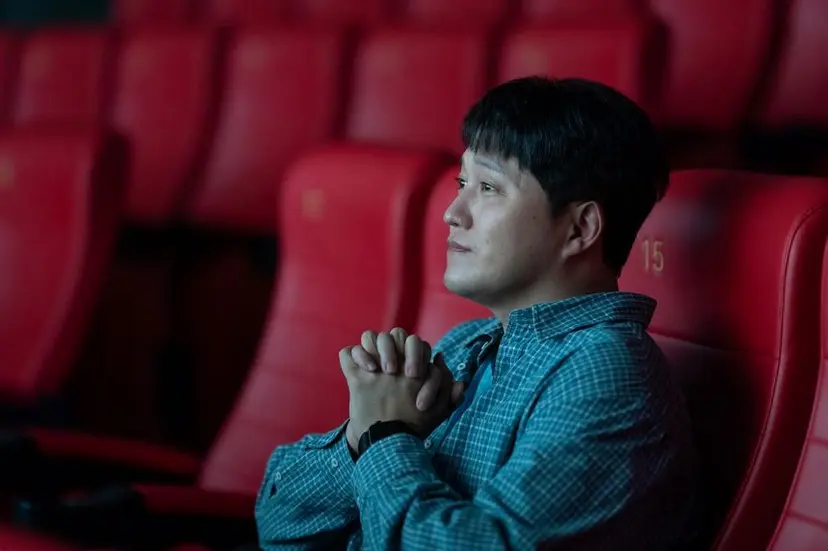
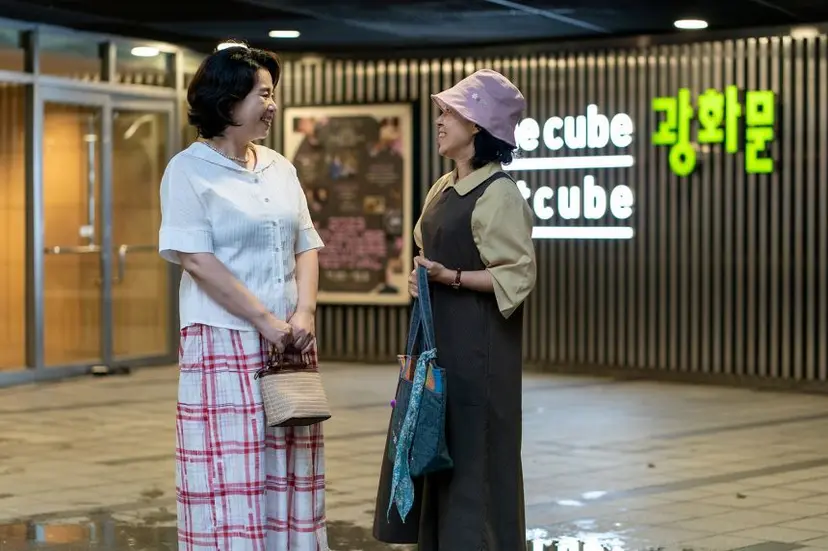
The three pieces are a love letter to cinema, a constant friend that has always allowed us to laugh, cry, and dream together. The films are: director Lee Jong-pil’s 'Chimpanzee,' about three friends who meet by chance near Gwanghwamun and fall into a mysterious story about a chimpanzee; director Yoon Ga-eun’s 'Naturally,' which depicts child actors and a director struggling on a movie set; and director Jang Kun-jae’s 'Time of the Movie,' which captures the day of middle-aged women reuniting at a Gwanghwamun theater and the people who work there.
The mere mention of the directors' names raises expectations. Lee Jong-pil, who showed delicate directing skills in 'Samjin Company English Class,' 'Escape,' and recently 'Pavane'; Yoon Ga-eun, who expanded from the world of children in 'The World of Us' and 'The House of Us' to the world of teenagers in 'The World'—which recorded the #1 spot for Korean independent films last year; and Jang Kun-jae, who provided empathy and comfort in 'A Midsummer’s Fantasia' and 'Because I Hate Korea'—having them all in one place is a luxurious experience.
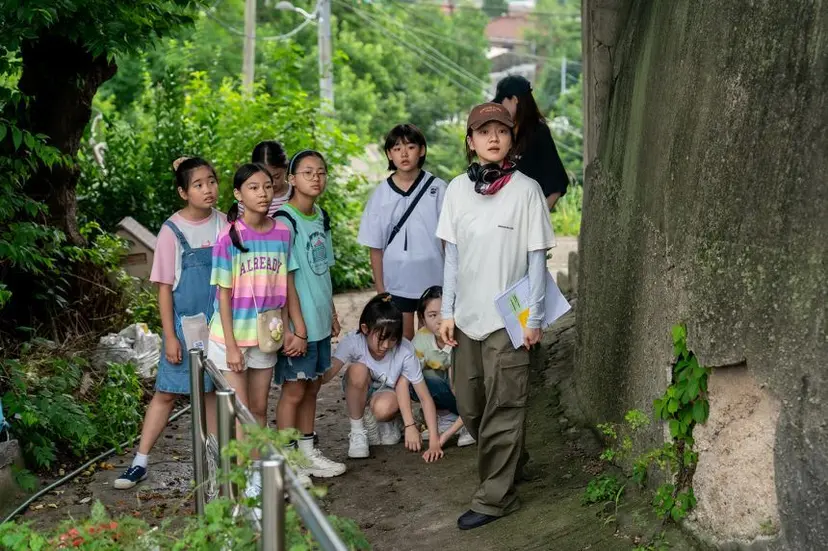
The cast is also lovely. The lineup includes young Godo (Wonstein), Jjye-jye (Hong Sa-bin), Momo (Lee Soo-kyung), and older Godo (Kim Dae-myung) in 'Chimpanzee'; the director (Ko Ah-sung) who demands natural acting from children in 'Naturally'; and Young-hwa (Yang Mal-bok), her high school friend Woo-yeon (Jang Hye-jin), the elderly projectionist (Kwon Hae-hyo), and the late audience member (Moon Sang-hoon) in 'Time of the Movie.' They are all actors who shine with a naturalness and familiarity we might encounter in our daily lives. The synchronization between Wonstein and Kim Dae-myung is surprisingly high, and the scene-stealing performance of Moon Sang-hoon, famous for 'Paddnerz,' is impressive.
Although they share the theme of movies and theaters, the tone and manner of the three works are quite distinct. This is because each focuses on different aspects: some on memories tied to theaters, others on the process of filmmaking, or focusing on characters associated with the space. Which piece resonates with you will likely vary. Personally, director Lee Jong-pil’s 'Chimpanzee' left a deep impression. The line, "The feelings from back then still remain," really struck a chord. The line "Show some respect for the film" and the movie reviews that director Godo reads will surely make cinephiles who pride themselves on watching many movies smile.

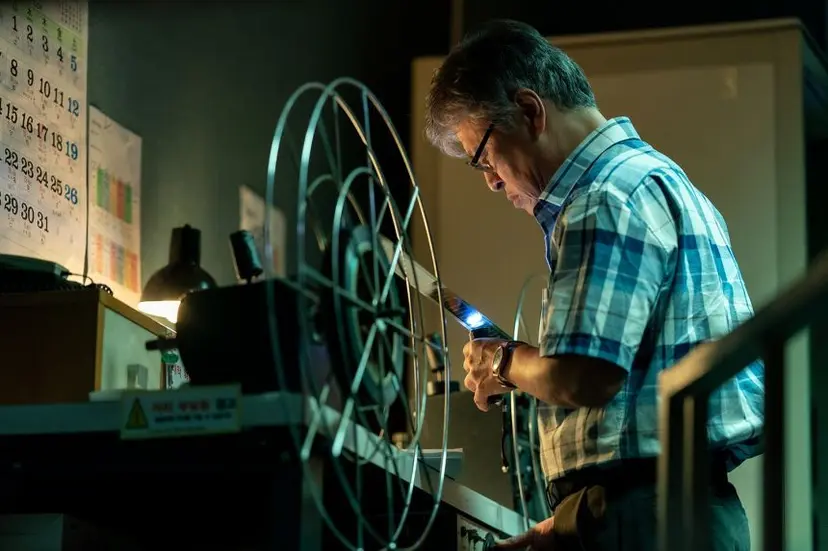
Beyond the three main pieces, the prologue and epilogue that open and close 'Cinema Times' are also noteworthy. They capture the day of Hong Sung-hee, a projectionist who has worked at Cinecube for 26 years since its opening, and show her teaching know-how to a young projectionist; it feels like a message to the next generation who love movies. Directed by Lee Jong-pil, it carries a subtle resonance.
Recently, global star Timothée Chalamet was at the center of controversy for a remark made during an interview about the future of the film industry, saying, "I don't want to work in a genre that people are no longer interested in, like ballet or opera." Setting aside prejudices against other art forms, it was pointed out as an ignorant statement for failing to understand that the experience of moviegoers is the same emotion as that of ballet or opera. Especially considering that the film industry itself is in a situation where it could be diminished or varied by OTT and other factors.
Conversely, director Steven Spielberg’s remarks are quite impressive, as they stand in sharp contrast to Chalamet’s, carrying a dignity that elegantly encourages those who love movies and theaters. "A true cinematic experience comes when people gather in a strange, dark space. We are all strangers, but when we see a good movie, we share countless emotions, become one, and walk out into the sunlight or into the darkness. It is an experience that cannot be compared to anything else." He also added that such experiences also occur when watching concerts, ballet, and opera.
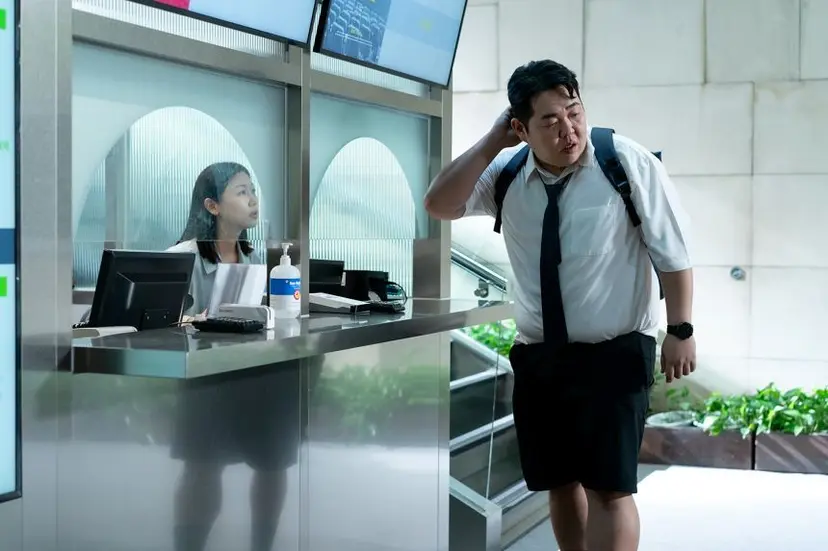
The experience of cinema that Steven Spielberg spoke of aligns with the emotions offered by 'Cinema Times.' I hope you enjoy this film and the sentiment of strangers gathered in a strange, dark space becoming one through the medium of film. 'Cinema Times' will be released on March 18.
Who is the writer, Jung Su-jin?
I have covered and written about movies, travel, and popular culture across various magazines. While I don't want to fall behind trends, I have become an 'old-fashioned person' who watches the latest dramas and predicts the obvious clichés for the next scene. Trying to recover my lost intuition while drifting through the vast OTT world, my current wish is for an integrated OTT subscription plan to be released.