

[비즈한국] Market attention is focused on the voting intent of the National Pension Service (NPS) ahead of the Korea Zinc010130 regular general shareholders' meeting. As the NPS has announced it will exercise its voting rights more actively starting from this year's annual meetings to reflect the intent of the recently revised Commercial Act and prioritize the protection of general shareholders' interests, attention is on what decision it will make regarding the reappointment of Korea Zinc Chairman Choi Yun-beom as an executive director.
The Fund Management Headquarters of the National Pension Service announced on the 12th that it would implement 'active exercise of voting rights' starting from the March annual general meetings to reflect the intent of the Commercial Act revision, aimed at enhancing shareholder value and increasing fund profitability. It has decided to, in principle, oppose agenda items proposed by companies that circumvent the intent of the Commercial Act revision or fail to sufficiently protect the interests of general shareholders. Specific examples cited include agendas that limit the number of directors via articles of association, reduce the quota for auditors, or establish grounds for holding or disposing of treasury shares for management purposes without regard to shareholding structure.
This stance by the NPS aligns with the discussions surrounding the Commercial Act revision. The revised act expanded directors' fiduciary duty to include 'shareholders' rather than just the 'company.' It mandates electronic shareholders' meetings for listed companies of a certain size, renames outside directors to independent directors, and increases their mandatory appointment ratio. It also includes provisions limiting the voting rights of the largest shareholder and related parties to 3% when electing or dismissing audit committee members. As the government has explained this revision as a key institutional change for shareholder protection and governance improvement, the NPS has effectively confirmed that it will strictly review related agenda items.
The active exercise of voting rights is also connected to the NPS's Stewardship Code. In July 2018, the NPS established the 'Guidelines on Fiduciary Responsibility Activities of the National Pension Fund' to create standards for responsible investment and the exercise of shareholder rights. It mandates managing and operating the fund by considering non-financial factors such as a target's environment, social, and governance (ESG) aspects, and exercising shareholder rights independently and transparently. The active exercise of voting rights at this year's general meetings is seen as a litmus test to evaluate whether the NPS is consistently applying its fiduciary responsibility principles, alongside the revised Commercial Act.
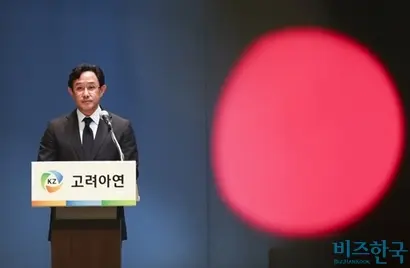
This atmosphere is expected to have a significant impact on Korea Zinc's general meeting. Korea Zinc is currently embroiled in a management dispute between Chairman Choi Yun-beom's side and the Young Poong-MBK Partners alliance. Meanwhile, ISS, the world's largest proxy advisory firm, recently recommended voting against the reappointment of Chairman Choi as an executive director. It is reported that ISS took issue with Korea Zinc's governance and shareholder value aspects. Observers note that the outcome of the proxy battle could hinge on the decision made by the NPS (Related article: ISS recommends voting against reappointment of Korea Zinc Chairman Choi Yun-beom... What will the NPS choose?).
Recent cases of NPS voting decisions are also worth noting. On the 12th, the NPS Fiduciary Responsibility Committee designated Hyosung TNC298020 as a publicly monitored company and decided to vote against the appointment of Chairman Cho Hyun-joon as an executive director at the upcoming general meeting on the 18th. The reason was that Chairman Cho falls under the category of 'individuals with a history of damaging corporate value or infringing on shareholder rights.' This is interpreted as a signal that the NPS intends to scrutinize histories of damaging shareholder interests and corporate value more strictly than before during this year's general meeting season.
The policy environment has also shifted. President Lee Jae-myung stated in a Ministry of Health and Welfare work report last December, "The National Pension Service, which holds the people's stocks, must properly exercise its voting rights," adding that "it should actively exercise them for companies engaging in backward management." Kim Sung-joo, Chairman of the National Pension Service, also stated in January, "We will certainly incorporate ESG factors into the entire investment process, upgrade to 'Stewardship Code Season 2,' and strengthen our fiduciary responsibility activities."
Ultimately, the focal point of the Korea Zinc general meeting is how consistently the NPS will apply its strengthened voting principles. With the government's stance on shareholder protection, the NPS's policy of active voting, the ISS's recommendation to oppose, and the fiduciary responsibility principles under the Stewardship Code all converging, the Korea Zinc general meeting is emerging as a symbolic event of this year's general meeting season.
A capital market official analyzed, "As seen in recent cases, the NPS is now applying a zero-tolerance policy toward management that faces legal risks or has failed to communicate with shareholders. It is highly likely that the NPS will avoid taking responsibility at Korea Zinc through active opposition or, at the very least, passive abstention (neutral vote) rather than casting a vote in favor."