

[비즈한국] In financial markets, war is always one of the most powerful factors of fear. As the military conflict between the U.S. and Iran escalated, global financial markets were shaken significantly. International oil prices surged in the short term, and stock market volatility increased. However, the market's perspective on this situation is quite different. While novice investors are anxious about the possibility of total war, seasoned market participants are already calculating the 'next stage.'
The most critical variable in this Middle East crisis is not the war itself, but the Strait of Hormuz. Approximately 20% of the world's seaborne crude oil passes through this narrow strait. If it were blocked, it could disrupt not just oil prices, but the entire global supply chain, as a significant portion of crude oil and refined petroleum products exported from the Middle East moves through this strait.
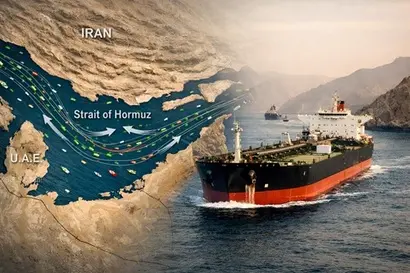
Therefore, what the financial market is focused on is not political declarations that 'the war is over,' but whether the strait remains securely open. In the market, the flow of logistics is always more important than diplomatic rhetoric.
Interestingly, while the fear of war dominates headlines, global economic forecasts have not been significantly damaged. The OECD Composite Leading Indicator (CLI) currently sits above the baseline of 100 in most countries and has been on an upward trend for several months. This is a sign that the global economy remains in an expansionary phase, even amidst the shock of war.
The case of South Korea is particularly telling. Even with geopolitical risks at their peak, exports centered on semiconductors maintain a strong upward trend. In particular, the recovery in exports to China is strong evidence that the global manufacturing sector is bottoming out and rebounding.
While geopolitical risks can temporarily shrink the market, they rarely change the economic cycle itself, which is driven by human demand and technological progress. The market is now reacting more coolly, viewing the war as a short-term volatility event rather than the prelude to a long-term recession.
Instead, market interest is focused on the price signals created by the war. A prime example is energy. As Middle East tensions escalated, oil and natural gas prices rose rapidly, boosting the profitability of the energy and refining industries. In fact, refining margins have expanded significantly alongside the recent rise in oil prices.
On the other hand, rising energy prices act as a burden on sectors sensitive to raw material costs, such as the chemical industry. This is why the war does not pull down the entire market, but rather becomes a factor that widens the gap between industries.
Another change to pay attention to is the structural shift in the energy market. While 'price' has been the key variable until now, 'access'—that is, whether you can obtain it—is likely to become a more important issue. Analyses suggest that if the blockade of Hormuz is prolonged, some countries could face energy supply disruptions within 20 to 30 days. If that happens, the global economy would face a crisis of logistics and industrial operation, not just a surge in oil prices.
Investors' questions are also shifting. The core question is no longer "How high will oil prices go?" but rather "Which industries can secure energy access?" This change is already becoming visible in the market. While energy-producing countries and resource companies are relatively strong, industries sensitive to raw material costs are facing increasing pressure.
Ultimately, the winners in the financial market are not those who cover their ears when cannons roar, but those who read what structural changes those sounds portend. The reorganization of energy supply chains, the expansion of strategic reserve assets, and the strengthening of resource security will now settle in as long-term investment trends rather than temporary themes.
War is tragic, but the market coolly finds a new order even within that tragedy. What we need now is not to react to the red numbers in front of our eyes, but to have the perspective to read the massive tectonic shifts. Sometimes, the direction of investment becomes clearest during the most chaotic times.