

[비즈한국] Due to recent rapid changes in the Middle East, a controversy has erupted over whether the THAAD (Terminal High Altitude Area Defense) system deployed in Seongju has left South Korea. While debates continue regarding which specific equipment was moved and when, the core issue lies in the fact that THAAD is a 'fluid asset' capable of deployment and withdrawal at any time. Due to the intense political conflict at the time of its arrival in 2017, many people mistakenly believe it to be a permanent garrison asset, but THAAD is fundamentally field equipment designed to defend theater regions. It is a weapon system with maximized mobility, with its operational manual stating that the withdrawal of one battery can be completed within 72 hours.
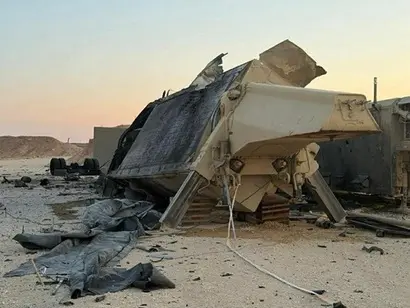
For citizens who remember the severe social conflict of that time, the news of this relocation may come as a shock. However, one must avoid either downplaying or exaggerating the role of THAAD. A common misconception is the claim that 'THAAD completely neutralizes China's nuclear weapons.' The AN/TPY-2 radar mounted on THAAD has two operational modes, and the THAAD in Seongju operates in 'Terminal Mode' for the defense of the Korean Peninsula. This is because interceptor missiles cannot be operated in the 'Forward-Based Mode,' which is suspected of being used for monitoring China.
The true value of THAAD lies in implementing 'Multi-layer Defence,' the core of modern missile defense. If there is only one chance to intercept an enemy ballistic missile, it is difficult to completely prevent damage, regardless of how high the performance is. A double or triple defense network, where THAAD attempts a primary interception at a high altitude and Cheongung-II or Patriot missiles step in if it fails, is the core of our security.
Of course, a temporary gap in some THAAD assets does not immediately translate to a security vacuum. In recent actual combat in the UAE, the Cheongung-II proved its performance by intercepting ballistic missiles, cruise missiles, and drones with near-perfect precision, and the Patriot PAC-3 also showed an excellent interception rate. However, for South Korea, which faces the threat of large-scale North Korean missiles, even a slight decline in interception probability can directly lead to an increase in casualties during actual combat. This is why the U.S. relocation of THAAD is regrettable.
However, the real problem is not whether THAAD is withdrawn. More serious is the fact that technical limitations have been revealed in actual combat. The background of this THAAD relocation lies in the radar destruction incident in the Middle East. It has been confirmed through satellite imagery and open-source intelligence (OSINT) that on February 28 and March 3, the AN/TPY-2 radar, a core piece of THAAD equipment deployed at the Muwaffaq Salti Air Base in Jordan, was destroyed by Iranian attacks. Although the U.S. military has not disclosed the weapons used in the attack for security reasons, it is an unprecedented event for a U.S. anti-aircraft missile system in active operation to be directly struck and neutralized.
The fact that the supposedly invincible U.S. air defense system can be destroyed has significant military and historical implications. If the 'shield of the sky' cannot protect itself, any defense network could become useless. Until now, we have attributed the destruction of Russian or Chinese air defense systems to poor performance or lack of operator proficiency. However, it has now been proven that even expensive U.S.-made radars costing over 400 billion won can be vulnerable to an enemy's Suppression of Enemy Air Defenses (SEAD) operation.
Now, we must focus on the 'survival' of THAAD rather than its relocation. While our military's Patriot and Cheongung systems are protected by assets like the Cheonho self-propelled anti-aircraft gun, there are still many deficiencies in responding to future threats. This is why the development and field deployment of next-generation defense systems, such as Hanwha Aerospace's012450 'AI-integrated anti-air weapon' or LIG Nex1's079550 'ground-based CIWS-II,' must be accelerated. In the long term, we should diversify our detection assets by distributing large radars and 'low-observable' air defense systems, while also challenging ourselves in the field of air detection technology using artificial satellites. Furthermore, it is time to seriously consider a paradigm shift toward futuristic weapon systems, such as reviewing the introduction of 'air defense/anti-drone UAMs' that can protect a wider area than self-propelled anti-aircraft guns by applying recently rapidly growing Urban Air Mobility (UAM) technology.