[비즈한국] "It is saddest when sincerity does not reach. We tried to persuade the Seoul Metropolitan Government since last year, but we failed in the end. We are deeply saddened as well."
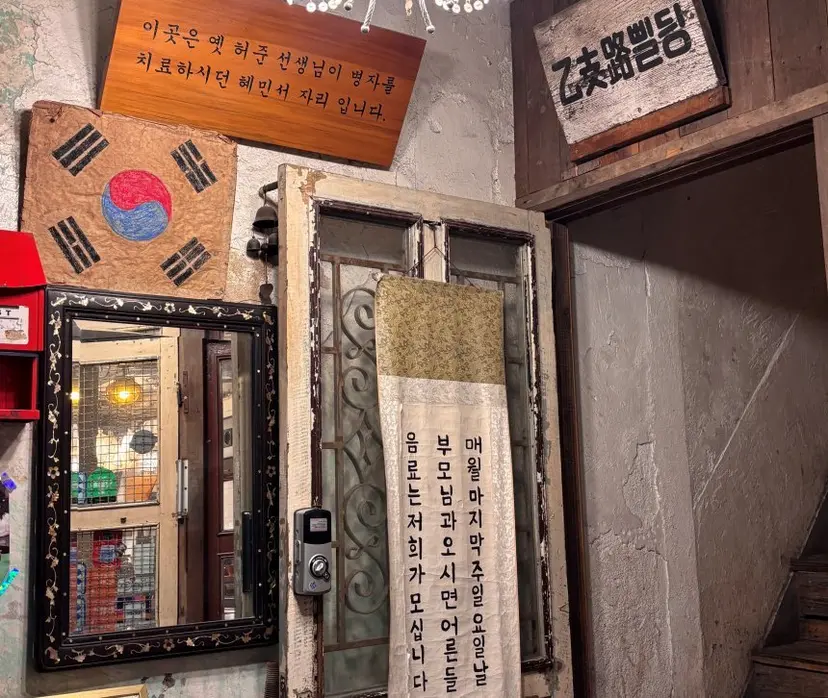
Deep within the alleys of Euljiro, two cafes face each other across a narrow passage between two buildings. One is 'Coffee Hanyakbang,' and the opposite is the dessert cafe 'Hyemindang.' Both are spaces operated by CEO Kang Yun-seok. Hyemindang, in particular, is located on the site where Hyeminseo, a medical institution for commoners during the Joseon Dynasty, once stood; it has long held that memory amidst the aging buildings. However, facing redevelopment plans, Hyemindang is set to be demolished this coming April.
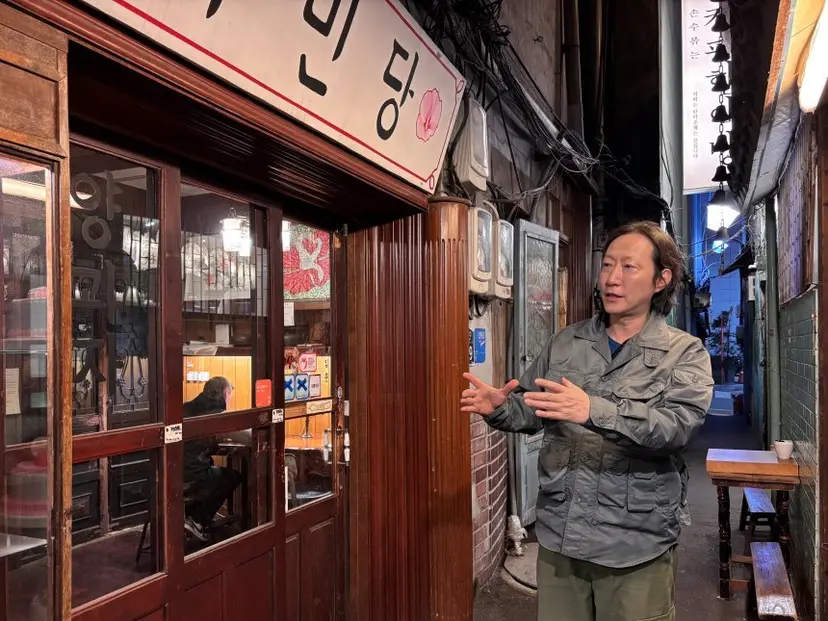
A traditional pharmacy-style cafe built on the site of Hyeminseo
In the past, the Euljiro area was called 'Gurigae' because the soil was muddy and yellowish. It was a hilly area where over a dozen streams starting from Namsan Mountain flowed into the Cheonggyecheon Stream, and it was home to Hyeminseo, the government office that treated commoners during the Joseon Dynasty. It is a space deeply connected to the life of Heo Jun, the author of 'Dongui Bogam'.
Hyemindang is a cafe that reinterprets a 1950s building and a tile warehouse with the atmosphere of an old Korean pharmacy from the Enlightenment period. Unexpected scenery unfolds as you enter the narrow, dark alleyway. From old mother-of-pearl cabinets and heavy wooden furniture to handmade bead decorations and a grandfather clock that rings on the hour, the old sentiment is alive in every corner of the three-story space. Thanks to this unique atmosphere, Hyemindang has established itself as a space symbolizing the retro culture of Euljiro.
CEO Kang Yun-seok personally collected discarded mother-of-pearl cabinets and vintage items to fill the space. He stated that he hoped these old Korean objects, once shunned for being 'tacky,' would be read as beautiful once again in this place.
Korean aesthetic draws in foreign tourists
Hyemindang has also gone viral among foreign tourists. According to the cafe, a significant portion of morning visitors are foreigners, accounting for about 30% of total visitors.
Nagi (23), a Japanese tourist who arrived in Korea a few days ago, said, "I am a fan of the idol group ITZY, and I came here after seeing them visit on a variety show." She added, "I came all this way because my idols visited, but once I arrived, I really liked the traditional Korean vibe. It's fascinating that such an old space, like a cultural asset, still remains." Having visited two art galleries and museums that day, she expressed relief, saying, "I didn't know it was going to be demolished, but I'm glad I visited before it happens."
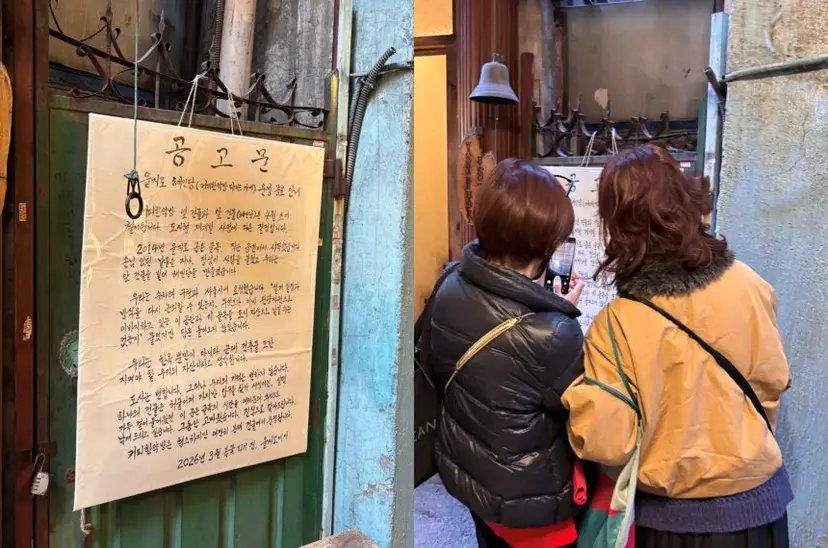
CEO Kang faced a dilemma when posting the closure notice in front of Hyemindang recently. He hesitated over whether to include a notice in foreign languages, as there are many foreign visitors. "Initially, I thought about writing the notice in English, but I was worried about how foreigners would perceive this situation," he confessed. "I felt ashamed, wondering if they would think, 'If there is a space like this in Korea, why aren't you protecting it?'"
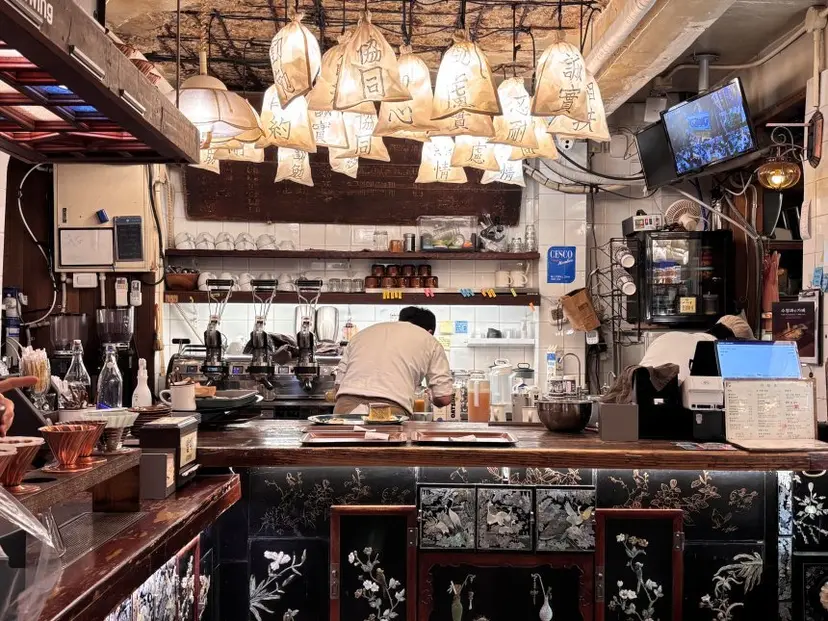
The Hyemindang building is owned by the Seoul Metropolitan Government, making it difficult to operate Coffee Hanyakbang
The Hyemindang building is currently an asset owned by the Seoul Metropolitan Government. This is because it was contributed to the city during the redevelopment project process. 'Contribution' is a system where a redevelopment developer hands over land or buildings to a local government for free in exchange for incentives such as increased floor area ratios. However, as this plot was designated as an urban renewal zone, a demolition order was issued on the grounds that it is planned to be developed into a park site in the future.
CEO Kang said, "I understand the explanation that nearby buildings need to be cleared for the creation of a park, but there are still quite a few buildings remaining. In such a situation, it is hard to accept that this place is being demolished first." He added, "It is a space that even foreign tourists intentionally seek out, and it's a pity to erase it. Modern living culture is also part of a city's history, and these landscapes are constantly disappearing."