

[비즈한국] Recently, a post by a small business owner on a social community site, pleading with customers to order via the 'Ddaeng-gyo' app because "it's too difficult due to Baemin and Coupang commission fees," drew attention. While ordering through the public delivery app Ddaeng-gyo offers a lower brokerage commission of 2% compared to private delivery apps, consumers have responded that they don't see any reason to use the app, despite the benefits of lower delivery fees and the ability to use local currency.
Kind commissions? 'Unkind' convenience for consumers
The brokerage commission for the public delivery app 'Ddaeng-gyo' is around 2%. On the other hand, brokerage commissions for private delivery platforms are known to be approximately 7.8% for Baedal Minjok and Coupang Eats, and about 9.7% for Yogiyo. In the case of Baedal Minjok and Coupang Eats, business owners must also pay delivery fees of 3,400 won and 2,900 won, respectively. Including payment processing fees, the total burden rate reaches approximately 27% to 30%.
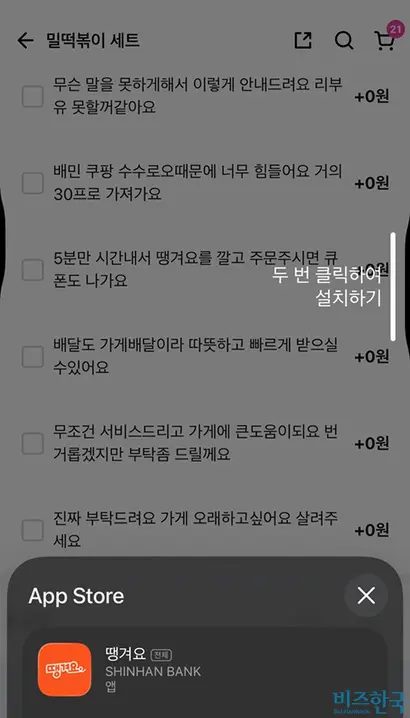
According to data compiled by the Seoul Metropolitan Government last year, the market share of the public delivery service 'Seoul Delivery + Ddaeng-gyo' remained at 7.7%. It is pointed out that the reason the usage rate of public delivery apps does not increase significantly, despite the advantage of low commissions, is because they fail to consider consumer convenience. A structure has been formed where consumers stay with platforms they are already familiar with, and store owners find it difficult to give up the apps where orders are concentrated.
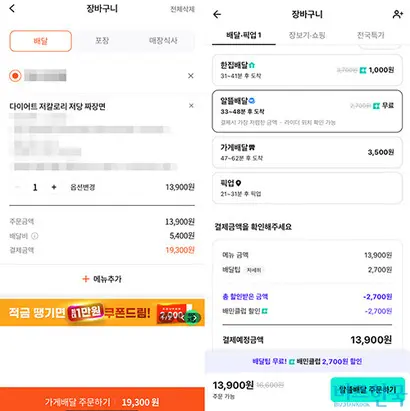
Kim, an office worker (26), said, "Baedal Minjok has free delivery and review events, but Ddaeng-gyo has high delivery fees and no events. From a consumer's perspective, Baedal Minjok is more convenient to use.”
Kang, who runs a lunchbox shop (51), said, "I get about two or three pickup or take-out orders a day via Ddaeng-gyo, maybe five at most. Even if the commission is low, it's useless if people don't use it.”
Lee Hong-ju, a professor of consumer economics at Sookmyung Women's University, described the delivery platform market as a "market with very strong network effects." Professor Lee added, "It is a structure where a platform inevitably becomes stronger once various data, such as reviews and recommendation features, are accumulated.”
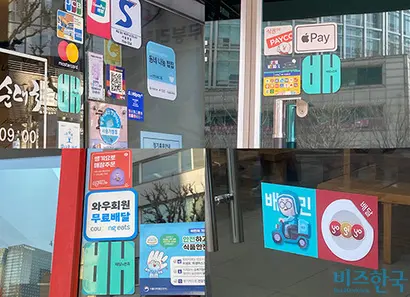
When the reporter checked 15 restaurants near Seoul Station, only a few shops had 'Ddaeng-gyo' stickers. Self-employed owner A explained why they haven't joined, saying, "Orders are concentrated on Baemin or Coupang rather than Ddaeng-gyo.”
Public delivery apps: Delivery fees soar due to lack of logistics network
One of the reasons public delivery apps are falling behind in competition with private platforms is the 'lack of a delivery network.' While private platforms have secured riders with massive capital, public apps are experiencing bottlenecks in the stage of securing delivery drivers.
Some consumers complained, "My order was canceled because no delivery driver could be found." Riders also flock to platforms with high order volumes and higher unit prices.
Lee Joong-sun, Secretary General of the Korea Federation of Micro Enterprise Owners, pointed out, "During peak hours, premiums (additional delivery fees) are applied to Baemin or Coupang Eats, so delivery for public apps like Ddaeng-gyo is inevitably pushed to the back of the priority list. Giant platforms effectively monopolize riders, making it an extremely difficult structure for public apps to compete for dispatches.”
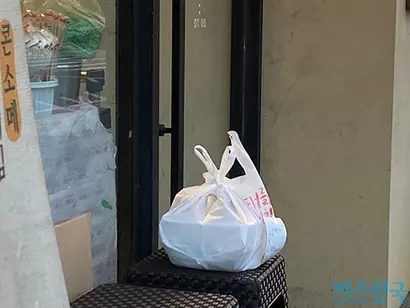
Public delivery apps do not have their own rider organization and rely entirely on local delivery agencies. Since business owners sign individual contracts with these agencies and pay monthly fees, the burden of delivery fees is bound to increase.
Secretary General Lee assessed, "In this process, delivery fees soar from 4,000 won to as much as 6,000 won. It's only the commission that's low; in the end, Ddaeng-gyo doesn't provide much help to self-employed owners either.”
Discount benefits based on budgets provided by local governments are also useless against the aggressive marketing of the private sector. Business owner Kang lamented, "If the local government distributes 5,000 won coupons, orders increase momentarily, but as soon as the coupons are exhausted, they stop immediately. Since private apps respond to public app coupons with even larger-scale, customized discounts, it's only a matter of time before consumers return to the apps they are familiar with.” Ultimately, public delivery apps are facing a 'triple barrier' where they are not chosen by consumers, store owners, or riders.
"No chance of winning with the same method as the private sector"... Niche strategy is desperate
Meanwhile, concerns are also being raised that the tyranny of delivery platforms will not stop without institutional regulations. Recently, the Joint Action for Enacting the Online Platform Act held a press conference at the National Assembly to demand legislation. The 'Online Platform Regulation Act,' designed to regulate monopoly platforms, has been pending in the National Assembly for nearly two years.
Secretary General Lee Joong-sun said, "The enactment of the Online Platform Act has been a matter of discussion for over two years. Institutional mechanisms are necessary to create a fair competitive environment in the platform market.”
In a situation where both consumers and business owners have no choice but to rely on giant platforms, experts pointed out that public delivery apps need to devise differentiated strategies rather than competing in the same way as private platforms.
Professor Lee Hong-ju said, "It is not easy to win by competing exactly like the large platforms as we are doing now.” He emphasized, "While it is important to prepare strong alternatives such as consumer incentives or delivery fee subsidies, it is necessary to adopt a strategy that targets areas where existing platforms have not yet entered, such as traditional markets, local restaurants, or lunch delivery for office workers.”