

[비즈한국] In the global telecommunications equipment market, hardware and software function virtually as a single product. However, the story changes when it comes to taxation. This is because taxation methods differ completely depending on whether the cost of the software embedded in the equipment is considered a simple 'product price' or a high-level 'technology usage fee (royalty).'
A court recently ruled in favor of the National Tax Service (NTS) in a tax litigation case involving over 14 billion won between the Swedish telecom giant Ericsson’s Korean subsidiary and the NTS. The ruling is expected to reignite discussions on where to draw the line between equipment sales and technology usage within the telecommunications equipment industry.
"It Takes a Year to Train Experts"… A Collection of 'Know-How', Not Just a Simple Product
The Seoul Administrative Court (6th Administrative Division, Presiding Judge Na Jin-yi) dismissed all claims by Ericsson Partners Korea (Ericsson Korea) in a lawsuit filed against the Yeoksam Tax Office to cancel the corporate tax assessment on the 27th of last month. Ericsson Korea started as a joint venture with LG Electronics066570 and has been a major player in the domestic telecommunications equipment market. Its predecessor, 'LG-Ericsson,' was established with equal investment from LG Electronics and Ericsson’s Swedish headquarters. Later, as Ericsson increased its stake and LG Electronics' stake decreased, the company changed its name to 'Ericsson-LG.' Currently, Ericsson headquarters holds a 75% stake, while LG Electronics holds 25%.
The case originated from the software sales structure of Ericsson Korea. The Korean subsidiary receives software for 3G, LTE, and 5G network equipment from its Swedish headquarters (Ericsson AB) and sells it to domestic telecommunications companies such as SK Telecom017670, KT030200, and LG Uplus032640. While Ericsson Korea classified these payments as 'product purchase costs' and did not withhold taxes, the NTS judged the fees paid by the Korean entity to the Swedish entity as 'technology usage fees.' Consequently, the NTS imposed a total of 14.84208 billion won in withholding corporate tax (including penalties).
The core issue of the lawsuit was whether this software was a simple product for sale or a license for the use of technology and know-how. Ericsson argued in court that "the software is merely a standardized product sold along with the telecommunications equipment" and claimed no technology transfer had taken place from headquarters, but the court did not accept this argument.
The Seoul Administrative Court ruled, "It is difficult to view it as a general-purpose product that can be freely used, given that it is not sold in its standard state to an unspecified number of users but is customized, requires significant expertise for operation necessitating related training, and the Korean subsidiary is responsible for the maintenance, management, error correction, and updates of the software, as well as providing related technical support."
The court focused on the structure and usage method of the telecommunications equipment software. The software is composed of various features, supplied by allowing telecommunications companies to select and activate the functions they need. The price also varies according to the feature configuration, ranging from hundreds of millions to billions of won.
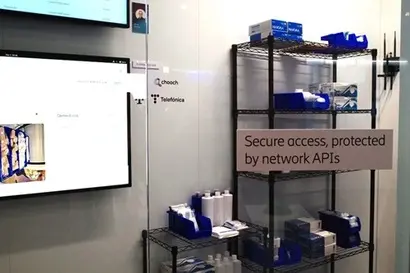
Significant technical support is also required during the installation and operation process. Before selling the equipment, engineers hold design consultation discussions (CDR) with telecom clients, and the product manuals alone amount to approximately 9.6GB. In many cases, actual equipment installation and operation were handled by Ericsson Korea engineers. Ericsson Korea employees received On-the-Job Training (OJT) at the Swedish headquarters research center for software operation and technical support, which they then passed on to engineers at domestic telecom companies. During the tax audit, an Ericsson employee stated, "Our equipment is more complex than home appliances, so it takes at least a year to train a client's engineer to become proficient."
The contract structure also differed from simple product sales. The contracts used terms such as 'license grant' rather than software 'sale,' and granted telecommunications companies a non-exclusive and non-transferable right to use. The fact that the software is a culmination of know-how accumulated through long-term Research and Development (R&D) was also considered. In fact, the Ericsson Group invested 14-18% of its annual revenue (approximately 5-6 trillion won at current exchange rates) in R&D between 2016 and 2020.
The court concluded that, when considering these factors, the relevant software transactions were not simple imports of goods but constituted compensation for the use of technology and know-how.
Taxation Standards for the Telecommunications Equipment Industry Highlighted
The core of this ruling is connected to the unique business structure of the telecommunications equipment industry. Established in 2010, Ericsson Korea has become one of the major equipment suppliers in the domestic mobile infrastructure market. Analysts suggest this is a case where the business structure—in which global telecommunications equipment companies retain core technology at headquarters while local subsidiaries handle equipment supply and technical support—is maintained even in domestic joint venture forms.
The court interpreted that, since telecommunications equipment is a complex technological product combining network operation technology and software functions rather than a simple hardware product, the sale of equipment and the use of technology occurred virtually simultaneously.
Industry experts predict that this ruling could reignite discussions on where to draw the boundary between hardware sales and technology usage in the telecommunications equipment industry. As telecommunications infrastructure equipment increasingly shifts toward software-centered models, the distinction between equipment costs and technology usage fees may directly impact taxation issues.
Ericsson Korea did not provide a separate statement regarding inquiries related to this ruling.