

[비즈한국] The so-called 'Yellow Envelope Act' (amendments to Articles 2 and 3 of the Trade Union and Labor Relations Adjustment Act), which is set to reshape labor-management relations in the industry, has officially gone into effect six months after its promulgation last September. With the labor sector ramping up negotiation demands and signaling strikes in line with the law's implementation, a heavy atmosphere of tension hangs over the entire industry. In particular, the petrochemical and steel sectors, already facing pressure for restructuring due to sluggish market conditions, are expected to become the 'first testing grounds' to gauge the impact of the amendments, as conflicts between labor and management are likely to erupt during workforce restructuring processes.
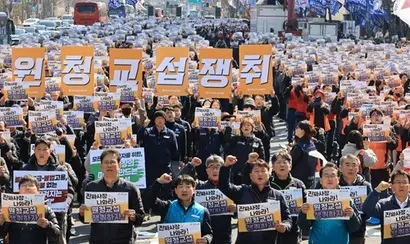
The core of these amendments lies in the expansion of the definitions of 'employer' and 'labor dispute.' Previously, negotiations were only possible between parties directly bound by employment contracts, but now, subcontracted workers can demand that the prime contractor—which exercises actual control over their working conditions—come to the negotiation table directly.
The scope of industrial action has also broadened. While labor disputes were previously limited to matters concerning the determination of working conditions such as wages, they will now include management decisions like restructuring or factory relocations, provided they are 'management decisions that affect working conditions.' While the responsibility of prime contractors in subcontracting structures has increased, the law makes it more difficult for companies to file claims for damages against workers for losses caused by strikes.
The decisive criterion for determining 'employer status' is the existence of 'structural control.' Even if a prime contractor is not a party on the contract, they are increasingly likely to be recognized as an employer if they substantially and specifically control or determine key elements of the subcontracted workers' working conditions, such as work hours, break times, or the size of the workforce deployed to specific processes.
Labor Sector Moves in Earnest… Will Existing Bargaining Frameworks Break?
The labor sector is also mobilizing in line with the law's effective date. The Korean Confederation of Trade Unions (KCTU) held a 'Rally to Declare the Struggle for Prime Contractor Bargaining' at the Sejong-daero intersection in Seoul on this day, sending official negotiation request letters to prime contractors on behalf of approximately 137,400 members across 900 workplaces. Negotiation targets include major Hyundai Motor Group affiliates such as Hyundai Motor Company005380, Hyundai Mobis012330, and Hyundai Glovis086280, as well as Hanwha Ocean042660, Hyundai Heavy Industries, Hyundai Samho Heavy Industries, GM Korea, Hankook Tire, LX Hausys, and KCC Glass.
The Federation of Korean Trade Unions (FKTU) is launching an 'On-site Task Force for the Amended Trade Union Act' to conduct field inspections. Ryu Gi-seop, Secretary General of the FKTU, stated, "The amendment of Articles 2 and 3 of the Trade Union Act has opened a historic path for subcontracted workers to negotiate with prime contractors who are their actual employers," adding, "We will respond quickly to ensure that these legal changes lead to the actual guarantee of collective bargaining rights for subcontracted and platform workers in the field."
Individual unions have also intensified their responses. The irregular workers' chapters at Hyundai Motor and HD Hyundai Heavy Industries delivered their third negotiation requests to their respective prime contractors on this day. Having already made two requests that were ignored by management, they are now increasing pressure using the new legal grounds.
The platform and logistics industries are also within the sphere of influence, bringing conflicts by sector and company to the surface.
The Kakao branch of the KCTU (Crew Union) has scheduled a press conference near Pangyo Station on the 12th. Their policy is to strongly demand the improvement of working conditions and the guarantee of bargaining rights from the headquarters, which holds the actual power over personnel and labor decisions within the complex governance structure typical of platform companies.
The courier union of the Service Federation held a rally on this day calling for CJ Logistics to participate in direct negotiations. The long-standing legal battle over whether to recognize the employer status of prime logistics companies for delivery drivers appears to be escalating into a demand for the fulfillment of direct bargaining obligations following the implementation of this law.
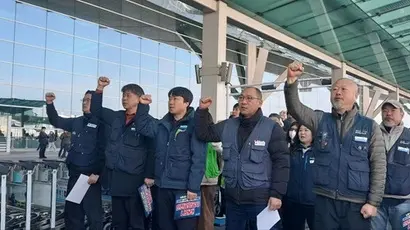
Incheon International Airport Corporation, which has been in conflict over demands for increased staffing at subsidiaries and shift system reform, is also evaluated to be facing a new phase. Jeong An-seok, head of the KCTU Public Service and Transport Workers' Union Incheon Airport Regional Chapter, urged direct negotiations with the corporation, stating, "The management of the subsidiaries has evaded responsibility by claiming that budget and staffing authority lies with the parent company, while the prime contractor has hidden behind the claim that it is not a legal employer."
"Survival Strategy and Investment": Business World Enters Emergency Mode Amid Government Emphasis on Mutual Growth
The repercussions are expected to continue throughout the industry. The pressure from the amendments is particularly heavy for companies with large-scale subcontractors, such as those in the shipbuilding, automotive, and construction industries. Companies like Hanwha Ocean and Hyundai Steel are being mentioned as potential 'No. 1' targets because courts have already issued precedents partially recognizing the employer status of prime contractors for subcontracted workers. Amidst ongoing speculation about the first target, internal labor conflicts have emerged, with the regular workers' union at Incheon International Airport Corporation openly opposing the designation, stating, "We refuse the government's consideration of the corporation as the 'No. 1 pilot project for the Yellow Envelope Act'."
The business world is busy preparing countermeasures. Each company has formed a dedicated task force (TF) to establish response manuals and has entered emergency mode. A business official stated, "We are reviewing our entire related process based on the interpretation guidelines and manuals distributed by the government." The Korea Enterprises Federation (KEF) noted in a statement on the 8th, "We are concerned that disputes between labor and management will continue as indiscriminate negotiation demands are made, regardless of whether employer status is recognized."
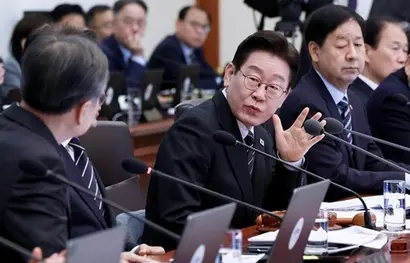
The government is managing the conflict by emphasizing labor-management cooperation models. On the afternoon of this day, President Lee Jae-myung held a meeting at the main building of the Blue House, inviting executives from major conglomerates including Samsung Electronics005930, Hyundai Motor Company, SK, Naver, and Hanwha Ocean, along with 36 representatives from small and medium-sized partner companies.
President Lee cited Hanwha Ocean's case of resolving the issue of wage attachments for workers and recently contributing approximately 89 billion won annually to provide performance bonuses to subcontracted workers on par with those of the prime contractor's employees as an exemplary model. President Lee emphasized, "Mutually beneficial cooperation between large and small enterprises is not an act of charity, but a smart survival strategy and investment."
As labor and management are expected to engage in fierce disputes over legal interpretation in the initial phase of the amendment's implementation, analysts say the greatest challenge for the industry will be finding a new practical balance between management rights and labor rights.
Jang Yeon-sil, an attorney at law firm Jipyong and director of the Korean Bar Association's Labor Law Association, advised, "Under the amended Trade Union Act, even management decisions such as layoffs can become subjects of collective bargaining if they have a substantial impact on working conditions," adding, "Employers should check in advance whether the introduction of new technology is subject to consultation or agreement under collective bargaining agreements, and unions should also take a rational approach based on the scope where direct impact is objectively expected to prevent disputes."