

[비즈한국] Recently, the political circle has been discussing the transition of the Korea Exchange (KRX) into a holding company. The plan is to convert it into a holding company and then incorporate the KOSPI and KOSDAQ markets as respective subsidiaries. Proponents argue that once the conversion is complete, the competitiveness of the KOSDAQ market could be strengthened. However, there is significant opposition, with concerns raised about the potential insolvency of the KOSDAQ. The Busan Metropolitan Government, where the KRX headquarters is located, also opposes the conversion, making it difficult to ignore local sentiment with local elections approaching.
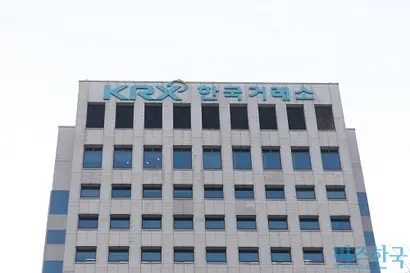
Kim Yong-beom, the Blue House Policy Chief, stated in an interview with the Seoul Economic Daily last February that after converting the KRX into a holding company, the KOSPI and KOSDAQ markets would be separated into independent subsidiaries. Democratic Party lawmaker Kim Tae-nyeon has representatively sponsored a bill aimed at transitioning the KRX into a holding company structure.
Those advocating for the conversion cite the differing characteristics of the KOSPI and KOSDAQ markets as the main reason. KOSPI is primarily composed of large domestic corporations, while KOSDAQ consists mostly of small and medium-sized enterprises or venture firms. This is because KOSDAQ's listing requirements are relatively lower than those of KOSPI. Proponents argue that because the two markets have different characteristics, flexible management suited to their respective situations is necessary, which justifies separating them into distinct subsidiaries.
Upon proposing the bill, Rep. Kim Tae-nyeon explained, "(KOSDAQ) has been operated under a framework similar to KOSPI regarding listing, monitoring, and delisting standards, making it difficult to design flexible systems suitable for growth-oriented companies or to operate the market swiftly. As a result, problems such as the weakening of KOSDAQ's competitiveness and credibility have emerged. By introducing a holding company system and allowing each market to be separated and operated as a subsidiary, we intend to provide a foundation for KOSDAQ to have an independent operating system distinct from KOSPI and to design listing, monitoring, and delisting standards tailored to its market characteristics."
However, there is strong opposition. Voice of dissent is particularly high within the Korea Exchange. The Korea Exchange branch of the Korean Financial Industry Union (KRX Labor Union) pointed out, "This is an anachronistic decision that runs counter to the global trend of market integration and will weaken the effective self-regulatory system. Separating KOSDAQ, which encourages 'blind' listings, will bring about a recurrence of the dot-com bubble, leading to losses for individual investors. The conversion to a holding company will also reinforce a state-controlled financial structure designed to create positions for parachute appointees."
The KRX Labor Union is concerned that if a competitive relationship between KOSPI and KOSDAQ is created, it will lead to a decline in the overall quality of the stock market. If profit-oriented competition continues, the possibility of insolvent companies entering the market en masse cannot be ruled out. The union argues that in this case, retail investors will bear the damage.
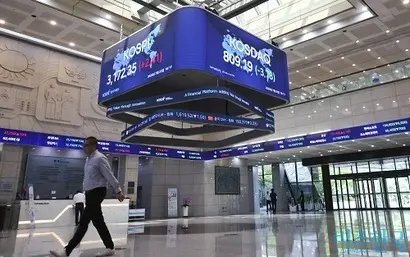
As the claims of both sides clash sharply, complications are expected until the actual conversion of the KRX into a holding company. Additionally, voices opposing the conversion are emerging from local governments. Busan Mayor Park Heong-joon visited the National Assembly in February to convey his opposition to the KRX's transition to a holding company. The KRX headquarters is located in Nam-gu, Busan, while stock and bond trading operations are handled at the Seoul office. There is a persistent opinion among Busan civil society that the KOSPI and KOSDAQ trading functions should also be handled by the Busan headquarters. If the KRX converts to a holding company and the headquarters for the KOSPI and KOSDAQ trading subsidiaries remain in Seoul, dissatisfaction from Busan is inevitable.
On social media, Mayor Park Heong-joon pointed out, "If the conversion to a holding company is pursued without clear regulations on the location of the headquarters, there is a high possibility that core functions will move to the capital region. Then, Busan will once again be reduced to an empty shell."
The KRX's conversion to a holding company is possible if the government and the ruling party push it forward. Twenty-eight lawmakers participated in the bill representatively sponsored by Rep. Kim Tae-nyeon, all of whom are members of the Democratic Party. Opposition parties, including the People Power Party, have not released an official stance regarding the conversion. Since the Democratic Party currently holds a majority in the National Assembly, it is capable of passing the legislation on its own.
However, they cannot ignore Busan's public sentiment. The Democratic Party is aiming to recapture the Busan mayor's office in the upcoming local elections in June. Even if they push through the conversion, they may need to place the headquarters of the KOSPI and KOSDAQ subsidiaries in Busan to appease the citizens.
Despite this situation, both the Blue House and the National Assembly are refraining from expressing official positions regarding the KRX's holding company conversion. So far, the only official positions released are Chief Kim Yong-beom's interview and the bill sponsored by Rep. Kim Tae-nyeon. The situation remains difficult to gauge for the future.