

[비즈한국] Although Pizza Hut franchisees have secured a final legal victory in their lawsuit for the return of margin-based franchise fees, the actual possibility of collecting the awarded money is becoming uncertain. This is because Pizza Hut Korea is pursuing a 'liquidation-type rehabilitation' process, where it sells its business operations to PH Korea and then winds up the existing corporate entity. Industry experts suggest that because this structure separates the business from its liabilities, the amount franchisees can actually recover after the Supreme Court ruling may be limited.
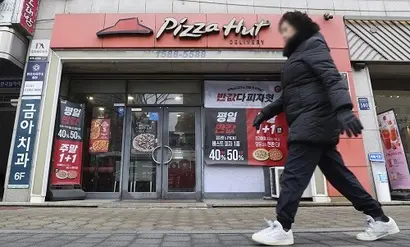
Business Transfer, Not Equity Acquisition; Debts Not Assumed
Pizza Hut Korea is pushing forward with a plan to sell the company to private equity firm PH Korea. PH Korea is a corporation established by investments from domestic mid-sized private equity firms K-Clavis and Winter Gold. On February 12, Pizza Hut Korea held an information session for stakeholders, including creditors and franchisees, at the Seoul Bar Association auditorium to explain the sale plan to PH Korea.
What stands out in this sale is the rehabilitation method. On February 20, Pizza Hut Korea submitted an 'Application for Approval of Business Transfer and Drafting of Liquidation-Type Rehabilitation Plan' to the Seoul Bankruptcy Court. Liquidation-type rehabilitation is a procedure where, instead of keeping the company alive, the business assets are sold to a third party through a 'business transfer' to pay off debts, followed by the dissolution of the existing entity.
According to the plan, PH Korea will acquire business assets such as the Pizza Hut brand and operating rights to continue the business, while the existing Pizza Hut Korea entity will undergo liquidation after debt repayment. The Pizza Hut brand and operations will shift to the new company, and the original Pizza Hut Korea entity will be dissolved. All employees at direct-managed stores will have their employment transferred, and contract workers will be guaranteed employment for at least two years. Franchise agreements are also expected to be reorganized to maintain operational continuity.
The problem is the actual collectability of the returned margin-based franchise fees. In January, the Supreme Court ruled that Pizza Hut Korea must return 21.5 billion won in margin-based franchise fees to franchisees. Previously, in December 2020, 94 franchisees filed a lawsuit, claiming the head office did not sufficiently inform them during the franchise contract process that the product prices included margin-based franchise fees. Following the first and second trials, the Supreme Court also sided with the franchisees, effectively ruling that these were a form of franchise fees.
However, prospects for actual recovery remain dim. PH Korea has agreed to acquire Pizza Hut Korea’s operating rights and assets for approximately 11 billion won, but Pizza Hut Korea's total debt is known to reach about 61.5 billion won. The 21.5 billion won in return of margin-based franchise fees is included in this debt.
Notably, the fact that this transaction is being conducted via business transfer rather than equity acquisition is a key variable. As it is a structure that only acquires business assets, PH Korea does not assume the debts of the existing Pizza Hut Korea entity. Consequently, the debt related to the return of franchise fees will remain with the original Pizza Hut Korea entity.
The Pizza Hut Korea entity will settle its debts using the proceeds from the sale before entering liquidation. While in a typical rehabilitation process, there might be a chance to pay additional debt through future operating profits, the dissolution of the entity upon liquidation means there will be no target left for franchisees to demand further payment. Because of this, analysts suggest that even though the debt has been recognized by the court, there is a limit to the actual amount that can be recovered.

Pizza Hut Korea: "If the Sale Falls Through, Payout Could Be Zero"
Initially, industry experts predicted that acquiring Pizza Hut Korea would not be easy. This is because the scale of the margin-based franchise fee lawsuit amounted to approximately 21.5 billion won, raising concerns that any buyer would inherit the related debt if the company were acquired through equity transfer.
However, the situation changed as this sale was pushed forward through a business transfer within a liquidation-type rehabilitation process. Industry insiders analyze this structure as a strategic choice to separate the business from its liabilities. Since it is a structure that only acquires business assets, PH Korea avoids inheriting the existing Pizza Hut Korea entity's debts or litigation burdens.
Pizza Hut Korea stated that this sale structure is an alternative to increase the repayment rate for creditors. According to Pizza Hut Korea, if about 7 billion won—remaining after priority repayment items are deducted from the 11 billion won acquisition price—is used to repay rehabilitation claims, the repayment rate is estimated to be around 13%. Conversely, the company explained that if this sale falls through and leads to bankruptcy liquidation, the actual distribution rate could be effectively close to zero.
The sale process for Pizza Hut Korea currently awaits remaining approval procedures, such as the court's authorization for the business transfer. According to Samil PricewaterhouseCoopers, the lead manager for the sale, they are awaiting a court decision, and the review is reportedly taking some time due to factors such as court personnel changes.
In this regard, Pizza Hut Korea added, "Although we held an information session for stakeholders in February, subsequent procedures such as voting have not yet taken place. While we are at a point where no specific results have emerged, we hope for a positive conclusion to the process."