

[비즈한국] The blockade of the Strait of Hormuz due to the war between the US/Israel and Iran has sounded an alarm for global energy and petrochemical supply chains. Amid this, Kuwait Petroleum Corporation (KPC), a major Middle Eastern oil producer, and Yeochun NCC, the largest ethylene production facility in South Korea, have declared 'Force Majeure,' citing the inability to fulfill contractual obligations. As concerns grow that the geopolitical crisis could extend beyond energy supply to the real economy across industries, we examine the meaning of the 'Force Majeure' declaration.
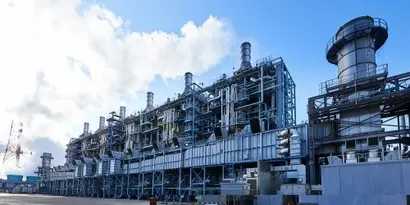
Kuwait Petroleum Corporation (KPC) announced in a statement on the 7th (local time) that it would reduce crude oil production and refining throughput, declaring Force Majeure. Unlike Saudi Arabia, which possesses land-based pipelines, Kuwait relies heavily on maritime transport through the Strait of Hormuz for most of its crude oil exports, making the impact of the blockade immediate. KPC explained that the measure is a precautionary step taken in light of the difficulty in securing ships for safe transport.
In the domestic petrochemical industry, Reuters reported that Yeochun NCC declared Force Majeure on the 4th, notifying major customers of delays in product supply fulfillment. Although Yeochun NCC is a key facility with an ethylene production capacity of 2.29 million tons, it has entered low-rate operations, running all production facilities at minimum capacity due to the blockage in naphtha raw material supply. The company stated in a letter to clients, "We are facing serious setbacks in raw material procurement due to the Middle East crisis."
The 'Force Majeure' clause declared by KPC and Yeochun NCC refers to a provision that exempts a seller from liability for damages when the performance of a contract becomes impossible due to external factors beyond the parties' control, such as war or natural disasters.
The requirements for a Force Majeure situation include: △ events outside the sphere of influence (situations outside any party's control or scope of influence) △ unpredictability (matters that the party could not have reasonably prepared for before signing the contract) △ impossibility of avoidance and overcoming (situations that the party cannot reasonably avoid or overcome even after the event occurs) △ absence of fault of the other party (situations not originating from the contracting party).
This situation is evaluated as meeting these requirements because the physical blockage of transport routes was caused by war. When a company declares Force Majeure, it becomes exempt from liability for damages resulting from delayed product supply or may adjust the timing of performance.
While a Force Majeure declaration is a mechanism that exempts a seller from compensation liability, it cannot prevent the rise in costs across the industry. Currently, the domestic petrochemical industry's operating rate has already dropped to the 70–80% level due to oversupply from China and sluggish demand. On top of this, the Middle East crisis has caused naphtha prices to surge by approximately 25% compared to the end of February, placing a significant burden on the domestic petrochemical sector. Given the current market environment of oversupply, it is difficult to immediately reflect cost increases in product prices, raising concerns about a deterioration in corporate profitability.
NICE Investors Service forecasted that while major domestic NCCs (Naphtha Cracking Centers) have secured about one month's worth of reserves, the situation could change if inventories are depleted due to a prolonged crisis. Furthermore, as the burden of fixed costs increases due to low-rate operations, securing alternative procurement sources is expected to be the key to responding to future supply uncertainties.