

[비즈한국] Prospective travelers who were excited to head out for trips to Europe and the Middle East have had their plans completely frozen. With the flames of the escalating U.S.-Iran conflict effectively shutting down Middle Eastern airspace, prospective travelers and the travel industry have been plunged into unprecedented chaos. As it has become inevitable that travelers stranded in the Middle East, as well as those who booked trips to or transiting through the region, will suffer losses, travel agencies find themselves in a 'difficult' position.
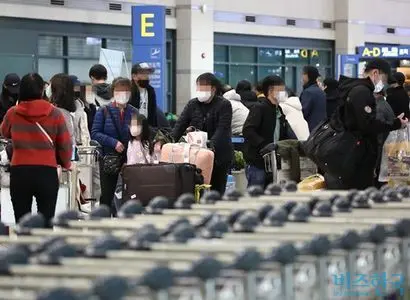
“No Obligation for Free Refunds, But…” Deep Concerns
The travel industry’s biggest concern right now is 'what to do about refund guidelines.' Schedules for visiting or transiting through major Middle Eastern hub airports like Dubai, Abu Dhabi, and Qatar remain completely uncertain. While travel agencies offered free refunds for trips scheduled from late February to early March, they have now begun a 'waiting game' over how to handle products departing in mid-to-late March.
Technically, in the case of 'war,' travel agencies are not obligated to provide free refunds. Generally, war is classified as a force majeure event comparable to a natural disaster. Since it is not the fault of the travel agency, there are no legal issues with issuing refunds after deducting cancellation fees according to the terms and conditions.
The problem is the 'livelihood' of the travel agencies. Usually, after a war breaks out, travel demand to nearby regions shrinks. Furthermore, as exchange rates soar, travelers also feel the burden of costs. If free refunds increase, it is inevitable that the 'cash flow situation' for travel agencies will worsen. This hits them hard, both in the short and long term.
The fact that several Middle Eastern hub airports have firmly established themselves as stopovers for 'Europe trips' is also a painful point. Recently, many cost-effective European package tours have utilized Middle Eastern national carriers like Emirates or Qatar Airways. This was thanks to the aggressive pricing marketing by Middle Eastern airlines, but the problem is that with the war, these air routes have effectively been closed.
In South Korea, the Incheon-Dubai route operated by Korean Air003490 was fully canceled until the 8th. Qatar Airways, Emirates, and Etihad Airways also canceled flights to and from Doha, Dubai, and Abu Dhabi following the closure of their airspace, with only some direct flights between the UAE and Incheon resuming on the 6th.
For travel agencies, trying to find detour routes and rebooking flights results in a massive increase in ticket prices and customer burden, but keeping the current plans makes it uncertain whether the 'flight schedules' are even viable. This is why travel agencies are struggling to come up with refund guidelines while anxiously watching the breaking news.
Nol Universe: “Covering Even Flight Costs”
For now, major travel agencies have announced policies for full refunds without cancellation fees due to force majeure. Hana Tour039130 decided to suspend operations for Dubai/Abu Dhabi-bound products scheduled to depart by the 10th and provide full refunds to customers. They also decided to provide free accommodation for travelers currently stranded in Dubai. Mode Tour080160 and Kyowon Tour will also provide full refunds without cancellation fees for products transiting through the Middle East departing by the 8th.
Nol Universe (Nol Interpark) went a step further, vowing to cover the full costs of stay, accommodation, and even airfare for customers who were stranded and suffered losses in the Middle East. An official from Nol Universe stated on the 6th, “We made the decision for full support immediately after all travelers' return schedules were confirmed and compensation issues were put on the table.” The official added, “We provided large-scale compensation to customers and partners during the TMON-WeMakePrice crisis in 2024. This time, while it is a significant financial burden as flight prices have soared to the 4 to 8 million won range, we made a sweeping decision because customer safety is our top priority.”