

[비즈한국] Since February 28, the Middle East has been in complete chaos following joint airstrikes by the US and Israel on Iran. In retaliation, Iran has been launching ballistic missiles, cruise missiles, and drone attacks on almost every country in the Middle East, including Iraq, Kuwait, the UAE, Qatar, Saudi Arabia, Bahrain, Israel, and Lebanon, leading to an unprecedented halt in regional aviation and logistics.
This "turmoil" has sparked fierce competition among reporters. Many of the nations currently under attack are key customers of "K-Defense" weaponry. Just before this war, South Korean defense companies aggressively promoted their weapons at the WDS 2026 exhibition in Saudi Arabia, and last month, Chief of Staff Kang Hoon-sik visited the UAE to announce a secret defense cooperation program worth tens of billions of dollars.
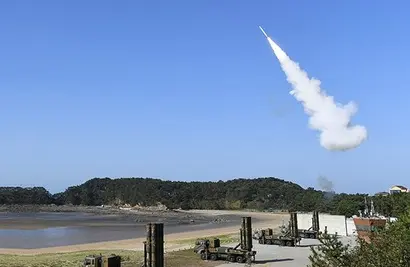
The subsequent drone and missile attacks by Iran ignited yet another "reporting war." There was immense interest in how effectively Saudi Arabia and the UAE, the top customers of K-Defense, were using our weapons in actual combat, as instances of South Korean weapons being deployed in real-world conflicts are rare. The most well-known cases are the K9 self-propelled howitzers used during the Yeonpyeong bombardment and the FA-50 (T-50) aircraft used in combat by the Philippines and Thailand.
The conclusion to this reporting war appeared to be the news of "96% interception by Cheongung-II." After several exclusive reports, it was officially announced via the National Assembly that the Cheongung-II had indeed intercepted Iranian missiles fired toward the UAE, with a 96% success rate using approximately 60 missiles.
The problem, however, arose from an unexpected place. Around the time reports emerged that the Cheongung-II was deployed in the UAE, posts appeared on anonymous community boards claiming that the system was operated not by UAE troops, but by private company employees, and derogatory nicknames were used to refer to the company's CEO, which then spread like wildfire.
However, this was confirmed to be false. The company's official statement denied these claims, and my own investigation confirmed the same. While it is true that Korean civilians and military personnel were dispatched to support the operation of the Cheongung-II in the UAE, the UAE military evacuated all foreigners—who had no operational authority—from military bases and ordered them to stay at their lodging as soon as the conflict erupted.
Logically, the claim that the UAE military entrusted the operation of the Cheongung to Korean civilians is difficult to believe. The UAE military was already in the final stages of securing operational capability for the Cheongung and was already proficient in tasks such as operating the radar and launching the missiles. The speculative reporting—driven by the stereotype that the UAE military is an incompetent "Middle Eastern army" incapable of firing the missiles they purchased without Korean staff—demonstrates a complete lack of understanding of local conditions and the defense industry.
While the company's labor union did issue a statement criticizing the incident, they were referring to providing auxiliary support such as connecting communication lines, not reporting that Korean civilians were actually operating weapons and engaging in warfare.
Nevertheless, the narrative spread widely, creating the public perception that civilians had operated missiles and participated in a foreign war, effectively turning it into a meme.
The issue is not just about correcting the facts. Under Article 11 of the Criminal Act, participating in a private war (private warfare) is a serious crime, and such reports could lead to the misunderstanding that a domestic company has violated international norms. Hasty reporting could even trigger international sanctions.
Furthermore, reporting based on a single source without cross-verification, or presenting speculation as fact, is a significant problem. As someone who strives for speed and exclusive scoops, I am not immune to such risks, but we must at least adhere to the basics of verifying through two or more separate sources. Even if a report is not for the public good, we must be wary of causing unjust financial damage. In fact, defense exports to the Middle East have often been derailed due to issues surrounding embargoes.
I am well aware that I am not free from this responsibility. However, I write this critique with a heavy heart, concerned that if no one speaks out against the spread of false news related to a serious crime like private warfare, further incidents will inevitably follow.
It is true that K-Defense is a source of pride and an asset for South Korea, and that news of our defense exports brings joy to the public. However, we need a culture of reviewing content, especially overly sensational stories that could be easily verified with a little effort, before going to press.