

[비즈한국] K-Bank279570 made its debut on the Korea Composite Stock Price Index (KOSPI) on March 5. On its first day of trading, the stock opened at 9,000 won, surpassing its IPO price of 8,300 won. While it rose to as high as 9,880 won shortly after the market opened, it surrendered most of its gains due to a late-day slump, closing at 8,330 won—just 30 won (0.36%) above the IPO price.
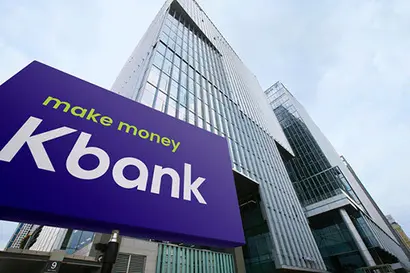
According to the Korea Exchange, the stock code for K-Bank is A279570. As of the listing date, the combined stake held by the largest shareholder and related parties was disclosed at 31.24%. K-Bank, an internet-only bank founded in January 2016, reported an operating profit of 106.1 billion won for the third quarter of last year.
This IPO marks the conclusion of K-Bank's 'third attempt' at going public. The bank postponed its listing schedule in February 2023 and withdrew its IPO in October 2024 due to weak demand, before finally pushing forward with its KOSPI entry in 2026.
For this offering, K-Bank issued and sold a total of 60 million shares, consisting of 30 million new shares (50%) and 30 million existing shares (50%). Based on the final IPO price of 8,300 won, the total offering amount was 498 billion won, with an implied market capitalization of 3.3673 trillion won after listing.
In terms of supply and demand, the floating share ratio was set at 36.35% on the listing date, with a structure that will increase to 65.81% after six months. During the institutional demand forecasting process, the mandatory retention commitment ratio stood at only 12.4%. However, it was reported that the largest shareholder, BC Card, voluntarily extended its lock-up period from the original six months to one year.
K-Bank has identified the expansion of financing for sole proprietors and small and medium-sized enterprises (SMEs) as a key task, utilizing the capital raised through the IPO. As of the third quarter of last year, K-Bank's SME loan balance stood at 1.9284 trillion won, accounting for 10.8% of its total loans of 17.8554 trillion won. The actual success of the public offering is reflected in the figures: K-Bank recorded a competition rate of 134.6 to 1 in the subscription for retail investors, with subscription deposits totaling 9.85 trillion won (provisional).
With K-Bank's listing, two out of the three domestic internet-only banks (K-Bank and KakaoBank323410) are now publicly traded, leaving only one (Toss Bank) as a private company. Moving forward, K-Bank must demonstrate to the market its ability to expand SME financing, manage funding costs and financial soundness (such as delinquency rates), and diversify its non-interest income sources.