

[비즈한국] The global mobile charging brand Anker has held its first official media event in South Korea, signaling a full-scale push into the local market. While Anker is a company with roots in China, its growth foundation is not the Chinese domestic market, but overseas markets like North America and Europe. Its Asian base is also Japan, not China. The key question now is whether the brand can replicate in Korea the global image it built through a direct-to-consumer (D2C) online structure and "value-for-money premium" positioning.
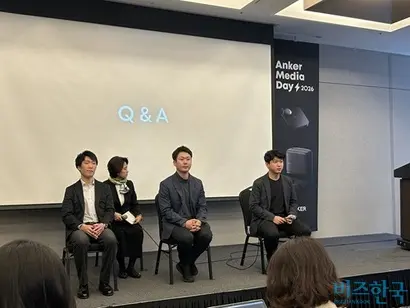
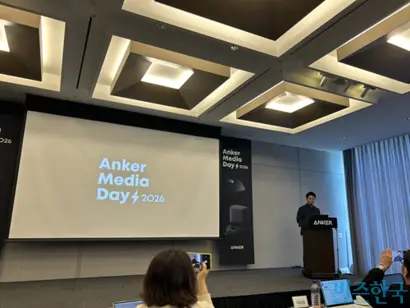
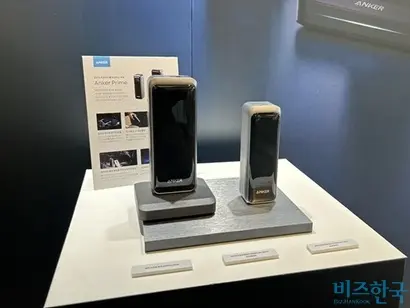
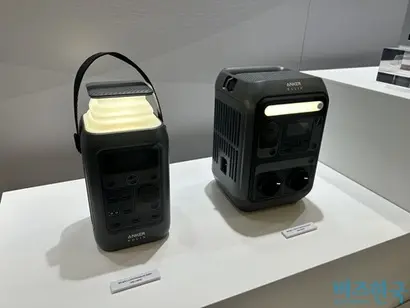
Anker Innovations Korea held a press conference at the InterContinental Parnas in Gangnam-gu, Seoul, on the 4th to unveil its business strategy and key new products for the Korean market. The event showcased a diverse lineup, including the "Anker Prime" series of high-output multi-chargers and high-capacity power banks, AI-based voice recorders, wireless earphones and speakers from the audio brand "Soundcore," and robot vacuum cleaners from the flagship smart home brand "eufy." The plan is to expand the portfolio from being a charging accessory-focused brand to include audio and smart home products.
Ayumu Endo, Chairman of Anker Korea and CEO of Anker Japan, stated at the event, "As our sales in Korea have more than doubled over the past few years, we intend to propose a smart lifestyle to Korean customers based on the know-how accumulated in the global market," adding, "We will expand our touchpoints with Korean consumers through product experiences."
Anker is one of the most recognizable Chinese electronics brands among American consumers. It is highly regarded for having grown its presence in the mobile accessory market by emphasizing not only price-to-performance ratio but also stable quality and design perfection.
A Chinese Company, But the Growth Stage is North America and Europe
Anker's growth trajectory differs somewhat from typical Chinese electronics manufacturers. Rather than expanding abroad based on the Chinese domestic market, Anker targeted overseas consumers in North America and Europe as its primary customer base from its inception. Its structure is one where North America accounts for more than half of its revenue, followed by Europe and Japan, meaning the vast majority of its sales are generated outside of China.
Founded in 2011 by Steven Yang, a former Google employee, Anker grew by utilizing Amazon as its primary sales channel. At one point, over 70% of its total revenue was generated online, with a significant portion coming from Amazon.
While its initial products were laptop batteries and chargers, it quickly expanded into the power bank and charging accessory market as smartphone adoption spread. It boosted brand reliability by analyzing consumer review data to improve products, successfully building a positioning of "stable quality at a reasonable price."
This strategy was a result of identifying structural gaps in the smartphone accessory market. Original manufacturer chargers were expensive, while low-cost generic products often lacked quality reliability. Anker rapidly expanded its footprint in the North American market by providing stable quality and relatively reasonable prices through Chinese manufacturing supply chains.
Since then, Anker has been focusing on elevating its brand image from "low-cost accessories" to a "trustworthy electronics brand" by expanding into life electronics product groups such as audio and smart home devices.
Full-Scale Asian Push… Korea as a Testing Ground
In the Asian market, the company is expanding its business with Japan as its hub. The Korean entity is also operated as a new business unit under the Japanese subsidiary.
Anker officials explained, "We have developed our business with a focus on overseas markets from the beginning and built our brand foundation in the North American market," adding, "The Korean business is also being pursued as part of an Asian strategy centered on our Japanese subsidiary."
Recently, the company has also shown signs of gradually entering the Chinese domestic market. This is described as a strategic decision to diversify its business base in response to environmental changes such as the global economic slowdown.
Key products vary depending on regional characteristics. In Japan, demand for high-capacity power banks is high due to preparations for disasters like earthquakes, making the battery product group highly influential. Eufy is also establishing a foothold in the Japanese market. Anker officials explained, "Eufy has secured the number two position in the market after Sony in the main budget earphone product category."
Anker products are currently sold in Korea primarily through online channels. Recently, the company has been expanding its offline touchpoints as well. It opened an official service center in Seoul last October and has been increasing consumer exposure by operating a pop-up store at Starfield City Wirye early this year.
However, the competitive landscape is challenging. In the mobile accessory market, the company is already competing with Chinese brands like Xiaomi and various domestic small and medium-sized brands. The challenge remains to secure not only price competitiveness but also brand trust and product perfection.
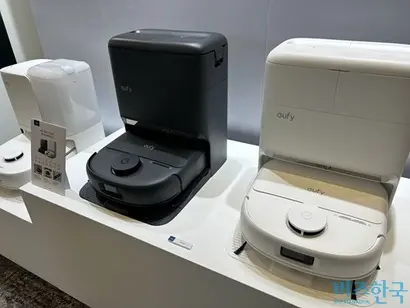
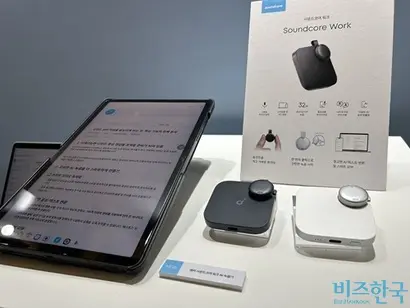
Whether the brand competitiveness built in North America and Japan will resonate in the Korean market is considered key to future business expansion. Anker plans to broaden its reach into audio and smart home products while strengthening its brand image centered on premium chargers and power banks. Along with this, it is actively incorporating AI technology into each business sector while also focusing on security responses.
Oh Byung-keun, Head of Anker Korea, stated, "We have obtained all certifications compliant with global security standards used overseas as a matter of principle," adding, "We are also making necessary preparations to ensure we do not violate domestic Korean laws." He further mentioned, "In line with the expansion of the Korean market, we plan to release products that Korean consumers want one by one in cooperation with our global and Japanese organizations."
Hiroaki Takeuchi, Vice Chairman of Anker Korea, emphasized, "The Korean market is one where a diverse price range coexists, from budget products to premium offerings," adding, "We plan to continuously expand our offline touchpoints, including keeping the possibility of opening permanent physical stores on our horizon, to enhance brand experiences that can be felt in person."