

[비즈한국] Cha Won-tae, Vice Chairman of CHA Hospital and CHA Bio Group, has become the new CEO of Cha Biotech085660. This marks the beginning of owner-led responsibility management for the first time since Cha Biotech's establishment in 2009. CEO Cha has been entrusted with the heavy responsibility of strengthening the internal stability of Cha Biotech, which has successfully achieved external growth, and securing a leading position in the global CGT (cell and gene therapy) CDMO (contract development and manufacturing organization) market.
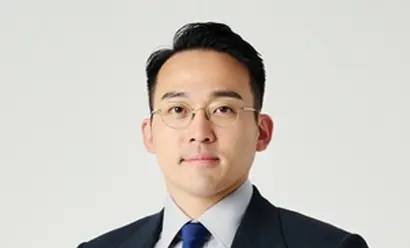
Vice Chairman Cha was appointed as the CEO of Cha Biotech through a board meeting held on the 4th. CEO Cha is the grandson of the late Honorary Chairman Cha Kyung-sup, the founder of CHA Hospital, and the eldest son of Cha Kwang-yul, the head of the CHA Hospital and CHA Bio Group Global Research Institute. He built his global perspective and on-site experience through Duke University, a master's degree in public health from Yale University, and an MBA from MIT, followed by roles such as Chief Strategy Officer at CHA Hollywood Presbyterian Medical Center and President of CHA University. Since September of last year, he has also worked as the CSO of Cha Biotech, focusing on strengthening the ESG management system for sustainable growth.
CEO Cha's top priority is improving profitability. Last year, Cha Biotech recorded consolidated annual revenue of 1.2683 trillion KRW. This was a record-high performance, an increase of 21.4% compared to the previous year. However, due to increased costs from expanding U.S. hospital operations and R&D investments, the company recorded an operating loss of 47.5 billion KRW and a net loss of 139.2 billion KRW. While the company's size has grown, it is now in a situation where it must actively focus on internal stability.
To this end, establishing the global CDMO business is essential. In particular, the recovery of financial health for Matica Biotechnology, a Texas-based CGT CDMO subsidiary that continues to suffer operating losses, is key. As of the third quarter of last year, Matica Bio recorded 2.6 billion KRW in revenue and an operating loss of 23.3 billion KRW. Although it signed 10 billion KRW worth of orders from local U.S. bio companies in the first half of last year, it takes time for these to translate into actual results, and the scale of orders needs to be further expanded. Having focused on producing clinical drugs with 500-liter cell culture equipment, the company must now push forward without setbacks in building a 2,000-liter second plant aimed at commercial-stage CGT production, with a goal of completion by 2027.
He must also actively work on improving relationships with shareholders. Some shareholders, pointing to Cha Biotech's sluggish stock price, have demanded through one-person protests in front of the headquarters that CEO Cha and his father, Director Cha, step to the forefront and take responsibility for management. CEO Cha is the first member of the owner family to be listed as a registered director in the 17 years since Cha Biotech entered the KOSDAQ market through a back-door listing in 2009. Given that even his father, Director Cha Kwang-yul, did not take on a registered director role while serving as General Chairman, the market's expectations and the burden of responsibility are heavy.
Recovering shareholder trust while resolving the complexities surrounding the IPO of its key subsidiary, CHA Healthcare, is another task. Cha Biotech has set a goal of merging CHA Healthcare with its hospital infrastructure subsidiary, CHA Cares, by June of next year, followed by an IPO in 2027. Since Cha Biotech issued 120 billion KRW worth of exchangeable bonds (EB) to the private equity firm Stick Investment in December 2024, conditional on the IPO, it cannot delay the listing schedule. The industry believes that if CHA Healthcare successfully goes public, it will not only reduce Cha Biotech's financial burden but also strengthen CEO Cha's control over the group and provide further justification for his management succession.
Cha Biotech is busy boosting its corporate value ahead of the listing. A prime example is the acquisition of management rights for Kakao Healthcare through companies like CHA Cares late last year. This is interpreted as a strategy to maximize listing valuation by combining digital healthcare and medical data platform businesses with the existing global offline hospital operation network.
However, some shareholders are expressing concerns over the moves to push for CHA Healthcare's listing, calling it a typical case of "split-off listing" (double listing). This is because currently, about 70% of Cha Biotech's total revenue comes from CHA Healthcare. Furthermore, the fact that Cha Biotech raised 250 billion KRW through a shareholder-allotted capital increase last February and announced plans to use 90 billion KRW of that for CHA Healthcare is another trigger. Shareholders are strongly criticizing the move, arguing that there is no benefit for shareholders of the parent company if funds raised by diluting the parent company's equity value are used to grow a lucrative subsidiary only to spin it off for listing.