

[비즈한국] Arriving at Gwacheon Racecourse on a weekend morning, pushed along by the crowds, one could see the coexistence of two faces: a complex recreational space and a massive gambling arena. This place, where the cheers of children, the social interactions of the elderly, and the self-reliance of young people with disabilities exist together, is currently trembling with anxiety due to the government's recent relocation announcement. We examined on-site the economic losses and the risk of the disappearance of social values that the forced relocation of a profitable site would entail.
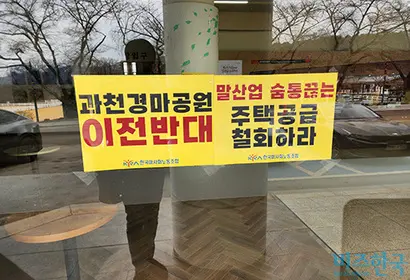
At just before 10 a.m. on the 1st, the ticket gates at Racecourse Park Station felt like a transfer station during weekday rush hour. Swept along by the crowd eager not to miss the first race at 10:15 a.m., I was pushed out of the station. From the horse racing magazine stand visible as soon as you exit, to the street vendors selling corn and silkworm pupae beyond Exit 3, the local ecosystem operated entirely around the racecourse. However, the 'Oppose the Relocation of Gwacheon Racecourse' banners hung throughout the facility spoke to the intense tension between the survival struggle of those on-site and policy uncertainty.
The part of the racecourse commonly called the 'race track' is currently operated under the name 'LetsRun Park'. Upon entering after paying the 2,000 won admission fee, the first place that caught my eye was the Nol Lounge. This area, which only allows entry to those in their 20s and 40s and families with minors, was occupied more than half by families with children ranging from preschoolers to early elementary school students.
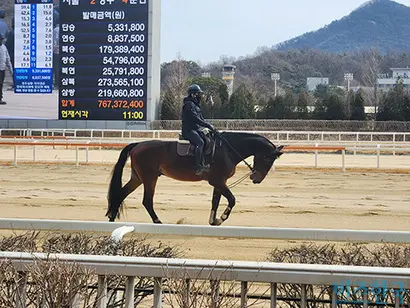
As the racehorses came into view, the children cheered, "Horse! Horse! Horse!" but at the same time, the middle-aged and elderly racing fans filling the stands from the 2nd to the 6th floors let out roars that shook the ceiling as the horses approached the 200-meter mark to the finish line. For some, it was a place for an outing, but for others, it was a battleground where they wagered hundreds of thousands of won or more. One white-haired man asked me if I had bought a betting ticket and showed me several tickets worth 100,000 won bet on horse number 2. The instructor who teaches the basics of horse racing at the Nol Lounge even remarked that people watch the races with as much seriousness as if they were studying for a bar exam.
For those I met on-site, the racecourse relocation controversy felt like a loss. A man in his 20s who visited with a high-performance camera said, "There aren't many places in Korea where you can see horses, so I hope they don't move it." The horse doll hanging on his bag showed an affection that went beyond just horse racing. A woman in her 60s who visited alone also expressed her disappointment, saying, "If the racecourse goes far away, I can't come here. I wish there were places for people to rest." Indeed, the seniors I saw on-site were naturally striking up conversations with people they had just met, using the racecourse as a social hub.
Of course, as it is perceived as a gambling venue, negative views also existed. Outside the Nol Lounge, from the 2nd to 6th floors and in the internal restaurants, groups of middle-aged and elderly people could be seen frowning and sighing while clutching their betting tickets. Two men in their 30s who visited together said, "I think it would be fine if the racecourse disappeared if other healthy places to rest were created instead."
Just as opinions are divided among users, the public sentiment of local residents and merchants was also complexly intertwined. Residents shared various opinions regarding local image versus practical benefits. A resident in her 20s living near Gwacheon Station said, "The perception is so bad that I wish it would disappear. But since they say they pay a lot of taxes, I'm a little worried," while a resident in her 60s urged for relocation, stating, "The perception of it being a gambling den isn't easily shed, so I hope it disappears this time. There are serious real estate issues, and I think more housing would be better than a racecourse."
On the other hand, a male resident in his 40s expressed skepticism, saying, "If more houses are built on the racecourse site, traffic will likely be worse than it is now, and I don't see the need to clear out something that is already well-established." A middle-aged woman selling racing magazines in front of the station expressed concern over the potential collapse of the local commercial district, saying, "It's worrying that it might disappear in 2 or 3 years. If it goes, the people associated with it won't come," and a restaurant worker inside LetsRun Park lamented, "If the racecourse disappears, I'm worried because my job will vanish immediately."
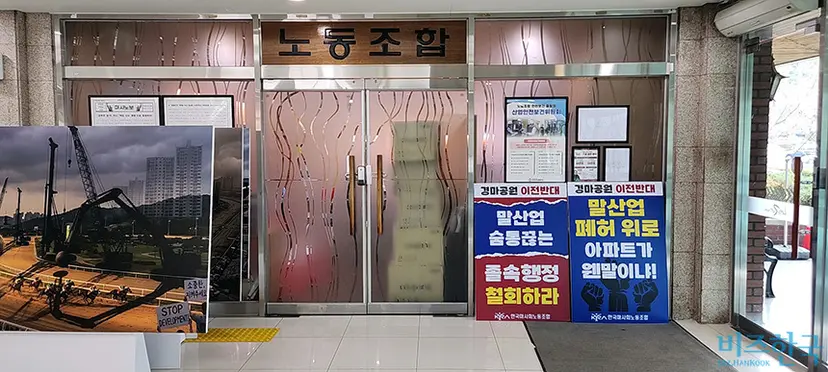
In the afternoon, I visited the Korea Racing Authority (KRA) Labor Union to hear more specific internal details. The union's secretary-general presented indicators regarding the side effects the relocation of the Gwacheon racecourse would bring. Currently, the Gwacheon racecourse is the only profitable site among the three racecourses in the country. In particular, thanks to the overwhelming public transit accessibility of the Racecourse Park Station, 75% of all users are concentrated at the Gwacheon racecourse.
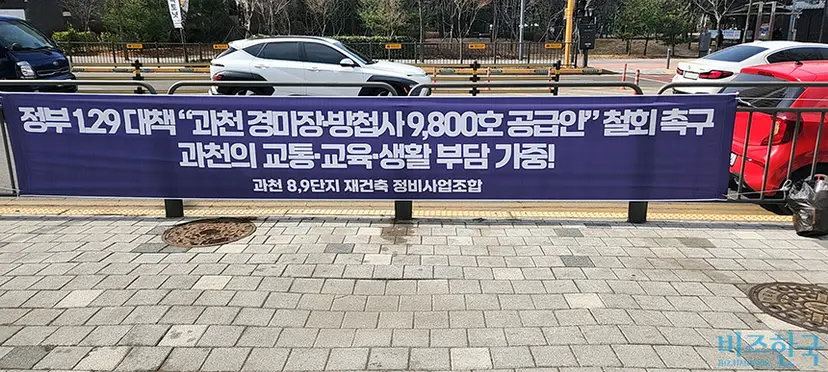
Their position is that if it is relocated to 'somewhere' in Gyeonggi-do according to the government's announcement on January 29, a decline in revenue due to worsened accessibility is inevitable. A decline in revenue leads directly to an employment crisis. Among these, the low-wage, short-term workers, known as 'racing staff,' who are mostly middle-aged or elderly, would find it realistically impossible to maintain their employment if the site moves. Furthermore, as a significant number of horse-related events, including major equestrian competitions, are held here, the economic foundation of industry workers also relies heavily on this location.
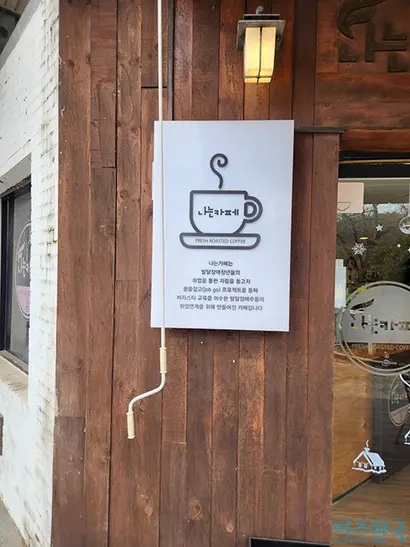
After leaving the union building and walking around, I saw 'Naneun Cafe' next to the feeding area where horses were peacefully grazing on hay. Naneun Cafe is a workplace established by the KRA to help young people with developmental disabilities with vocational training and self-reliance. Since its inception in November 2012, it has expanded to 15 branches, serving as a ladder into society for dozens of young people with developmental disabilities.
Most of the KRA's revenue comes from betting ticket sales. That is why critical views regarding revenue based on a gambling industry always follow. Paradoxically, however, part of that profit becomes the foundation for social contribution projects for the marginalized. The symbolic model of public-private cooperation that has lasted for 14 years is also placed before the uncertainty of the racecourse's relocation.