

[비즈한국] At 'Mobile World Congress (MWC) 2026', the world's largest mobile exhibition, South Korea's three major telecommunications companies emphasized their shift from mere network providers to 'AI infrastructure' and 'AI service platform' players. While the strategies presented by each company share AI as a common denominator, they differ in their specific profit models and technical approaches. This reflects the deep concerns of each firm regarding how to convert massive AI capital expenditures (CAPEX) into tangible subscriber revenue or business-to-business (B2B) profit.
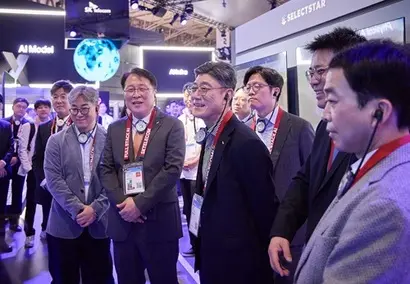
At MWC 2026, held in Barcelona, Spain, from the 2nd (local time) to the 5th, the three companies made their intent to find breakthroughs in AI clear. SK Telecom focused on large-scale infrastructure, KT030200 on enterprise operating systems and public sector demonstrations, and LG Uplus032640 on Sovereign AI full-stack solutions and customer touchpoint innovation. Amidst a global trend where operators are maximizing operational efficiency through network intelligence, these domestic companies are going a step further by positioning integrated models that combine proprietary Large Language Models (LLMs) with specialized hardware design as their core competitiveness.
SK Telecom Declares 'Infrastructure Preemption'
On the 1st, SK Telecom CEO Jung Jae-heon held a press conference locally and stated, "While we took pride in being the number one provider, I realized we were crumbling because we took it for granted. We cannot guarantee survival unless we change everything," proposing an 'AI Transformation'.
SK Telecom's strategy goes beyond simply increasing servers to focus on structural innovation that resolves data transmission bottlenecks. A prime example is the adoption of a CXL (Compute eXpress Link)-based architecture, developed in collaboration with Panmnesia, which expands the fixed server-unit structure to a rack-unit level. This is interpreted as a strategic move to secure profitability by improving the cost structure of existing AI data centers, which previously required adding unnecessary GPUs whenever memory was insufficient.
Furthermore, they plan to respond preemptively to the AI DC demand from global Big Tech companies by adopting a 'Prefab Modular' method in partnership with companies like Supermicro and Schneider Electric, which modularizes power and cooling infrastructure to shorten construction periods.
It is also notable that they are promoting a 'Sovereign AI Package' as an export model, which ensures national data sovereignty while upgrading their proprietary 'A.X K1' model to over 1000B (1 trillion parameters). This is being materialized as a cooperative belt connecting Asia, the Middle East, and Europe through the 'Global Telco AI Alliance' with major global carriers such as Deutsche Telekom, Singtel, e&, and NTT. CEO Jung emphasized his role as an infrastructure architect, stating, "Competitiveness in the AI era depends not only on technology but on how you design and connect infrastructure."
KT Targets 'Practical AX'
KT focused on the fundamental evolution of networks and the supply of an 'Operating System (OS)' that can be immediately applied to corporate environments. The 'Agentic Fabric' unveiled at this MWC aims to be an 'Enterprise AI OS' that goes beyond simple chatbot services to autonomously perform core business tasks. They explained that it solves internal system integration and security issues through a 5-layer structure.
KT has also lowered the barrier to entry for corporate AX (AI Transformation) through an 'Agent Builder' that allows non-developers to create AI agents via drag-and-drop. This is a strategy to create recurring subscription revenue based on software platforms, moving away from simple communication line revenue.
KT is highlighting its B2G (Business-to-Government) demonstration achievements, such as the Supreme Court's trial support platform and the Gyeonggi-do Office of Education's 'Hi-Learning', to emphasize its practical revenue base in the public sector.
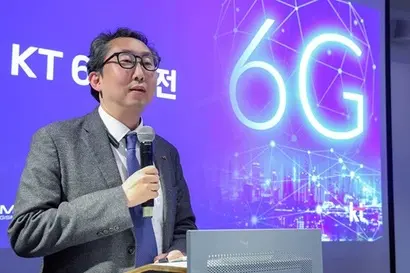
In terms of infrastructure, KT defined 6G as an 'Intelligent AI Network' and presented a vision for 3D coverage connecting the ground to satellites. At a KT press conference on the 2nd, Lee Jong-sik, Head of KT's Network Laboratory (Senior Vice President), stated, "KT is the only domestic carrier with the technology for standalone (SA) 5G services," adding, "We can utilize our experience in building and operating 5G architecture longer than our competitors as a technical asset in the 6G design and commercialization process."
With the observation that 6G will move beyond speed competition to become infrastructure where AI makes its own judgments and operates, the company plans to differentiate its security competitiveness with networks that have internalized quantum cryptography. Senior Vice President Lee added, "6G is not just about speed competition, but a network that fundamentally changes customer experience. An ultra-low latency, high-reliability AI network will be our core competency."
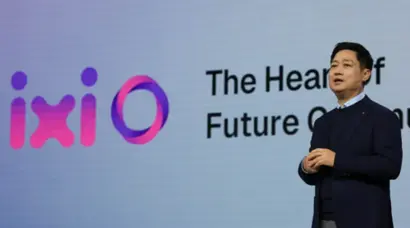
"Voice is the Weapon": LG Uplus's Innovation
CEO Hong Bum-sik, who served as a keynote speaker at the opening ceremony on the 2nd, showcased the company's AI call agent 'ixi-O', explaining, "An evolved voice agent that understands users most deeply and is even responsible for their daily safety will be the core of future communication." The analysis is that in an era where countless AI technologies and devices appear, from wearable devices like smart glasses to AI agents and physical AI, voice will be the most important interface.
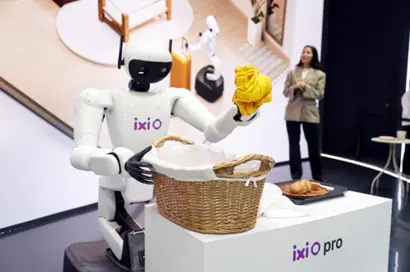
LG Uplus is focusing on evolving voice, the essence of telecommunications, into an AI execution platform. At this exhibition, 'Ambient AI', which connects various devices and spaces centered around voice, was unveiled. The vision is to expand connections in a smartphone environment, ranging from wearable devices to vehicles, IoT appliances, and humanoid robots.
The active agent 'ixi-O pro' has destroyed the limitations of existing passive assistants. It aims to approach users by analyzing their physical situation and psychological context in seconds. At the site, a physical AI demonstration attracted attention where 'ixi' analyzed the context of a business trip schedule shared during a call with family to adjust restaurant reservations, while a linked humanoid robot retrieved a suitcase to pack luggage on its own. Choi Yoon-ho, Head of LG Uplus's AI Business Group, stated, "We have presented a future vision where communication-based voice AI combines with physical AI to execute reality," expressing the intention to expand services through the advancement of ixi.
On the 1st, Lee Sang-yeop, CTO of LG Uplus, pointed out during a joint press conference with LG AI Research that the success rate of AI adoption by global companies is currently only 5%, emphasizing the importance of providing practical solutions.
Accordingly, the company is implementing a parallel strategy of securing data trust by applying homomorphic encryption technology to its security brand 'ixi Guardian 2.0', and lowering the adoption threshold for companies with a 'Sovereign AI Full-Stack Solution' in collaboration with LG AI Research and FuriosaAI. The calculation is that hyper-personalized data accumulated on a tight security system is the driving force behind close services that Big Tech cannot imitate.
Although the three major telecoms have declared a transition to 'AI Native', the market is paying attention to the efficiency of their massive capital expenditures. Large-scale capital investment is essential for SK Telecom's 1GW-class hyperscale AI DC construction or KT's securement of GPUaaS infrastructure. As the traditional revenue structure of the telecom industry has entered a stagnant phase, the evaluation is that the key will be whether AI investment leads to substantive B2B platform revenue or increases in Average Revenue Per User (ARPU), rather than just cost reductions in operational expenses (OPEX).
An industry official stated, "It is now difficult to convince the market with mere declarations of 'doing AI'. We are in a stage where achievements must be proven with measurable indicators such as data center utilization rates, recurring subscription revenue from corporate customers, and the contribution of AI-based services." They added, "As we have moved from the era of laying networks to the era of layering AI, who structures their profit model first will ultimately determine the success of the telecom companies' structural transformation."