

[비즈한국] Recently, BTS and BLACKPINK have been drawing attention for their activities related to Korean traditional culture. BTS will perform at Gwanghwamun to commemorate the release of their album 'Arirang' on the 20th. BLACKPINK has embarked on a cultural heritage docent service at the National Museum of Korea. While some attribute significance to these activities as if it were their first time acting as ambassadors for traditional culture, BTS and BLACKPINK have long been integrating our traditional heritage into their musical activities, and are now showcasing it in an even more upgraded way.
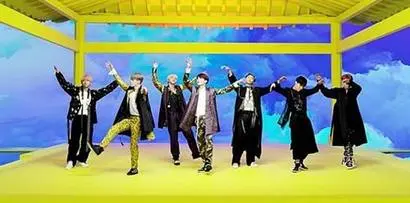
BTS has resonated with global fans by embodying Korean traditional culture and music in ways that suit modern sensibilities. 'IDOL,' which reached 10th place on the Billboard Hot 100 singles chart in 2018, incorporated our traditional rhythms by adding the 'deong-deo-kung' beat and vocal ad-libs like 'eolssigu' and 'jota,' transforming our excitement into an exhilarating rhythmic dance track. The music video is even more Korean. They showcased fashion styles that reinterpret traditional costumes, performed dance moves reminiscent of the Bukcheong Lion Dance, and featured hanok (traditional houses) alongside tiger patterns. Looking at it now, it reminds one of the tiger Duffy character in 'K-Pop Demon Hunters.' Leader RM paved the way for the National Museum of Korea syndrome by introducing the 'Room of Quiet Meditation,' home to the Pensive Bodhisattva, to the world.
In 2020, Suga released the full-length album 'D-DAY' under the name Agust D, featuring the song 'Daechwita.' This is a modern reinterpretation of the Joseon Dynasty's royal court music 'Daechwita' with exciting rhythms and hip-hop codes. Starting with the rap line "Daechwita, Daechwita, let it ring, Daechwita" set against a hip-hop beat, the song received global acclaim. The track 'Haegum' carries a dual meaning: the traditional instrument 'haegum' and the act of 'lifting a ban.' Here, too, fashion utilizing traditional costumes drew attention. Suga showcased a style inspired by the 'gonryongpo,' the king's robe from the Joseon Dynasty. He also effectively embodied hip-hop fashion by utilizing white 'dopo' (outer robes) and hanbok ribbons that contrasted with his black outfit.
In April 2023, the outfits worn by BLACKPINK as headliners at the Coachella Valley Music and Arts Festival, the largest music festival in the US, caught the eyes of foreign media. Becoming the first Asian headliners, they prepared 'Pink Venom' as a performance track and took to the stage in hanbok. CNN Style commented that Jenny, Jisoo, Lisa, and Rosé wore hanbok on stage, showing a groundbreaking moment by paying homage to Korean traditional cultural heritage. The four hanbok outfits were inspired by the silhouette of the 'cheol-lik' and embroidered with traditional Korean patterns such as 'dancheong' and peonies. 'Cheol-lik' refers to the official uniforms worn by military officers from the Goryeo Dynasty to the Joseon Dynasty. Inspired by the fact that the cheol-lik consists of a jeogori-style top and a pleated skirt bottom, they utilized this traditionally male military garment to create a 'girl crush' vibe for female artists.
Prior to this, in June 2020, BLACKPINK featured modernized hanbok in the final part of the music video for their new song 'How You Like That.' On the stage of NBC's 'The Tonight Show Starring Jimmy Fallon,' Jenny wore a pink male durumagi jacket with phoenix patterns, while Rosé wore a phoenix-patterned cropped top with a black cheol-lik. The cropped top was based on the form of the 'gaseum-garigae' (an undergarment from the Joseon Dynasty) but was exposed outwardly with added patterns. The vivid patterns were derived from the phoenix designs found on royal bojagi (wrapping cloths). By feminizing traditionally male styles, they pursued genderlessness and refreshed the zeitgeist, effectively re-creating rather than settling within tradition.

The recent activities of BTS and BLACKPINK differ from the past. They are mediated by physical space. Until now, the weak point of K-pop was this spatial mediation. Since the post-COVID-19 endemic era, the importance of direct experience and 'proof shots' (verification photos) has increased, fueling the thirst of overseas fans. Previously, the only K-pop-related spots fans could visit in Korea were agency buildings. Music video filming locations were scattered in rural areas, lacking accessibility. This was especially true given that Korea’s travel flow is centered around Seoul.
Above all, interest in Korean traditional culture and the desire to visit in person have grown significantly since 'K-Pop Demon Hunters.' The government has inevitably taken an interest as well, viewing this as a great opportunity to share Korea's identity and encourage repeat visits. Gwanghwamun, where BTS performed, and the Seoul Plaza will become must-visit spots for overseas fans. At the National Museum of Korea, where BLACKPINK introduced artifacts, foreigners can visit in person to hear the voices of the members. The museum has motivated nighttime visits by bathing its exterior in BLACKPINK’s signature pink, allowing fans to take photos and share them on social media. It serves as a win-win model of mutual benefit.
Such examples should not end with BTS or BLACKPINK. Many K-pop artists, including Stray Kids, have been producing various songs, fashion, and content utilizing traditional culture. It is regrettable that there is no concentrated space to experience these K-pop activities. This will be a task for public policy leadership to resolve in the future.
The author, Kim Heon-sik, has walked through or navigated the forest of pop culture phenomena since his 20s, driven by the belief that there is a way to make the world a better place through culture. In the 21st century, where artificial intelligence and quantum computers are at play, he continues to walk the same path with the same conviction.