

[비즈한국] Parents in South Korea are among the most diligent in the world. Even before a child is born, they focus on prenatal care, and they eagerly collect 'parenting gear' and 'educational information' needed for each growth stage. In bookstores, parenting books consistently rank at the top of the bestseller lists. It has even reached the point where the term 'Jamie Mom' has emerged. However, despite parents pouring their all into their children, neither the parents nor the children are particularly happy. What has gone wrong?
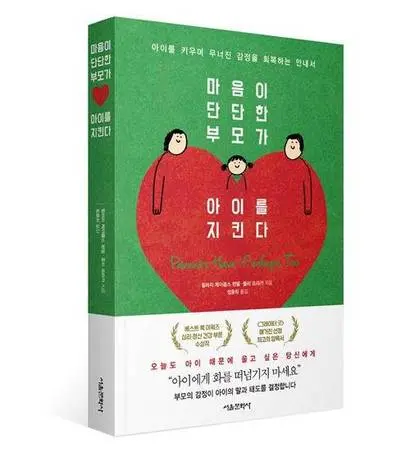
The new book, 'Resilient Parents Protect Their Children,' argues that parents need an emotional education. It states that everyone is bound to feel shaken and make mistakes while raising a child, and one can only become a better parent by recognizing the emotions they encounter during that process.
Most self-proclaimed parenting or education experts tell parents not to get angry at their children or to empathize with what they say. However, when a child cries, throws a tantrum, or rebels, intense emotions naturally surge within the parent as well. How can one maintain composure?
People mostly learn how to handle anger, sadness, or stress subconsciously by watching their own parents during childhood. If parents did not express their emotions in a healthy way, the child will likely do the same, and the cycle will pass down to the grandchildren. To break that vicious cycle, parents must first learn to recognize their own emotions.
For this purpose, the authors introduce the 'Change Triangle.' The Change Triangle is an emotional map that helps one understand internal feelings at a glance. By utilizing the Change Triangle, you can quickly identify your emotions and uncover the true feelings hidden beneath them. Only by facing emotions such as sadness, anger, and fear—which often lie beneath defense mechanisms and anxiety—as they are, can you restore the four core competencies: calm, connection, curiosity, and compassion. Furthermore, when parents have an open mind, they can approach their children from a state of emotional stability.

Author Hilary Jacobs Hendel is a psychotherapist and psychoanalyst, and Julie Fraga is a psychologist and parent educator. Based on their extensive counseling experience, they present specific situations and real-life cases that parents may encounter.
If you are a parent living with anxiety and self-reproach, fearing that your child might turn out poorly because of you, this book will help you learn how to examine and care for those emotions.