

[비즈한국] President Lee Jae-myung is set to visit Singapore and the Philippines. This tour is drawing attention to whether it will mark a full-scale effort to diversify the core mineral supply chain, which has been overwhelmingly dependent on China. In particular, cooperation with the Philippines, one of the world's major nickel production hubs, is emerging as the key to overcoming the 'nickel security' crisis faced by Korean companies.
President Lee Begins Full-Scale Economic and Security Diplomacy
On the 27th, the Blue House announced that President Lee would pay state visits to Singapore and the Philippines from March 1 to March 4. In Singapore from March 1 to 3, he is scheduled to hold a summit and a friendship luncheon with Prime Minister Lawrence Wong, as well as a meeting and a state banquet with President Tharman Shanmugaratnam.
He will also attend the 'AI Connect Summit,' co-hosted by the two nations. Building on the strategic partnership established during the 50th anniversary of diplomatic ties last year, South Korea and Singapore plan to expand cooperation into promising future sectors such as AI and nuclear power.
From March 3 to 4, he will pay a state visit to Manila, Philippines. March 3, the day the summit is held, is deeply meaningful as it marks the 77th anniversary of diplomatic relations between South Korea and the Philippines. During this visit, the two countries are expected to deepen existing cooperation in defense and infrastructure while achieving tangible results in core minerals and AI.
'Nickel Hub' Philippines Essential for South Korea's Supply Chain Diversification
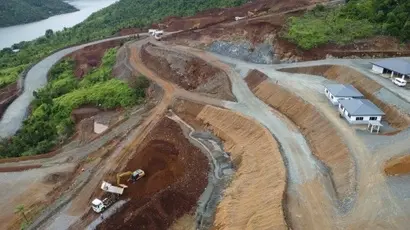
Alongside Indonesia, the Philippines plays a pivotal role in the global nickel supply chain. According to the U.S. Geological Survey (USGS) and other sources, the Philippines ranks 5th to 6th in the world for nickel reserves, and is the second largest in Asia after Indonesia. As of the end of 2024, confirmed nickel reserves for commercial mining reached 612.98 million DMT (Dry Metric Ton), an increase of approximately 28.6% from the previous year.
The global market environment is further increasing the value of the Philippines. With the rapid growth of the electric vehicle (EV) and energy storage system (ESS) markets, demand for high-purity battery-grade nickel is expected to grow by an annual average of more than 20% over the next decade. Nickel accounts for 60-80% of high-nickel battery composition and is often called the 'oil of the EV era.' As the U.S. and EU attempt to reduce their reliance on China through the IRA (Inflation Reduction Act) and CRMA (Critical Raw Materials Act), the Philippines' strategic position has become even more solidified.
Currently, South Korea's nickel security situation is not optimistic. Dependency on China for imports of nickel oxides and hydroxides is nearing 100%, and more than 68% of nickel sulfate is also sourced from China. This structure makes the domestic battery industry highly vulnerable to supply chain fragmentation. Therefore, strengthening cooperation on core minerals with the Philippines during President Lee's tour is a strategic response in terms of national security.
Impact of Philippine Raw Ore Export Restrictions on the Global Economy
The Philippine nickel industry is currently at a major turning point. In early 2025, the Philippine Senate passed a bill to phase out the export of metal ore. Although direct export bans were excluded from the final legislation (Republic Act No. 12253) to reflect industry concerns, strengthened fiscal regulations such as tiered royalties linked to mine profitability and excess profit taxes were introduced.
This demonstrates the Philippine government's commitment to shifting away from a structure centered on simple mining and raw ore exports toward creating value-added products through local smelting and refining. In particular, High-Pressure Acid Leaching (HPAL), a process that uses low-grade limonite ore to produce mixed hydroxide precipitate (MHP), is emerging as a core technology for industrial transformation. While raw ore still accounts for the absolute majority of nickel exports, the Philippine government is actively encouraging the expansion of HPAL-based smelting facilities through tax incentives.
Global companies are moving busily to preempt the structural changes in the Philippine nickel industry. China's Zhejiang Huayou Cobalt is cooperating with Philippine companies to build an HPAL smelting plant, while Japan's Sumitomo Metal Mining is expanding its stake in existing local smelters to secure raw materials.
In contrast, the entry of Korean companies into the local market remains in the early stages or has been suspended due to economic feasibility issues. The nickel joint venture in the Philippines pushed by the POSCO Group in 2023 was withdrawn due to economic and risk factors. Currently, only a few private companies, such as JS Co., are exploring mine development.
Experts point out that the discussion on restricting raw ore exports in the Philippines goes beyond mere regulatory review and could lead to structural changes in the global nickel supply chain.
Hyung Min-hyuk, from KOTRA's Manila Trade Center, analyzed in his report, 'Philippine Nickel Industry: Pressure for Transition from Raw Ore-Centered Structure and the Turning Point for Global Supply Chain Reorganization,' that “As pressure for global supply chain diversification increases, the policy and investment direction of the Philippines will be directly linked to changes in procurement strategies for major importing countries, including South Korea.” He added, “The speed at which HPAL and NPI (Nickel Pig Iron) projects are promoted will likely emerge as a key indicator for assessing the stability of the Northeast Asian battery supply chain.”