

[비즈한국] The safety over-the-counter (OTC) drug program, introduced in 2012 to alleviate the inconvenience of purchasing medicine during late-night hours or holidays, has entered its 13th year. The 'one-item-per-person' principle, established to balance consumer convenience with the prevention of misuse, is currently in a institutional blind spot that fails to filter out 'workarounds' in the field. Even the government acknowledged in a 2016 report that "it is realistically difficult for public health centers to constantly supervise sales at over 20,000 convenience stores," making the management void a predicted problem.
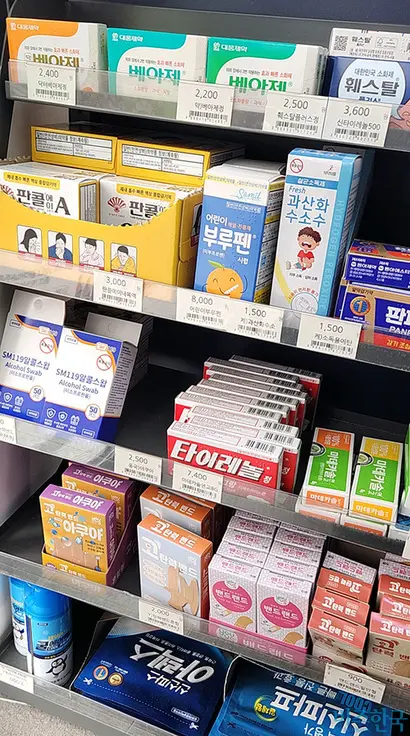
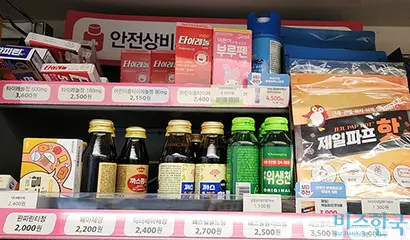
On the afternoon of the 24th, I visited 7 convenience stores around Seoul Station and 3 in the Songpa-gu area. Amidst the food and daily necessities filling the racks, OTC drugs stood out. A total of 13 types of medications, including fever reducers and cold medicine, were waiting for customers under 24-hour lights. To see how the concerns about regulatory impotence, which have been raised since before the system's introduction, are manifesting as 'workarounds' in the field, I personally attempted to purchase them to uncover the loopholes.
When I attempted to buy more than two of the same item, the staff naturally resorted to 'workarounds.' Splitting payments for one item at a time was standard practice, and methods previously mentioned during the COVID-19 pandemic—such as demanding cash to avoid detection or using different POS terminals—are still being repeated in the field as of 2026.
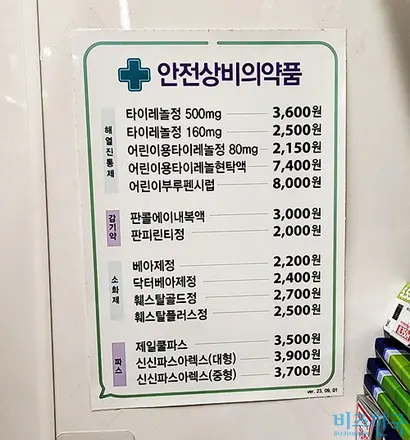
The holes in a system neglected for 13 years have become a perfect shield for store owners. Because there is no mechanism to share purchase information between stores, I was able to walk to the next shop and buy the same items without restriction. One convenience store official freely shared a story about 'splitting a payment 20 times for a specific medicine to sell to a customer heading overseas.' This is the moment when the 'one-item-per-person' limit, designed for public health, became powerless in the face of field 'workarounds.'
The people I met in the field were clearly aware of the regulations, but they had different interpretations of the underlying purpose. "It's because pharmacists oppose it," "The government asks too much of convenience stores," or "Isn't it just to prevent hoarding?"—it was difficult to find any understanding among store owners of the original intent of the one-item limit: the 'prevention of drug misuse.'
However, everyone was clearly aware of the fact that selling identical items is prohibited, thanks to the warning message that pops up on the POS terminal screen. It is highly unlikely they were structurally unaware, yet they were ignoring it. I attempted to interview a customer who purchased more than two of the same item, but they avoided answering and left. The regulatory purpose put forth by the government was completely ignored in practice.
An official from a public health center in Seoul said, "It is difficult to secure evidence to prove a violation," explaining the difficulty of enforcement. "Since we are an administrative agency, we must clearly verify a violation to take any action or disposal. Naturally, we handle things according to the rules, but enforcement is difficult unless evidence is submitted or we witness the act ourselves." Another public health center official in Seoul also said, "We cannot act like police, going out to buy two items on purpose or inducing illegal behavior."
To impose administrative sanctions, the store owner's 'intent' must be proven, but it is a clear violation of regulations for public servants without investigative authority to hide their identity and conduct inspections. This legal principle, intended to prevent unfair cases, has paradoxically become a safety device that protects field 'workarounds.' The time gap on receipts generated by splitting drug sales becomes strong evidence supporting a store owner's defense that they "didn't know it was the same person." Ultimately, unless field staff directly capture the violation, there are realistic limitations to imposing actual sanctions such as fines or sales suspension.
While practitioners hit limitations within the legal framework, fundamental questions are being raised about the effectiveness of the regulations. A medical professional working at a hospital in Seoul said, "The justification for the system exists, but its effectiveness is ambiguous. While it may have the positive function of blocking drug abuse or accidental suicide attempts to some extent, it is difficult for it to perform any substantial management beyond that."
To overcome these limitations, revisions to the law and specific guidelines from the Ministry of Health and Welfare must be supported. A Seoul city official stated that it is difficult for local governments to arbitrarily change current enforcement methods without clear guidelines from higher-level laws or the Ministry of Health and Welfare. For field staff to act more proactively without the risk of violating regulations, institutional decisions by the central government must come first.
More than 4,800 days have passed since the system was introduced. Regulations that have grown obsolete while disconnected from the field are failing to keep up with the changing era. We must plug the holes in this neglected system. Institutional discussions are needed to empower field staff with more authority to respond to situations.