

[비즈한국] A place is a space to which humans assign meaning. 'Sense of place' refers to the momentary emotions or inspirations felt at a location. 'Spirit of place' refers to the meaning or value system formed or shaped over a relatively long period. 'Placeness' is established when these feelings and spirits of a place are socially expanded and shared. It is based not only on personal value assignment but also on a consciousness formed collectively among members of society.
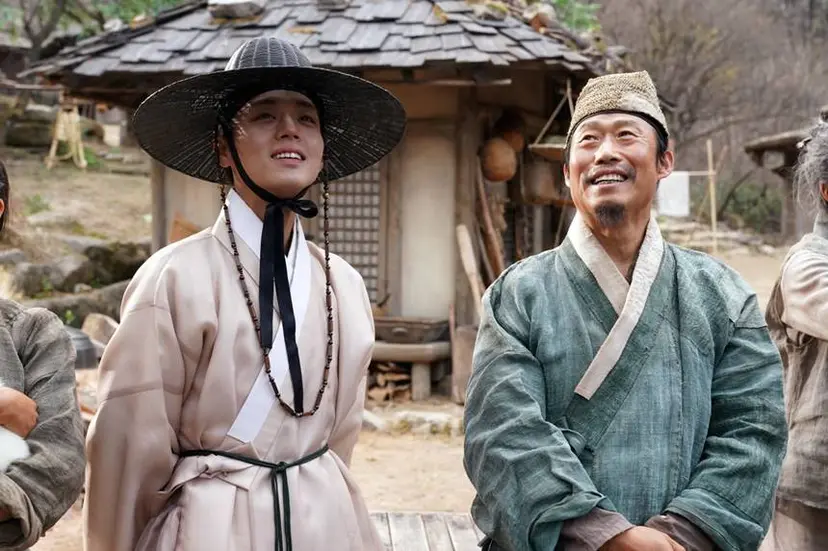
We generally think that humans understand spaces through experience and assign value to them, but meanings can also be reassigned to specific spaces through storytelling. Such storytelling is primarily recreated based on past facts intertwined with the space. One such method of storytelling is historical drama content. Recently, the movie 'The Man Who Lives with the King' has turned a specific space into an attractive one through storytelling.
Cheongnyeongpo in Yeongwol, Gangwon-do, has long been perceived as a tragic space. It was closer to a site for 'dark tourism,' exploring places of death and sorrow. King Munjong, son of Sejong who established the foundations of civil rule, passed away young, and Munjong's son, Danjong, was ousted from the throne at the age of 12 by the ambitions of his uncle, Grand Prince Suyang, and eventually put to death in exile. Considering it is the site of a heinous crime where an uncle brutally killed his nephew, visiting Cheongnyeongpo in Yeongwol has never been easy.
However, 'The Man Who Lives with the King' dispelled that collective perception. First, it moved away from defining Danjong as a passive and weak existence. Based on the historical fact that no one was allowed to claim Danjong's body, Director Jang Hang-jun inferred that Danjong must have actively plotted something. This signified resistance against Sejo. It was a reasonable imagination. As a result of this imagination, Cheongnyeongpo in Yeongwol gained an active and subjective sense of place rather than a passive, tragic one.
The figure of Eom Heung-do further emphasizes this sense of place. It shows it as a righteous space—a place where right and desirable actions took place. This holds persuasiveness as it is based on historical records. The 'Annals of King Jungjong' records, "A man named Eom Heung-do went, wept, prepared a coffin, and buried (Danjong). The local people also mourned him," and other records, including the 'Gukjo Inmulgo,' state that he said, "Even if I suffer misfortune for doing a good deed, I will gladly accept it." The 'Annals of King Hyeonjong' also noted, "People still speak of Eom Heung-do's integrity to this day."
In this context, the film emphasizes the fact that Danjong was reinstated after 241 years. It reaffirms the historical spirit that those who perform righteous deeds are eventually recognized and evaluated correctly.
The film unfolds as a comedy, yet transcends the anticipated tragedy to make one see hope. Historical facts permeate the light and cheerful first half of the film, leaving a profound resonance. It makes one think about the meaning of doing what one can, even when faced with realistic helplessness. This can be said to be the 'placeness' that encompasses the sense and spirit of place we feel toward Yeongwol now. Many people visiting Yeongwol and remembering Danjong and Eom Heung-do can be interpreted in this context.
The news that many people are visiting Yeongwol becomes a motivation for others to watch the movie. What could the movie be like that makes people actually visit Cheongnyeongpo in Yeongwol? Also, the parade of comments about a place becomes a sort of challenge. During the screening of the movie '12.12: The Day', there was a collective task called the 'heart rate challenge,' and during the movie 'Exhuma', many people joined the viewing procession out of curiosity about the 'something ominous' coming from the earth.
What the movie 'The Man Who Lives with the King' shows is placeness and the resulting sense of participatory visiting. It is even more desirable because it is a regional space with historical roots and records. It shows that content does not end with its own consumption but becomes an opportunity to coexist with the region through participation and experience. K-Culture is severely lacking in 'placeness.' This is true not only for local regions but even when expanded to Korea as a whole. We already saw in 'K-Culture-related phenomena' that storytelling that makes people come to Korea is more important than ever. In that sense, we should pay more attention to 'The Man Who Lives with the King'.
The author Kim Heon-sik has been walking through or navigating the forest of pop culture phenomena since his 20s, with the expectation that there is a way to make the world a better place through culture. In the 21st century, where AI and quantum computers are active, he is still walking the same path with the same belief.