

[비즈한국] Hyundai Motor Group plans to invest approximately 10 trillion won over the next five years in the Saemangeum region of Jeonbuk, aiming to cultivate it into a central hub for future new industries such as artificial intelligence, hydrogen energy, and robotics. Furthermore, with Gangwon State accelerating the expansion of its hydrogen ecosystem by significantly increasing charging infrastructure—building upon its nationwide leading hydrogen vehicle adoption rate—attention is turning to whether the sluggish hydrogen economy is approaching a new turning point.
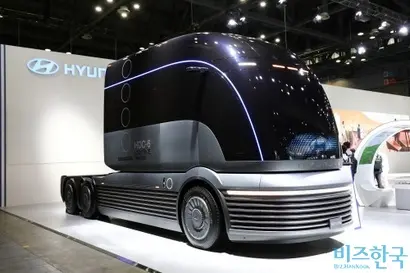
As a core part of Hyundai Motor Group's investment plan for Saemangeum, the hydrogen sector will introduce large-scale water electrolysis facilities that generate hydrogen by splitting water with electricity. The company is also reportedly considering building a solar power generation system; if realized, this will enable the production of 'green hydrogen,' which emits no carbon during the manufacturing process. In addition, plans include constructing a hydrogen transport center, charging stations, and a 1GW-class Polymer Electrolyte Membrane (PEM) water electrolysis plant. Consequently, the nearby Hyundai Motor Jeonju plant is expected to see its role strengthened as a production hub for commercial vehicles like hydrogen buses and trucks, integrated with the Saemangeum hydrogen hub.
Investment in the AI and robotics sectors will also proceed in parallel. Hyundai Motor Group intends to build a high-performance AI data center utilizing NVIDIA's Blackwell GPUs to establish a data processing foundation for the development of autonomous vehicles and robotics. Through the construction of a robot factory, the group plans to manufacture finished robot systems and also serve as a foundry facility that provides manufacturing services to small and medium-sized enterprises lacking technical expertise.
Support for the hydrogen economy from local governments is also taking concrete shape. Following the start of operations at the Taebaek hydrogen charging station on the 2nd, Gangwon State will open another station in Nohak-dong, Sokcho, in early April. The Taebaek station is expected to alleviate the inconvenience for residents in the southern Yeongdong region, who previously had to travel long distances for refueling due to a lack of charging facilities. Sokcho is also building an additional station to resolve regional gaps in charging availability and address the issue of station congestion caused by the increasing number of hydrogen vehicles. A total of 10 billion won was invested in the construction of these two stations.
Gangwon State has the highest hydrogen vehicle adoption rate relative to its population in the country, excluding Ulsan. This year, it plans to invest a total of 31.9 billion won, including both state and local funds, to provide 440 additional vehicles, including 390 hydrogen passenger cars and 50 hydrogen buses. These efforts by local governments to expand infrastructure could serve as a precedent for resolving the 'lack of charging stations' problem, a major pain point for hydrogen vehicle users, starting at the regional level.
Son Chang-hwan, head of the Gangwon State Global Headquarters, stated, "With the operation of the hydrogen charging stations in Taebaek and Nohak-dong, Sokcho, we will strengthen the regional balance of our charging infrastructure and build a stable hydrogen supply system," adding, "We will continue to expand the full-cycle infrastructure of production, storage, transportation, and charging to realize the Gangwon-style hydrogen economy."