

[비즈한국] After a long period of deliberation, Korea's sustainability disclosure standards are finally set to be unveiled. The Financial Services Commission (FSC) plans to hold the '4th Great Transition Meeting for Productive Finance' chaired by the FSC Chairman on the 25th, where it will announce the final version of the domestic sustainability disclosure standards and a draft roadmap. Subsequently, the Korea Sustainability Standards Board (KSSB) will hold its '1st KSSB Meeting of 2026' on the 26th to resolve the government submission draft of the KSSB disclosure standards, which contains detailed disclosure requirements. This proposal includes a provision to defer the core issue of 'Scope 3' emissions disclosure for three years.
The government's initial schedule for mandatory ESG disclosure, announced in January 2021, planned to phase in mandatory disclosures starting in 2025. However, this has been postponed several times due to concerns over corporate readiness and international consistency. In particular, the business community's concern that calculating emissions across the entire supply chain would impose an excessive burden, given the country's industrial structure which relies heavily on manufacturing, proved to be a decisive factor in the delays.
Disclosure of Supply Chain Greenhouse Gas Emissions Deferred by 3 Years
According to Bizhankook's reporting, the consensus reached on Scope 3 emissions disclosure—a key point of contention—is to include it as a mandatory requirement while providing a three-year grace period after the start of disclosures.
The core of sustainability disclosure is calculating greenhouse gas emissions, which quantitatively demonstrates a company's impact on the climate crisis. Emissions are divided into Scopes 1, 2, and 3 based on the measurement boundary. 'Scope 1' refers to direct greenhouse gas emissions from a company's product production process, while 'Scope 2' refers to indirect emissions from the generation of electricity or steam purchased by the company. 'Scope 3' encompasses all greenhouse gas emissions occurring throughout the entire supply chain, including raw material extraction, product transport, usage, and disposal stages, as well as those generated by suppliers, moving beyond the company's direct control.
The business community has argued for the exclusion or long-term deferral of Scope 3, citing the practical difficulties of collecting and calculating data across the entire supply chain given Korea's heavy manufacturing industry structure and vast network of suppliers. Conversely, investors and civil society have pointed out that since many high-emission processes are concentrated in the supply chain, excluding Scope 3 could render the disclosure process purely formalistic. There was also a perceived need to ensure consistency with international standards, as the International Sustainability Standards Board (ISSB) has made Scope 3 a mandatory disclosure item.
Ultimately, the final proposal includes Scope 3 to ensure the effectiveness of disclosures, but grants a three-year grace period considering the impact on small and medium-sized suppliers and the time required for corporate preparation. This is longer than the one-year grace period suggested by the ISSB and is intended to provide domestic companies with sufficient time to build data collection and calculation systems. However, some critics argue that given that major economies like the European Union (EU) are already implementing these disclosures, such a long grace period might delay the accumulation of experience for domestic companies.
Disclosure Timeline 2027–2029… Focus Also on Asset-Based Thresholds for Target Companies
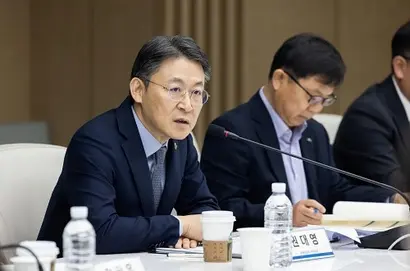
The initial disclosure period is expected to be decided between March 2027, when Japan introduces its system, and 2029, when the EU begins its disclosures for non-EU companies. In his opening remarks at the 6th ESG Finance Promotion Group meeting on February 4, 2026, FSC Vice Chairman Kwon Dae-young stated that the government is planning a roadmap to phase in mandatory disclosures starting with large corporations that have sufficient capacity, while referencing international examples from the EU and Japan. A likely approach is to start with stock exchange disclosures to minimize the burden of sanctions, then transition to statutory disclosures once the system is firmly established.
Jeon Hong-min, a professor at the Sungshin Women's University School of Business, said, "Since we must aim for a leading position in sustainability, I believe the timing of mandatory requirements is crucial," adding, "Given that the EU has already implemented the Carbon Border Adjustment Mechanism (CBAM) starting this year, accelerating the timeline as much as possible is appropriate for the successful settlement of sustainability disclosures."
The asset threshold for determining which companies are subject to sustainability disclosure is another important metric to be addressed in the final proposal and roadmap. Lee Jong-oh, Executive Director of the Korea Sustainability Investing Forum (KoSIF), noted, "I understand that companies with assets of 30 trillion won or more are likely to be the first to disclose," adding, "Under that standard, fewer than 50 companies would be subject to disclosure. To increase effectiveness, the scope of application must be expanded further."