

[비즈한국] Hankook & Company000240, the holding company of Hankook & Company Group, has begun streamlining its management following Chairman Cho Hyun-bum's resignation as a registered director. On February 20, the company held a board meeting to announce Cho's resignation and decided to shift from its existing co-CEO system to a single-CEO structure led by President Park Jong-ho for the time being.
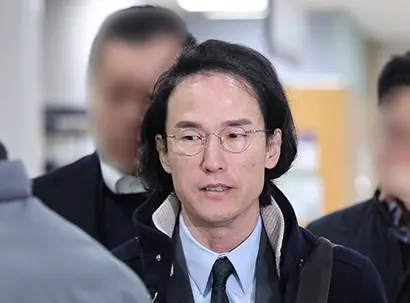
The stated reason is to "minimize the burden on the board of directors." The company explained, "Recent family-related issues have escalated into operational issues for the company, undermining the purity and independence of the board. This decision is intended to remove unnecessary burdens on the company and allow the board to focus on its fundamental functions." However, this resignation is difficult to view as a simple personnel reshuffle because it marks the beginning of owner-related risks spilling over into questions regarding the "legality of board operations."
The core issue is "director compensation." In January of this year, a court ruled to cancel resolutions from the Hankook & Company general shareholders' meeting, citing procedural flaws in the process of setting compensation limits for directors. The point of contention was the Commercial Code regulation stating that "a person with a special interest in a general meeting resolution cannot exercise voting rights"; the court judged that Chairman Cho acted illegally by participating in a motion that determined his own compensation limit. If this ruling is upheld, and if it leads to the reality of returning the compensation Cho received last year (reportedly around 4.7 billion KRW), the "compensation" issue could immediately expand into an issue of "accountability."
On top of this, a shareholder derivative suit has been filed. The Hankook & Company Shareholder Solidarity is reported to have filed a derivative suit demanding that Chairman Cho compensate the company for approximately 5 billion KRW, alleging he received substantial pay while under detention. Reports also suggest that Cho Hyun-sik, former advisor to Hankook & Company and the Chairman's brother—who previously vied for management control—is participating in the solidarity. When internal family conflict meets minority shareholder activism on the same agenda, the company finds itself in a structure where shareholders' meetings and board meetings become constant starting points for litigation.
At this point, the nature of the "owner risk" changes. While typical owner risk centers on criminal cases or reputation, the Hankook & Company situation has brought "governance procedural risk" to the forefront. The moment the leader—who is both an executive director and the largest shareholder—is classified as an interested party on a specific agenda, legal attack points emerge, from the exercise of voting rights to the validity of the resolution. Once a precedent is set, this structure is bound to repeat at future shareholders' meetings. In other words, a channel has opened to translate personal issues of the owner into "systemic flaws" of the company.
Chairman Cho's resignation as a registered director is interpreted as an attempt to narrow that channel. At the very least, conflicts of interest stemming from his status as a "director" will be reduced, and the board may attempt to operate normally under the justification of "board-centered management" rather than being viewed through the lens of the "leader's legal risk." The company's emphasis that this was a measure "to prevent the entire company from falling into a war of attrition due to procedural controversy and to allow management and the board to focus on decision-making and business execution" is in the same vein. However, stepping down as a registered director does not make the owner risk disappear. As long as Cho maintains his status as the largest shareholder, issues surrounding shareholder meetings and governance structure will remain a "permanent risk" for the company.
Ultimately, the key point to watch is whether "risk isolation," rather than a "full retreat," is actually possible. Even with a single-CEO system, governance issues are likely to remain a central agenda item for regular shareholders' meetings for some time, especially as the Shareholder Solidarity continues to signal its intent to recommend independent director candidates, submit shareholder proposals, and demand accountability.
This resignation shows that a "feedback loop" has been created where the owner's personal legal risks spill over into shareholder meeting procedures, compensation decision structures, and board independence controversies, which then feed back into shareholder activism and litigation. If the "minimizing board burden" mentioned by Hankook & Company is more than just rhetoric, the next step depends on how they redesign the board, compensation, and shareholder decision-making structures rather than just addressing an individual's status.