

[비즈한국] Tesla has been ordered to pay approximately 350 billion won in damages related to a 2019 fatal accident involving its autonomous driving system. The court upheld the jury's finding that there was a defect in Tesla's autonomous driving system. With controversy surrounding the safety of autonomous features, attention is now on whether this ruling will trigger a wave of lawsuits.
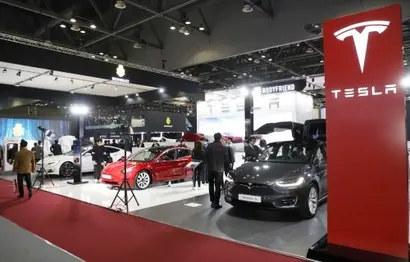
On February 20 (local time), the U.S. District Court for the Southern District of Florida ruled that Tesla was liable for a fatal accident caused by its 'Autopilot' autonomous driving system. The court denied Tesla's motions for a new trial and judgment as a matter of law, finalizing the order to pay $243 million (approximately 350 billion won) in damages. Of this, $200 million is for punitive damages, and $43 million is for compensatory damages to the bereaved family.
According to foreign media, the fatal accident occurred in Key Largo, Florida, in April 2019. A 2019 Tesla Model S, while operating in Autopilot mode, ignored a stop sign at an intersection and collided with a parked SUV while traveling at 100 km/h. As a result of the collision, a 22-year-old woman standing next to the SUV died. In court, the driver testified that they had lowered their head to pick up a dropped cell phone while Autopilot was engaged, believing the vehicle would detect any obstacles.
In August 2025, a Miami federal jury assigned 33% liability to Tesla and 67% to the driver, awarding $200 million in punitive damages against Tesla. While the jury acknowledged the driver's failure to maintain forward attention, they concluded that Tesla's system was defective, as the vehicle operating on Autopilot failed to provide warnings or engage braking mechanisms until the moment of the crash. Furthermore, they pointed out that Tesla holds responsibility for marketing that leads consumers to believe autonomous driving is safe.
Tesla contested the jury's verdict in August 2025, filing for a mistrial and a new trial. Arguing against the verdict, Tesla stated, "It sets safety back and jeopardizes the automotive industry's efforts to develop and implement life-saving technologies," adding that "no vehicle with 2019 technology could have prevented this accident.”
However, on February 20, the federal court rejected all of Tesla's claims, stating, "The evidence presented at trial sufficiently supports the jury's findings," and added that "Tesla failed to provide any argument that would warrant changing the existing decision," thereby finalizing the damage award.
The market predicts that this ruling could lead to a series of high-stakes lawsuits regarding autonomous driving. As Tesla previously rejected a $60 million (approx. 86.7 billion won) settlement offer before the jury reached a verdict, it is expected that the company will pursue an appeal.
Tesla is currently facing significant difficulties due to controversies surrounding Autopilot. Recently, the company stopped using the term 'Autopilot' in its vehicle marketing in California. This follows a decision by the California Department of Motor Vehicles to suspend Tesla's vehicle manufacturing and sales licenses for 30 days, citing concerns that Tesla's Autopilot marketing could be misleading to consumers.