

[비즈한국] Recently, there has been a surge in large-scale investments and mergers and acquisitions in the European AI market. Attention is focused on whether Europe, which has lagged behind in the AI sector, can fundamentally change the global AI competitive landscape through these moves.
While the generative AI market has been preoccupied with competition over large language models (LLMs) focused on text and images, the recent actions of European companies clearly demonstrate a strategic shift toward 'World Models' and 'Physical AI'—technologies that understand and control the laws of physics in the real world. This can be interpreted as an attempt to secure practical competitiveness in manufacturing and industrial settings where Europe has inherent strengths, independent of the hegemony competition in digital spaces dominated by the U.S. and China.

A World Model refers to technology where AI internally models the structures and changes of the real world, simultaneously handling three-dimensional spatial understanding, changes over time, cause-and-effect relationships, and practical constraints like safety or quality.
While existing LLMs focused on summarizing information or coding by learning vast amounts of text data from the internet, World Models are optimized for predicting and planning actions in physical environments by combining sensor data, process logs, and digital twins. Ultimately, the key to winning is shifting from the scale of the model itself to 'how stably one can operate and control vast and complex industrial sites.'
European AI ‘Big Deals’ Continue
Specific cases announced earlier this year demonstrate that Europe is continuously pouring capital into securing leadership in the AI domain. On January 26, London-based AI video generation platform Synthesia successfully raised $200 million in Series E funding, pushing its valuation to $4 billion.
Following this, on February 4, ElevenLabs, a leader in the voice AI sector, closed a $500 million Series D round, earning an overwhelming valuation of $11 billion.

‘Ineffable Intelligence,’ founded by David Silver, a key scientist from Google DeepMind, is also generating excitement with reports that it is seeking to raise $1 billion in capital with the goal of achieving superhuman intelligence.
Among these big deals, what stood out the most was the acquisition of cloud service startup Koyeb by France's Mistral AI on February 17, 2026. This deal marks Mistral's first M&A, signaling a determination to internalize infrastructure capabilities ranging from model development to deployment and operations, rather than simply expanding its size.
In the era of World Models, the winner is likely to be not the 'smartest model' but the 'AI provider that runs the widest range of industrial sites the most stably.' Therefore, Mistral AI's move is a symbolic case showing that Europe has understood the rules of the game and has entered the stage of building the infrastructure layer on its own.
As the AI battle shifts from 'models that write text well' to 'models that understand, predict, and control the real world'—namely World Models and Physical AI—there is growing support for the idea that Europe's manufacturing, industrial automation, and quality foundations will once again become competitive.
Advanced European Industrial Structure, Yet Questions Remain
The analysis that Europe can secure a relatively advantageous position in the field of World Models stems from the region's advanced industrial structure.
In an article published on January 20, the World Economic Forum (WEF) emphasized that European companies have already accumulated decades of data in asset-intensive industries such as automotive (Germany, France, Italy, Sweden), industrial machinery (Germany, Austria, Italy), logistics and manufacturing (Netherlands, Belgium, Czech Republic, Poland), and healthcare and pharmaceuticals (Nordic countries, Germany, Switzerland). In other words, Physical AI is an irreplaceable domain because the outcome depends on the 'volume and quality of field data.'
The WEF specifically notes the mid-sized companies (Hidden Champions) that lead the world in niche sectors in Europe. These companies hold patents and dominate the market, but have not yet fully internalized AI. In other words, they can become the most reliable early customers and data partners for Physical AI startups.
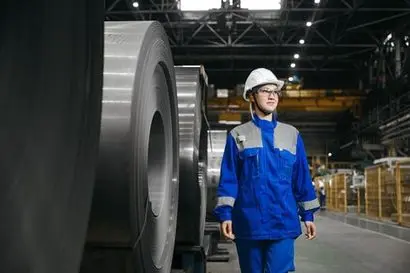
However, there are cold assessments as well. While data accumulated in traditional industries and strong research institutions are Europe's strengths, it still lacks 'commercialization scale.' In fact, most global Physical AI investments until the first half of 2025 were concentrated in the U.S. and China. Although Europe has many industrial robot powerhouses, it is true that it still lags behind the U.S. and China in platform businesses for the software layers applied to these machines.
Therefore, for the aforementioned big deals not to become hollow, the final puzzle piece is needed: cloud, infrastructure, and deployment capabilities. World Models and Physical AI require models to be deployed in the field to accumulate data; only when data accumulates does performance improve, and as performance improves, they expand into larger sites to grow.
Additionally, there is a need to consider the scale of investment capital. The combined capital expenditure (CAPEX) of U.S. big tech in 2026 exceeds $500 billion. Compared to that, Mistral AI's investment in its Swedish data center (about $1.4 billion) is still minimal. If 'scale' is one of the factors determining the winner in Physical AI, the question of how Europe will bridge the capital gap with the U.S. and China remains valid.
The series of movements happening in Europe in early 2026 are too early to be declared a total reversal against the U.S. or China. However, it can be seen as a process of redefining the playing field to an area where they can perform best. The logic is that practical competitiveness can only be completed when the field capabilities of Europe's strengths—manufacturing, logistics, and mobility—are combined with AI technology.
However, for these attempts to lead to valid results, three challenges must be overcome: rapid deployment speed to industrial sites, efficient accumulation and utilization of feedback data generated in the field, and control of exponentially increasing infrastructure operating costs.
This is why one wonders how the pragmatic path chosen by Europe, which has long had an image of being slow and thrifty, will reshape the global AI landscape in the future.
The author, Lee Eun-seo, majored in law in Korea and studied theater in Berlin. Based in Berlin, a city of art and a European startup hub, she leads 123factory, which connects the startup ecosystems of Korea and Germany while growing alongside the city.