

[비즈한국] The telecommunications industry is going beyond one-off advertising model contracts and focusing on an "incubating" strategy to directly foster creators optimized for social media (SNS) platform environments. This is interpreted as an attempt to redesign brand experiences and customer touchpoints in a situation where competition centered on pricing and network quality has reached its limits.

Telecom companies set out to build creator ecosystems directly
Recently, LG Uplus032640 filed for a trademark for its creator fostering program, "BOOSTUS," signaling a move to turn it into a brand asset. The trademark was broadly designated across fields ranging from advertising, marketing, and business management (Class 35) to telecommunications (Class 38) and education and entertainment (Class 41). This includes content production, education, and even commercialization, marking an expansion in scope compared to the graphic trademark registered two years ago.
Boostus is a program that selects small-to-medium-sized creators active on YouTube, Instagram, and TikTok to support them in creating content based on their experiences with the company's services. It features partial support for production costs, mentoring from professionals, educational programs, and opportunities to participate in offline events.
Participants create content such as parenting vlogs utilizing "Super Momcar," a home CCTV integrated with AIoT (Artificial Intelligence of Things), or videos covering the global mobile communications exhibition MWC, acting as a bridge between the brand and SNS users.
The program, which LG Uplus has been operating since 2023, recorded a cumulative 105 million views through its fourth season last year. In that season alone, 258 people participated, producing 792 pieces of content. Boostus has a strong nature as a marketing channel that collaborates when products are launched. An LG Uplus official explained, "It is intended to expand brand experience based on the creator community, and it is a strategic tool for upgrading community-based branding."
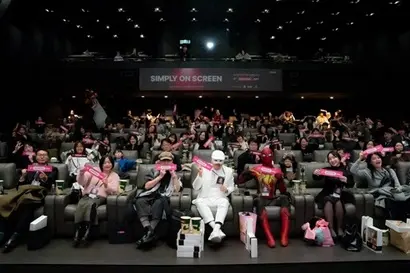
Other telecom companies are also making similar attempts. SK Telecom017670 began expanding its touchpoints with the younger generation last year with its first "T-fluencer" project. The purpose is to communicate more closely with customers through content that contains the creators' actual experiences. An SK Telecom official stated, "Our goal is to combine the company's expertise with the creativity of the younger generation through partnerships with young creators and to deliver brand messages more authentically."
In the case of KT030200, it launched the "Creator Factory Center (CFC)" in 2019 to support small business owners with infrastructure for advertising and content production, as well as educational programs. Although the timing and methods differ, telecom companies are essentially directly involved in the creator ecosystem.
A market with narrowed gaps in pricing and quality: Expanding touchpoints through content and AI
The background for telecom companies directly fostering creators lies in the changes in the industrial structure. The mobile communications market has limited room for product differentiation due to price regulations and the leveling up of technology, and the growth rate of subscribers has entered a period of stagnation. Accordingly, the three major telecom companies have expanded their business boundaries into the media sector, such as IPTV, OTT partnerships, and content investment. Analysts say that for telecom companies that already own IPTV businesses, content subsidiaries, and platforms, the strategy of securing a pool of producers is linked to their long-term media business competitiveness. The creator strategy has become a means of securing a pool of potential producers and naturally exposing customers to service experiences.
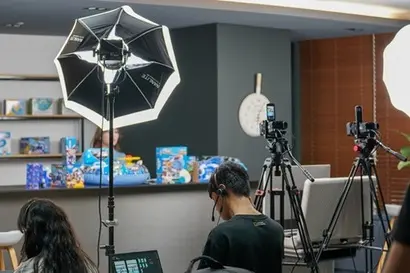
Changes in advertising execution methods also play a role. It is evaluated that an environment has been formed where content from small-to-medium-sized creators that captures actual usage experiences is more persuasive than one-way advertising centered on large-scale celebrity models. An industry official said, "Since telecommunication services have long-term contract structures, securing trust at the initial selection stage is important. Content that shows how services are used in daily life gets a faster response than explaining rate plans or technical specs."
It is also intertwined with the AI strategy that telecom companies are recently staking their lives on. LG Uplus included AI-related education in the Boostus program, and SK Telecom also put forward the spread of AI service experiences as one of the purposes of its project. Each company's AI services, such as SK Telecom's 'A.' (Adot) and LG Uplus's 'ixi', have also been used as key subjects.
On the field, there is a view that this segmentation strategy will determine the success or failure of marketing. An LG Uplus official emphasized, "Even within our customers in their 20s, we operate the 'U-Spirit' group targeting college students and the 'Boostus' part centered on influencers separately. It is a marketing direction that responds by finely dividing customer units."
An SK Telecom official said, "We aim for 'lifestyle reinterpretation' content centered on real-life benefits. We are focusing on fostering the self-sufficiency of creators through a growth-oriented support system that provides not just simple production support, but also mentoring and training from practitioners."