

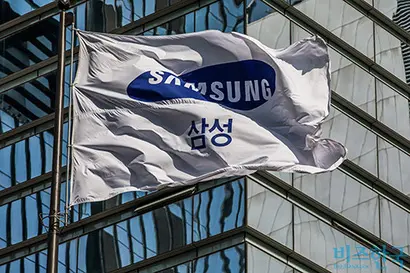
[비즈한국] Samsung Electronics005930 labor and management have failed to reach an agreement in their 2026 wage negotiations, leading to a declaration of breakdown. The joint negotiation team of Samsung Electronics labor unions officially announced the breakdown on February 19 and stated that they would submit a formal application for labor dispute mediation to the National Labor Relations Commission (NLRC) on February 20. They also announced a plan to move toward securing the right to collective action in stages if the mediation results fail to meet their expectations.
Negotiations Stalled Not Over Wages, but Over 'Incentive Formulas'
The essence of this breakdown differs from traditional wage negotiations focused on percentages of base salary. The core issue revolves around the calculation and distribution method of the Overall Performance Incentive (OPI)—or rather, the formula used to convert management indicators into incentives shared with employees. Regarding the OPI, the union demanded: (1) fixing the OPI occurrence period to 3 years; (2) ensuring compensation equal to or higher than global competitors for performance exceeding the 50% OPI threshold; and (3) setting the excess profit sharing ratio at '50% division performance + 50% business unit performance.' On the other hand, the company reportedly proposed announcing the operating profit for OPI at the beginning of the year, subdividing the 0-50% range into 10% increments to improve predictability, and offering additional compensation (paid entirely in company stock) linked to the performance of the DS (Semiconductor) division.
The implication of this situation is simple: the negotiation table has shifted from 'wage increases' to 'incentive formulas and profit-sharing rules.' As the OPI is funded by Economic Value Added (EVA) and can be paid up to 50% of an annual salary, even slight changes to the criteria lead to significant differences in what employees actually receive.
The Key Focus of the Mediation Phase: 'Transparency and Predictability' Rather Than 'Strikes'
Once the matter moves to the NLRC, the issues will become clearer. It appears that the company is demanding 'predictability,' while the union is demanding 'verifiable formulas and fair distribution.' The union is particularly concerned that the OPI is not merely a bonus, but an internal rule for returning performance gains to its members. Analysts suggest that the starting point of this institutional debate is the difference in how 'incentives' are viewed—whether they are closer to wages or profit sharing—depending on the company.
Therefore, it is difficult to conclude that a failure in mediation will immediately lead to production disruptions. However, as the union has signaled its intent to secure the right to collective action if mediation fails, the market is closely watching for the potential implementation of staged pressure tactics like partial strikes or work-to-rule campaigns. In a business like Samsung Electronics' DS (Semiconductor) division, where production line utilization rates and delivery reliability are key competitive advantages, any volatility in specific processes or support functions, even without a total shutdown, is bound to be perceived as a 'delay risk.'
It is also highly likely that comparison frames will be reinforced in a direction favored by the union. Competitors have previously adjusted incentives to be linked with operating profits (e.g., SK Hynix's agreement to link its profit-sharing criteria to operating profit), and such precedents are likely to be brought up again as grounds for the argument that “Samsung should also move to simpler and more transparent rules.”
Ultimately, the breakdown of Samsung Electronics' wage negotiations cannot be explained solely through the frame of 'labor-management conflict.' As OPI figures grow, the management indicators, formulas, and distribution rules used to generate those incentives effectively become a 'second wage system.' In the upcoming NLRC mediation phase, the real battle is likely to focus not on whether there will be a strike, but on who designs these rules and how they are disclosed and verified.