

[비즈한국] As the tariff threats from the Donald Trump administration, which champions 'America First' policies, become a reality, a reshuffling of the global trade order has begun. Discussions to build a mega trade alliance linking major economies in the Asia-Pacific region and Europe, spearheaded by Canada and the European Union (EU), are now in full swing.
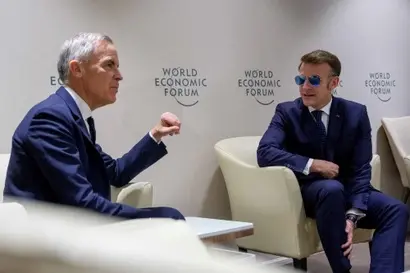
The US political media outlet 'Politico' reported that Canadian Prime Minister Mark Carney recently proposed 'structural cooperation' between the EU and the CPTPP (Comprehensive and Progressive Agreement for Trans-Pacific Partnership), emphasizing the necessity of supply chain integration. This is interpreted as a strategic choice to counter the US introduction of universal tariffs and the weakening of the World Trade Organization (WTO) system.
Prime Minister Carney's vision centers on merging the EU and the CPTPP to form a massive economic bloc covering approximately 1.5 billion people and 30% of the world's GDP. The intention is to create a robust trade zone centered on middle-power nations that does not yield to the trade pressures of any specific country. Last June, European Commission President Ursula von der Leyen also expressed a positive stance, stating that such cooperation could mark the beginning of a redesign for the WTO.
The most crucial part of these cooperation discussions is the utilization of the 'cumulation' rule of origin. While standard Free Trade Agreements (FTAs) grant tariff benefits only when the production ratio within member countries exceeds a certain level, the introduction of the cumulation rule allows parts produced in all member countries within both blocs to be recognized as originating from within the bloc.
If this regulation is applied, supply chain efficiency for industries with complex manufacturing processes will be maximized. Major economic organizations, such as the Association of German Chambers of Commerce and Industry (DIHK), expect that the simplification and standardization of rules of origin will enhance the manufacturing competitiveness of German and other European companies. This effectively signifies the birth of a massive supply chain connecting the Atlantic and the Pacific, and it is expected to contribute significantly to strengthening supply chain resilience.
In line with these changes in the trade environment, the South Korean government is also accelerating its push to join the CPTPP. The government has resumed discussions that had been stagnant since the decision to pursue membership in 2022. In particular, as a follow-up to the recent Korea-Japan summit, it is reported that working-level discussions with Japan, which holds the key to membership, began in February.
Joining the CPTPP could serve as an opportunity for South Korea to diversify its export markets and expand its trade territory with 12 major countries, including Japan, Canada, and Mexico. The effect of lowering trade barriers with countries like Mexico, with which South Korea has not signed a separate FTA, is particularly significant. Furthermore, if the cooperation between the EU and the CPTPP materializes in the future, South Korea will be able to solidify its position as a key partner in the global supply chain.
However, preventing damage to the domestic agricultural, livestock, and fisheries sectors due to high-level market opening remains a challenge. The CPTPP is so comprehensive that its commodity tariff elimination rate reaches 96%, and its Sanitary and Phytosanitary (SPS) standards are strict, leading to strong opposition from domestic farmers and fishermen. The government faces the task of persuading stakeholders affected by the opening of these markets and preparing compensation measures during the accession process.
Nevertheless, in a situation where US-led protectionism is deepening, joining a multilateral trade bloc is being highlighted as an essential strategy for economic survival. The assessment is that reducing export dependence on a specific country and joining a rules-based trade order is advantageous in terms of long-term economic security.
As the Canadian-initiated mega trade bloc vision takes shape, South Korea's trade strategy faces a major turning point. Whether or not South Korea can secure supply chain leadership by joining this massive economic alliance is expected to determine the future direction of the Korean economy.