

[비즈한국] Theaters saw a brief spark of vitality during the Lunar New Year holiday. The success of Korean films was particularly welcome. As seen in the film 'The King and the Living Man' crossing its break-even point and surpassing 3 million viewers, and the film 'Humint' quickly reaching 1 million, there were positive signs. However, it is uncertain whether this phenomenon will last. During this Lunar New Year, there were no major foreign film competitors, and the holiday period was relatively short, leading many to visit theaters. Yet, overall, the attendance did not reach 70% of pre-COVID-19 pandemic levels. In this situation, the holdback system is being discussed as an alternative to overcome the crisis in the film industry. The Ministry of Culture, Sports and Tourism is pushing for a mandatory holdback system for films that receive its support. Several bills have also been proposed in the National Assembly.
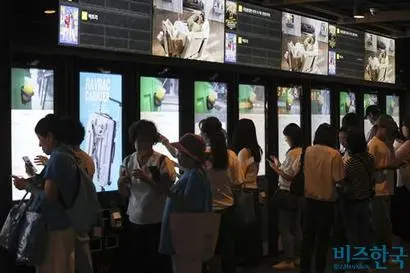
A 'Holdback' refers to delaying the time it takes for a film to move to other revenue channels or platforms. It essentially puts a grace period on how long after a theater run a movie can move to Over-the-Top (OTT) services or IPTV. The proposed bills specify a holdback period of six months. Originally, the distribution stages for a film followed the order of theaters, then IPTV (individual VOD sales, also known as TVOD), paid cable TV, general cable TV, and terrestrial TV. However, as OTT services expanded their influence during the COVID-19 pandemic, cases of films going directly from theaters to OTT became frequent. Moreover, this was exacerbated by the global influence of platforms like Netflix. As theater attendance dropped and theater revenue declined, direct-to-OTT releases surged, creating a vicious cycle where the profit structure deteriorated and production budgets were slashed.
So, what are the advantages of a holdback? If the theatrical run is extended, audiences can experience a wider variety of works. This is especially true for independent and art films. If the 3% film development fund included in ticket prices increases, it could support the production of diverse films. However, stakeholders in film production may have different thoughts. Creators would likely prefer their works to meet audiences in as many theaters as possible.
The same can be true for theaters to an extent. Multiplex theater revenue is split 50:50 between the theater and the film companies (investment/distribution and production companies). Implementing a holdback system would strengthen the reliance on theaters, as theater revenue accounts for 60-70%, while other ancillary revenue accounts for 30-40%. However, theaters are not necessarily thrilled about the holdback. It would force them to continue showing unpopular films. From a revenue standpoint, it would be better to allocate screens to popular films.
The production, investment, and distribution industry is largely opposed to it. They see it as a stumbling block that will make the film industry more difficult, as it infringes on the right to freely conduct business to increase sales and profits. Furthermore, the reality is that the environment for ancillary rights markets is changing rapidly. Some argue that because contracts and negotiations differ for every film, it is difficult to apply a uniform rule. Specifically, they argue that if a film is released online simultaneously with its theatrical release, a holdback is unnecessary. For low-to-mid-budget films that are already at a disadvantage in theatrical screenings, it is better to pursue revenue diversification.
There are also perspectives suggesting amendments. These include shortening the holdback period to 3-4 months or applying it differently based on the medium, genre, or scale of the film. France typically applies a 4-month holdback, sometimes 3 months, but applies longer periods to global video platforms—15 months for Netflix, 17 months for Amazon Prime, and 9 months for Disney. This approach centers on domestic theaters and online platforms.
What is important here is the perspective of the audience. It is necessary to focus on why audiences are not going to the theaters. A recent survey by the People’s Solidarity for Participatory Democracy showed that audiences are not visiting theaters because ticket prices are too high, and they are waiting for films to be released quickly on OTT or IPTV. A massive 95.6% of respondents perceived ticket prices as expensive. 67.7% of respondents said they reduced their visits due to high prices, and 66.9% said they have waited for an online release because of it. Considering that a theater ticket (based on weekend 2D general admission) costs 15,000 won, while OTT services range from 6,500 won (Watcha Basic) to 13,500 won (Netflix Standard), this is understandable. Unless it's a movie that absolutely must be seen in a theater, people look forward to OTT services where they can watch a variety of content at a lower price. Therefore, they find no reason to go to the theater.
In fact, one of the reasons theater tickets feel expensive is due to mobile carrier discounts. With these discounts, people can watch movies for 9,000 to 11,000 won. In several surveys, the public has indicated that an appropriate movie ticket price is 9,000 to 10,000 won. In reality, the ticket price that theaters provide to mobile carriers is 7,000 won. This is in stark contrast to the fact that general ticket prices have increased by 50% since the COVID-19 pandemic. Moreover, ticket discounts are exaggerated. A ticket that costs 14,000 won on weekdays and 15,000 won on weekends is provided to mobile carriers at 7,000 won. Audiences purchase these for 9,000-11,000 won, mistakenly thinking they are getting a 5,000-6,000 won deal. The structure essentially forces general audiences to shoulder the cost of the mobile carrier discounts.
General audiences reduce their visits due to high prices, and because only those with mobile carrier discounts visit, the film industry suffers from declining revenue, poorer investment, and consequently, the failure to produce the works that audiences actually want, trapping the industry in a vicious cycle. Therefore, lowering ticket prices is desirable for audience convenience and could increase the number of people visiting theaters. It would be beneficial to lower the weekday rate, which is around 14,000 won, to about 11,000-12,000 won.
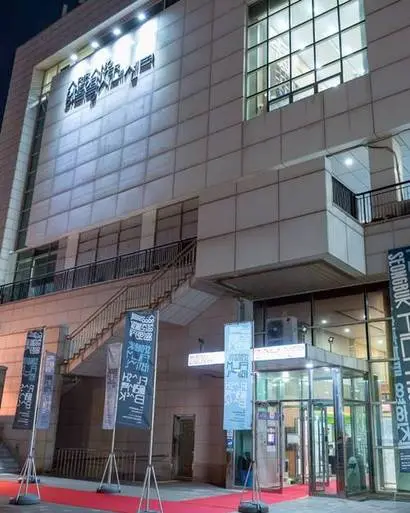
Structural reform of the screening system cannot be overlooked. The fact that the crisis of the three major multiplexes is being accepted as the crisis of Korean cinema is abnormal. In a structure where three multiplex companies control over 98% of theaters, there is a limit to how much ticket prices can be discounted. There is a need to expand public movie theaters. For example, the Arirang Cine Center in Seongbuk-gu, Seoul, charges only 7,000 won for general admission, 5,000 won for groups, and 4,000 won for morning screenings. The prices remain the same on weekends, and there are no advertisements.
This is possible because it is operated by the Seongbuk Cultural Foundation, which receives support from Seongbuk-gu. Not only independent art films but also general commercial films are available just like in multiplexes. Because people can enjoy new releases at a low price in a pleasant environment, residents of Seongbuk-gu actually visit this place more often than online video platforms.
In short, for the holdback system to succeed, ticket prices must be adjusted to realistic levels that the general public can accept, and more public movie theaters need to be established by local governments. These issues need to be brought to the public discourse, including during local elections.
The author, Kim Heon-sik, has been walking through and navigating the forest of pop culture phenomena since his 20s, driven by the expectation that there is a way to make the world a better place through culture. He continues on this path with the same belief in the 21st century, where artificial intelligence and quantum computers are active.