

[비즈한국] As the 2026 Lunar New Year holiday gets into full swing, traffic is expected to reach its peak for those heading to their hometowns on Sunday the 15th, between 12:00 PM and 1:00 PM. Along with traffic information for the holiday, the Ministry of Land, Infrastructure and Transport and the Seoul Metropolitan Government have established special holiday transportation measures and comprehensive emergency response systems to ensure the convenience and safety of citizens during their travels.
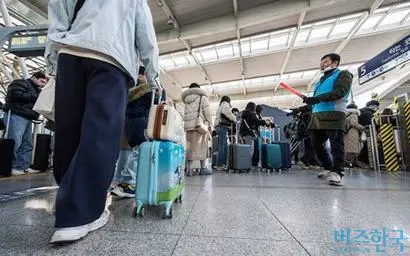
Homecoming traffic peaks on the 15th at 12:00 PM, return traffic on the 17th at 2:00 PM
According to the Ministry of Land, Infrastructure and Transport and the Korea Expressway Corporation, traffic congestion for those heading to their hometowns is expected to be most severe between 12:00 PM and 1:00 PM on Sunday the 15th. Departing from the Seoul Tollgate, it is expected to take 3 hours and 30 minutes to Daejeon, 7 hours to Busan, 5 hours and 30 minutes to Gwangju, and 4 hours and 30 minutes to Gangneung. For those returning, traffic is predicted to reach its peak on Tuesday the 17th, the day of the Lunar New Year, between 2:00 PM and 3:00 PM. It is expected to take 5 hours and 10 minutes from Daejeon to Seoul, 10 hours from Busan, 8 hours and 50 minutes from Gwangju, and 6 hours from Gangneung.
During the holiday period from the 15th to the 18th, highway tolls will be waived, and the operation of temporary shoulder lanes will be expanded to ease traffic in chronically congested sections.
Seoul subways and buses to operate until 2:00 AM on the 17th and 18th
On the 17th, the day of the Lunar New Year, and the 18th, when travelers return, the operating hours of major Seoul subway and city bus lines will be extended until 2:00 AM the following day. For city buses, the schedule will be adjusted, focusing on routes passing through major hubs such as train stations and terminals, to maximize the effectiveness of the extended late-night service. A Seoul city official explained, “We will strengthen real-time monitoring to ensure that citizens have no inconvenience using public transportation on their way home.”
64 emergency rooms to operate 24 hours a day
During the holiday period, 64 emergency medical institutions in Seoul will be in operation 24 hours a day. On average, about 2,500 clinics, hospitals, and pharmacies will be designated to remain open daily. Seoul City plans to maintain a hotline between 119 rescue services and medical institutions to allow for rapid response in case of emergencies, and to operate an airtight holiday emergency medical system. Information on operating hospitals and pharmacies can be checked in real-time through the Emergency Medical Portal (e-gen.or.kr) or the 120 Dasan Call Center.
Trash disposal 'prohibited' in Seoul on the 17th and 18th
In principle, residents of Seoul are prohibited from disposing of trash for two days, the 17th and 18th, during the Lunar New Year holiday. However, since trash collection schedules vary by autonomous district, it is recommended to check the district office website or the 'My Seoul' (Nae Son-an-e Seoul) app.
The government has fully activated a '24-hour pan-government safety management system' for a safe Lunar New Year holiday. From the 14th to the 18th, the Ministry of the Interior and Safety will implement 'Safety Management Measures for the Lunar New Year Holiday' in conjunction with central ministries and 17 city/provincial governments. The plan aims to minimize damage and inconvenience to the public during the holiday by focusing on: △safety inspections of major vulnerable areas, △24-hour situational management throughout the holiday, and △public promotion of safety information and guidelines.