

[비즈한국] The sharp spike in accommodation prices that occurred ahead of the Busan concert is now repeating in Seoul ahead of the Gwanghwamun concert in March. Following the controversy where some Busan accommodations charged up to 7 times their usual rates, prices for lodgings around Gwanghwamun in Seoul have also skyrocketed. The government plans to prepare comprehensive measures to enhance price transparency and strengthen consumer protection.
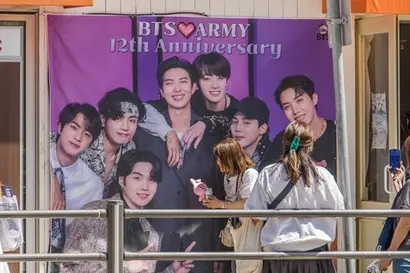
Gwanghwamun and Jongno hotels 'fully booked'... Accommodation prices jump nearly 6x the day before the concert
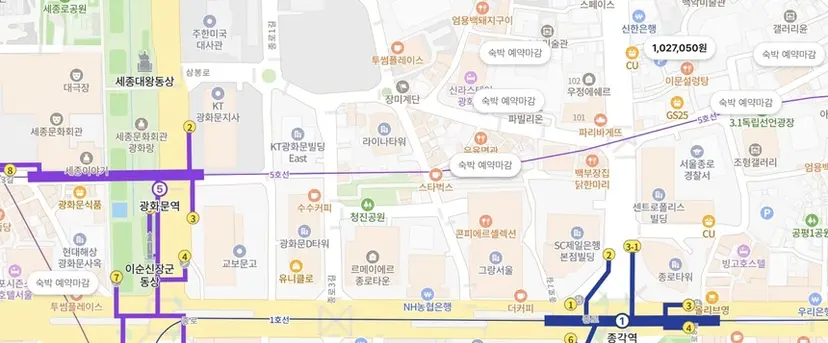
The Seoul downtown accommodation market is reacting rapidly to the news of BTS's Gwanghwamun concert. With the concert scheduled for March 21, major hotels near the venue—such as The Plaza, Four Seasons Hotel Seoul, The Westin Josun Seoul, and Shilla Stay Gwanghwamun—are already fully booked.
The wave of booking closures is spreading beyond Gwanghwamun to the Jongno, Insadong, and Ikseon-dong areas. On accommodation platform maps, many hotels near Jongno 3-ga Station and the Nakwon Music Mall in Insadong are marked as 'booking closed.' Remaining rooms are seeing prices surge to 1 million to 1.5 million won per night, significantly higher than usual rates.
With demand concentrated on the day before the concert, the upward trend in accommodation fees is becoming clear. In the case of Shilla Stay Gwanghwamun, rooms that typically cost around 300,000 won rose to 800,000 won on the 20th, the day before the concert, and Koreana Hotel also saw its room rates rise from the 100,000 won range to around 600,000 won. Even then, very few rooms remain.
According to the travel and accommodation platform 'Yeogi Eottae,' the number of accommodation bookings near Gwanghwamun in Seoul during this BTS comeback concert period has increased by approximately 450% compared to the same period last year.
Government strengthens response to soaring accommodation costs during concert 'specials'
It is the same in Busan. As the BTS Busan concert was scheduled for the second week of June, prices for nearby accommodations rose sharply. According to a field survey conducted by the Korea Fair Trade Commission (KFTC) and the Korea Consumer Agency on 135 accommodation businesses in the Busan area, average accommodation fees during the week of the concert were approximately 2.4 times higher than the weeks before and after.
By type of accommodation, motels saw the largest price increases. The average motel rate during the concert week was 325,801 won, which is about 3.3 times higher than the usual early 100,000 won range. Hotels also showed a high increase, averaging around 630,000 won, which is about 2.9 times higher than the weeks before and after, while pensions only saw a 1.2-fold increase.
Looking at individual businesses, the price gap was even wider. About 10% of the surveyed businesses, or 13 in total, raised their prices by more than 5 times the usual rate, with some cases even requesting prices up to 7.5 times higher.
Accommodations within a 5km radius of the Busan Asiad Main Stadium, where the concert is held, saw an average 3.5-fold increase, suggesting that a price premium based on accessibility was heavily reflected. Rates for accommodations near Busan Station rose by about 3.2 times, while businesses around Gupo Station and Sasang Intercity Bus Terminal saw increases of approximately 3.9 times and 3.4 times, respectively.
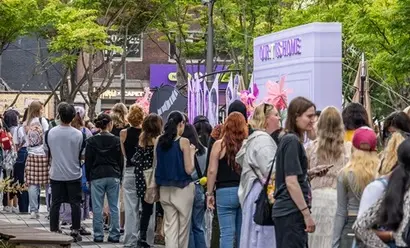
As the phenomenon of surging accommodation prices during concerts repeats, concerns are growing regarding the burden on consumers and the damage to market order. However, since raising prices itself is not illegal, the KFTC is limited to management and oversight, such as issuing recommendations to refrain from price hikes and conducting fact-finding checks.
Regarding this controversy over price distortion, President Lee Jae-myung also expressed strong concern. On January 16, ahead of the BTS Busan concert, the President shared a report on SNS (X, formerly Twitter) stating that some accommodation fees had risen nearly 10 times higher than usual, criticizing it as "malicious tyranny where price gouging destroys the order of the entire market and causes great harm to everyone."
The government and related agencies are also strengthening their response. The KFTC and the Korea Consumer Agency announced that whenever factors for rising accommodation costs occur, such as local festivals or large-scale concerts, they will provide related information to consumers through swift fact-finding surveys to support rational decision-making. They also plan to continue monitoring for consumer damage in the accommodation sector and pursue policy responses for damage prevention and relief.
Furthermore, in order to maintain market economic order and enhance national tourism competitiveness, the government is operating a 'Joint TF on Eradication of Price Gouging' with relevant ministries, including the accommodation industry. Following discussions with related ministries and communication with the industry, they plan to announce comprehensive measures within the first quarter that include plans to enhance price transparency and deter actions that damage consumer trust.