

[비즈한국] The fact that manufacturers of flour and sugar—the basic ingredients for everyday dining—systematically colluded on prices for years has sent shockwaves through the entire food industry. These oligopolistic firms have been maximizing profits by quickly raising prices when costs rise while delaying reductions when they fall. In response, the government has simultaneously imposed record-level fines and initiated criminal charges.
Amid this situation, the moves by Daejeon’s nationally renowned bakery, Sungsimdang, are gaining renewed attention. Last year, Sungsimdang began building its own supply chain by directly tilling land to plant and harvest wheat. Within an industrial structure plagued by collusion and oligopolies, Sungsimdang’s experiment of returning to the source of raw materials is being evaluated as an alternative model.
Government: "Forcing High Inflation Will Be Strictly Punished"
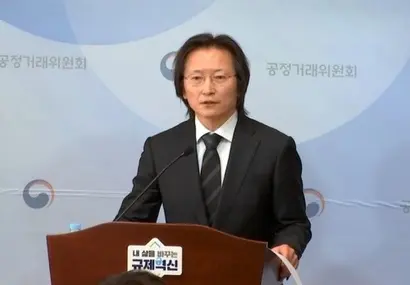
On the 12th, the Korea Fair Trade Commission (KFTC) decided to impose a total of 408.3 billion won in fines along with corrective orders on three domestic sugar manufacturers—CJ CheilJedang097950, Samyang Corp145990, and Daehan Sugar001790—for conspiring in advance on the scope and timing of sugar price hikes and cuts between February 2021 and April 2025. This is the second-largest total fine for a collusion case in history and the largest ever on a per-company average.
The investigation revealed that these companies maximized profits by quickly reflecting price hikes when raw sugar costs rose, while minimizing or delaying price cuts when costs fell. The KFTC identified this as a serious disruption of economic order.
Joo Byung-ki, Chairperson of the KFTC, emphasized, "They reaped unfair profits through collusion at a time when the public was suffering due to COVID-19 and economic downturns," adding, "This is a measure to send a warning to predatory price collusion and the behavior of oligopolistic businesses." To prevent future recurrence, the commission also issued an order to report any changes in pricing.
A similar structure was identified in the flour market. The Seoul Central District Prosecutors' Office’s Fair Trade Investigation Department uncovered evidence that six flour milling companies—Daehan Flour001130, Sajo DongA One008040, and Samyang Corp, among others—pre-coordinated whether or not to raise flour prices and by how much between January 2020 and October 2024. Prosecutors stated that the scale of this collusion reached 5.9913 trillion won, with flour prices rising by up to 42.4%.
Prosecutors have indicted 52 individuals, including executives and the corporate entities of the flour mills. Since flour and sugar are essential raw materials for the national diet, the judgment is that the burden of inflation caused by price collusion was passed entirely onto consumers. Consequently, President Lee Jae-myung ordered a strong response, stating, "Actions that force high inflation on the public by exploiting oligopolies must be corrected by mobilizing all national public power."
As the government's stance became clear, the industry belatedly began to rectify the situation. CJ CheilJedang issued an official apology, decided to withdraw from the Korea Sugar Manufacturers Association, and promised to ban employee contact with competitors and introduce a cost-linked pricing system. Companies including CJ CheilJedang, Samyang Corp, and Daehan Flour joined in efforts to stabilize prices by lowering consumer and commercial sugar and flour prices by an average of 4–6%.
Era of Collusion, Sungsimdang Answers with 'Direct Cultivation'
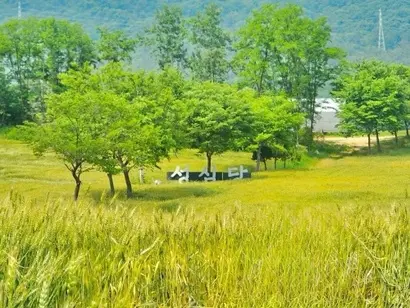
While the lack of transparency in the raw material market has come under fire, the moves of the Daejeon-based bakery brand Sungsimdang are gaining renewed attention.
In 2024, Sungsimdang signed a business agreement with the Daejeon Agricultural Technology Center and created a wheat field on its 23,140㎡ (approx. 7,000 pyeong) plot of land in Gyochon-dong, Yuseong-gu. The wheat produced here amounts to approximately 6–8 tons annually. Sungsimdang sowed domestic wheat varieties 'Hwanggeumal' and 'Baekgangmil,' harvesting them for the first time last June; these are known to have high protein content suitable for baking. The harvested wheat will be used in the future to develop bakery products specialized for the Daejeon region.
Sungsimdang’s wheat production is significant not merely as a cost-cutting measure, but as the establishment of its own supply chain linked to local agriculture. Sungsimdang also plans to boost local tourism through experience programs and festivals utilizing the wheat fields. Furthermore, the company aims to gradually expand its self-sufficiency of raw materials by considering double-cropping buckwheat and red beans.
Sungsimdang’s choice is symbolic in the face of the structural issue of price collusion. Rather than relying on an oligopolistic market, it chose to build its own supply chain and grow alongside the local community. As the government enforces strong regulations and the industry belatedly lowers prices, Sungsimdang’s 'direct cultivation' experiment is being evaluated as a case that goes beyond a simple brand story to show another possibility for the food industry.