

[비즈한국] Samsung Electronics005930 has planted its flag first in the next-generation High Bandwidth Memory (HBM4) market, which is considered the key to solving the 'bottleneck' in the Artificial Intelligence (AI) era. Samsung Electronics officially announced on the 12th that it has mass-produced and shipped the 6th-generation HBM, HBM4, to customers for the first time in the world. As Samsung takes a step forward in the race for 'who mass-produces HBM4 first,' which the industry has been watching closely, a full-scale battle for leadership with SK Hynix000660 has begun.
The HBM4 shipped this time is a product that applies Samsung's 10nm-class 6th generation (1c) DRAM process, achieving a processing speed of 11.7Gbps per second, far exceeding JEDEC standards. The bandwidth per single stack is approximately 3.3TB/s, an improvement of more than twice that of the previous generation. Initially, 24-36GB products will be supplied first, with plans to expand to a maximum of 48GB through 16-layer stacking in the future. These specifications directly target the high-speed data processing and high-capacity memory demands required in AI accelerator and GPU environments.
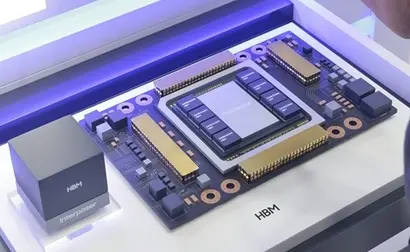
HBM4 is not just a simple memory upgrade. In Large Language Model (LLM) and super-large AI training environments, memory bandwidth dictates system performance more than computing power. Therefore, HBM4 is classified as an essential component for global customers such as Nvidia, who are preparing next-generation AI accelerator platforms. This is why securing the title of 'world's first mass production and shipment' is important for Samsung Electronics.
Market attention naturally shifts to the competitor, SK Hynix. Although SK Hynix has already been supplying HBM4 samples and preparing for mass production, Samsung has broken the tape first in terms of official shipment timing. According to some foreign media and industry information, it is suggested that SK Hynix may also begin supplying to customers within this month, but the symbolism of being the 'first mass production shipment' has been taken by Samsung Electronics.
However, the prevailing analysis is that the real battle begins now. While Samsung Electronics has secured a technological first-mover effect, SK Hynix puts forward its large-scale supply experience and customer-centric strategy accumulated in the existing HBM market as its strengths. Indeed, in the HBM3 and HBM3E generations, SK Hynix maintained its market share advantage by securing large volumes from major AI customers. Industry experts suggest that "while Samsung started ahead, the competition based on annual shipment volume and revenue will become much more intense."
There is also an interpretation that this HBM4 shipment marks a strategic turning point for Samsung Electronics' memory business. This is because Samsung Electronics, which has been evaluated as somewhat behind in the HBM market, is attempting to restore its technological leadership by acting as a 'first mover' in next-generation products. If the AI semiconductor ecosystem is reorganized around HBM4, the position of an initial supplier creates a structural advantage that allows deep involvement from the customer's design phase.
Ultimately, there are two key factors. One is the stability and yield of actual mass production, and the other is the volume of main contracts with global AI customers. Whether Samsung Electronics will use this shipment as a foothold for a counterattack, or whether SK Hynix will defend its existing lead, is likely to become visible starting in the second half of this year.
HBM4 is considered a core memory that determines the performance of AI data centers and next-generation accelerators. As Samsung Electronics formalizes its mass production and shipment, competition within the domestic dual-leader system of memory is expected to intensify further. Future developments will likely indicate which way the leadership in the HBM4 market will tilt based on actual supply volumes and customer adoption results.