

[비즈한국] Ten years have passed since the pilot project for smart factory dissemination began in 2014 to drive innovation in the domestic manufacturing industry. During this period, the pharmaceutical and biotechnology industry has aggressively invested in factory automation with the goals of strengthening GMP (Good Manufacturing Practice) standards and improving productivity. As of 2026, major domestic pharmaceutical companies are moving beyond hardware-centric automation and entering an intelligent phase that combines data with artificial intelligence (AI). However, critics point out that behind the flashy introduction of technology, challenges such as a lack of data connectivity and a shortage of specialized talent still remain.
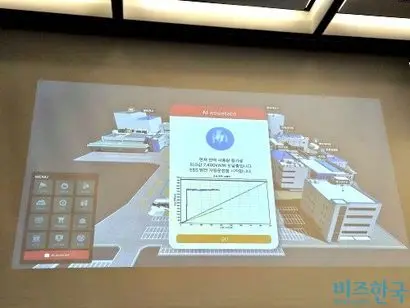
"Remote Control Without Entering the Cleanroom" Chong Kun Dang Introduces In-house LLM in March
By focusing on its Cheonan plant, Chong Kun Dang has implemented a stage where actual facility data can be verified and controlled in a virtual space through the introduction of a Metaverse Factory and AI system. While conventional smart factories were at the level of checking on-site data via monitors, Chong Kun Dang's Metaverse Factory has gone one step further by realizing bidirectional control, where operations in virtual space lead to actual movements of equipment.
Hwang Soo-jung, Director of Production Planning at Chong Kun Dang's Cheonan plant, shared the current status as a speaker at the 2026 Pharmaceutical and Medical Device Smart Factory Seminar, held in Yongsan, Seoul, on the 11th, hosted by KIMCo (Korea Innovative Medicines Consortium). Director Hwang explained, "It is a stage where operators can control equipment in a virtual space without having to physically enter cleanrooms, which are dangerous or sensitive to contamination." This is considered an achievement that maximizes process efficiency while dramatically reducing the risk of cross-contamination, the most critical issue in pharmaceutical processes.
Chong Kun Dang is also thoroughly vetting its processes beyond the mere introduction of technology. In the Annual Product Quality Review (APQR) process, the company has established a system where, when a person issues a command, the system extracts the data and verifies the consistency of this process through CSV (Computer System Validation). Director Hwang stated, "Data is not simply reflected on its own; we are securing the reliability of the data through verified procedures."
Currently, the company is also accelerating the assetization of knowledge, moving beyond hardware control. The plan is to ensure that even if experienced workers leave, their expertise remains within the system to become a sustainable competitive advantage. To this end, Chong Kun Dang plans to unveil an on-premises LLM (Large Language Model) by this coming March. The goal is to complete a smart work environment where AI assists in process data analysis and learning work manuals through the establishment of an LLM. Director Hwang noted, "Through tools like AI learning assistants, we are digitizing know-how scattered across the company," adding, "As time goes by, the concern shifts from the technology itself to 'how to integrate this technology into our way of working.'"
Daewoong Pharmaceutical069620 "Developing Core Systems In-House… We Must Hold Data Sovereignty"
Daewoong Pharmaceutical is making a name for itself through the internalization of smart factory construction technology. Built in 2016 and now in its 10th year of operation, Daewoong's Osong plant became the first in the domestic pharmaceutical industry to receive Level 4 (Full System Optimization) certification for a smart factory from the Smart Manufacturing Innovation Promotion Group under the Ministry of SMEs and Startups in 2022. This stage is just below the highest, Level 5 (AI Autonomous Control), where most processes are operated by IT-based automated equipment, allowing for pre-emptive response and optimization of decision-making through simulations.
The efficiency of the Osong plant built by Daewoong is proven by figures. According to Daewoong Pharmaceutical, the Process Cycle Time (PCT) has been reduced by 28.9% to 32 days compared to 45 days at the existing Hyangnam plant, and the manufacturing cost ratio is 31.7%, which is 5.3%p lower than the 37% at the Hyangnam plant.
The most distinctive feature is that the smart factory was built by developing key IT systems in-house rather than outsourcing them to external companies. Lee Seung-ha, Head of the Production Division at Daewoong Pharmaceutical, revealed, "We directly developed the Quality Management System (QMS), Laboratory Information Management System (LIMS), and Electronic Document Management System (EDMS)." This is a contrasting move compared to other pharmaceutical companies that purchase and use packaged software from global vendors.
Director Lee cited the flexibility of data utilization as the reason for in-house development. He emphasized, "When you introduce an external system, the data engineers belong to a third party, which limits our ability to improve the system or utilize data to suit our needs. Daewoong's philosophy is that we shouldn't just buy systems but grow them through internal capabilities, so our own data engineers manage and continuously develop the systems."
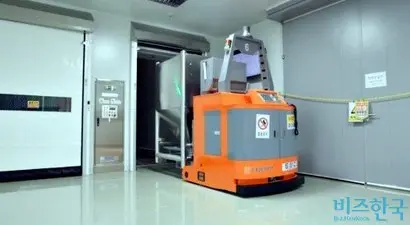
Must Beware of "Smart in Name Only"… "Facility and Quality Data Are Not Matched"
Despite these efforts by leading companies, there are piles of challenges to solve when looking at the industry as a whole. While 78 companies, including Ildong Pharmaceutical249420, Boryung003850, and Dongkook Pharmaceutical086450, are participating in the smart factory construction support project promoted by KIMCo, there is a significant technological gap between companies.
Experts point to data disconnection as the most urgent problem. Although robots and sensors have been installed in factories, the data generated from them is not organically connected to actual quality control.
Kim Ho-sung, Executive Director of the Global Sustainability Management Institute, who served as an evaluator for pharmaceutical smart factories, pointed out, "To perform analysis, you must match the facility setting values at the time of manufacturing with the quality data of the resulting product, but in most cases, that link is broken. You know which work order produced a product and what the defect rate was, but you don't know the temperature or setting values at the time of manufacturing. Since such correlations have never been matched, the structure is such that even if data accumulates, it cannot be analyzed."
As the importance of Data Integrity (DI)—which guarantees that data derived from the factory is complete, consistent, and accurate—continues to grow, the role of smart factories is also being emphasized as a means to block the possibility of human error or intentional tampering at the source. With the strengthening of data integrity regulations, there has been a sharp increase in cases where the Ministry of Food and Drug Safety (MFDS) has suspended manufacturing operations for approved pharmaceuticals and quasi-drugs due to data manipulation and integrity violations.
A KIMCo official explained, "The key reason for introducing smart factories in pharmaceutical manufacturing is not just for productivity, but to prevent data manipulation and prove reliability. It is essential (to adopt smart factories) to respond to the MFDS or overseas regulatory agencies."