

[비즈한국] The European Union (EU) has approved the first case allowing the replacement of additional countervailing duties imposed on Chinese electric vehicles with conditions such as a minimum import price and annual import volume limits. The first model to benefit is the 'Tavascan', an electric SUV coupe produced in China by Cupra, a Spanish brand under the Volkswagen Group. Reuters reported on the 10th that “the European Commission has decided to waive additional tariffs for the Tavascan in exchange for a commitment to a minimum price and annual quota model.”
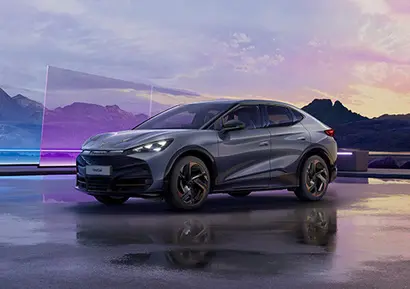
This decision goes beyond merely stating that “a specific model has avoided tariffs.” The EU has been countering Chinese battery electric vehicles (BEVs) by adding countervailing duties on top of the standard 10% passenger car tariff. Within this structure, a pathway has now been effectively opened to exempt individual models from additional countervailing duties, conditional on a 'price undertaking.' In an official announcement on February 10, 2026, the European Commission (Directorate-General for Trade and Economic Security) stated, “We have accepted the commitment offered by Volkswagen (Anhui) Automotive to sell above a minimum import price, and as long as those conditions are met, the Tavascan will be exempt from the BEV countervailing duties against China.”
Numbers explain why the Tavascan's 'first approval' is drawing attention. Reuters reported on February 10, 2026, that the Tavascan had previously been “subject to an additional 20.7% tariff on top of the base 10% tariff.” The key point is that it is this additional countervailing duty being waived, which is separate from the base 10% tariff.
The 'price of exemption' disclosed by the EU is heavier than expected. The Commission explained that this commitment includes not only a minimum import price and import volume restrictions but also extends to pledges regarding investments in EV projects within the EU and their associated implementation stages (milestones). The official document also includes a warning that if the commitments are not met, the Commission may withdraw the price undertaking and reimpose the waived countervailing duties. However, the specific figures for the minimum price and volume limits remain 'confidential.'
The message delivered by the EU here is clear. Rather than relying solely on 'tax rates' to push back, the EU intends to control the influx of Chinese EVs by redesigning the terms of entry through price, volume, and investment commitments. This framework was already institutionally in place. On January 12, 2026, the Commission released a guidance document outlining what Chinese exporters should include when submitting price undertakings (minimum import prices, sales channels, prevention of cross-compensation, investments within the EU, etc.). In other words, rather than being an 'impromptu exception,' the Tavascan represents the first case to successfully pass through a track established by the EU.
Looking at the background, it is clear why this 'detour' was opened now. The EU imposed provisional countervailing duties on Chinese BEVs on July 4, 2024, and transitioned to a definitive countervailing duty regime on October 30, 2024, after completing its investigation. These measures are structured to be added on top of the base 10% tariff.
As news of the first approval spread, Chinese companies began to move. Reuters reported on February 11, 2026, that “major Chinese EV manufacturers are reviewing similar exemption negotiations after seeing the Tavascan case,” and that the Chinese side (China Chamber of Commerce to the EU) has demanded “equal treatment” and “predictable working-level consultations.” However, the report also noted that the approval process is conducted on a per-model basis, and the complexity of the data and conditions required could act as a burden for Chinese companies.
Signs even within Volkswagen suggest that this agreement is not considered a 'permanent solution.' Citing German media, Reuters reported on February 11, 2026, that Volkswagen is considering moving the production of the Tavascan's successor model from China to Europe. Even with a path to bypass tariffs, the fact that companies have a growing incentive to shift to local production as the investment and supply chain conditions required by the EU strengthen means this 'first approval' could actually accelerate the reorganization of production sites.
In summary, what the EU has changed is not that it has 'abolished tariffs,' but that it has 'opened a conditional pathway that can replace tariffs.' Competition for Chinese EVs will no longer end with 'price discounts,' but is increasingly likely to expand into 'market access competition' that requires meeting minimum price, volume, investment, and localization conditions. The Tavascan case is the first signal that this change has begun to take effect.