

[비즈한국] In the electric vehicle (EV) market, the criteria for a 'worthwhile car' are not merely defined by range or options lists. Even with the same 300km range or the same heated seats, the numbers are rearranged the moment you hit the final checkout button. Consumers calculate everything in a single line: actual purchase price (subsidies), vehicle segment (body size and wheelbase), product value (basic options), and even 'brand premium vs. negative premium' (residual value and after-sales trust).
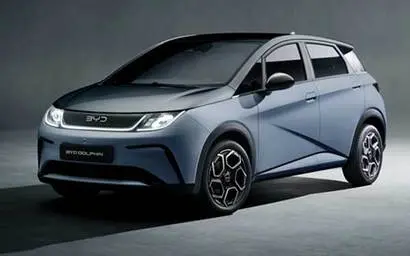
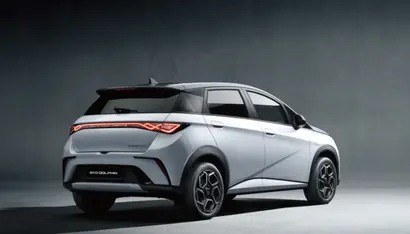
The BYD 'Dolphin' disrupts that calculator. Its starting point seems radical. The price tag of 24.5 million KRW for the base model and 29.2 million KRW for the higher 'Dolphin Active' trim (based on tax benefits) catches the eye first.
Naturally, it invites comparison with the Hyundai005380 Casper Electric. However, the Dolphin only shares a price bracket with the Casper; the moment you look at the body size and powertrain specifications, the focus shifts toward the Kia000270 EV3. While it may look like you are buying an EV3-class vehicle for the price of a Casper, the 'Chinese car' risk consumes that price difference.
Price Tag of a Casper, Body of an EV3… The 'Middle Ground' Created by the Dolphin
Let's look at the segment first. The BYD Dolphin (based on the domestic catalog) has a length of 4,290mm and a wheelbase of 2,700mm. The Casper Electric follows a city-car package with a length of 3,825mm and a wheelbase of 2,580mm. The EV3 has a length of 4,300mm (4,310mm for GT-Line) and a wheelbase of 2,680mm.
Looking only at length, the Dolphin (4,290mm) is 465mm longer than the Casper (3,825mm) and is practically on the same line as the EV3 (4,300mm). The wheelbase of the Dolphin (2,700mm) also overlaps with the EV3 (2,680mm).
In short, the Dolphin is less of a "light EV alternative" and more of a car that has crushed the compact EV (hatchback/crossover) segment with its pricing.
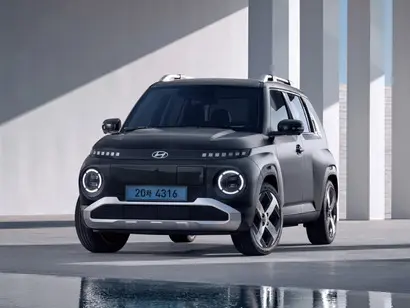
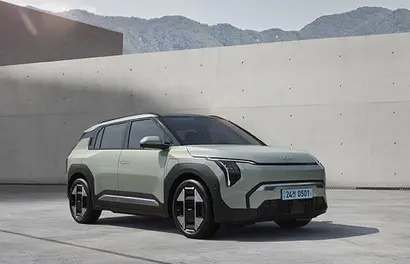
The range is a similar story. The Casper Electric is listed at 278km (42kWh) and 315km (49kWh) depending on the trim. The Dolphin offers 307km (49.92kWh) for the base model and 354km (60.48kWh) for the Active. The EV3 Standard gets 350km (17-inch wheels), while the Long Range significantly widens the gap to 501km (17-inch wheels).
This is where it gets interesting. The Dolphin Active (354km) exceeds the top range of the Casper (315km) and overlaps with the EV3 Standard (350km). While it might be compared as a 'Casper rival' on the surface, the actual numbers encroach upon the territory of the EV3.
The Dolphin’s character becomes clearest in its powertrain. The Casper Electric (long-range version) has a maximum output of 84.5kW and a peak torque of 147Nm. The Dolphin starts at 70kW for the base model, jumping to 150kW and 310Nm for the Active. The EV3 Standard and Long Range 2WD both feature 150kW and 283Nm.
To summarize: The Dolphin Active is priced near the Casper, but its output is in the 150kW class, the same as the EV3. This shifts the 'perceived vehicle class'—such as city driving feel, overtaking acceleration, and high-speed stability—into a different league from the Casper. This is also why BYD emphasizes the 0-100km/h time of 7.0 seconds for the Active trim in its press releases.
"All This As Standard?" Is the Dolphin's Weapon
The Dolphin’s product value point is its 'simplified options' strategy. According to the catalog, the Dolphin includes T-Map navigation, wireless phone projection (CarPlay/Android Auto), digital keys (NFC card), external V2L, a 3D surround-view monitor, and an ADAS package including ACC/ICC (lane-centering assist) as standard or at a high level across its trims.
Conversely, while the Casper Electric allows for convenience and safety features like a blind-spot view monitor or surround-view monitor in higher trims (configurations vary by trim/package), its core approach is focused on being 'small, light, and convenient in the city.'
The EV3 goes in a different direction. Its catalog and price list lead with a 'sub-compact EV package' as the standard, including Highway Driving Assist 2 (with lane change assist), 9 airbags (including front center), large displays/connectivity, and external V2L.
In other words, in terms of options, the Dolphin is a 'mass-market import that boosts perceived value by packing in standard features,' while the EV3 is one step ahead in terms of platform and package. The Casper sits below them, focusing on urban efficiency.
What shakes the Dolphin's logic is the subsidy. 'If the retail price is low, the purchase price is low' does not always hold true for EVs. It has been mentioned that the Dolphin will receive national subsidies of 1.09 million KRW (base) and 1.32 million KRW (Active), with combined (national + local) subsidies in Seoul estimated at 1.41 million KRW (base) and 1.71 million KRW (Active). At this rate, the calculated actual purchase price in Seoul would be 23.09 million KRW (base) and 27.49 million KRW (Active).
The Casper Electric is priced at 27.4 million KRW (Premium), 29.9 million KRW (Inspiration), and 31.9 million KRW (Cross). With a combined subsidy in Seoul of approximately 6.37 million KRW, the actual purchase price drops further. For the EV3, the price (after tax benefits) starts at 39.95 million KRW for the Standard and 44.15 million KRW for the Long Range (Air). With national subsidies of 4.69 million KRW (Standard) and 5.55 million KRW (Long Range), and including local subsidies, scenarios exist where the actual purchase price in Seoul drops to the mid-to-high 30-million KRW range.
In Gyeonggi-do, where variances by city/county are large, the combined subsidy for the Dolphin in Seongnam is around 2.05 million KRW (base) and 2.49 million KRW (Active). In this case, the actual purchase price becomes 22.45 million KRW (base) and 26.71 million KRW (Active).
'Chinese Car' Negative Premium: Bought Cheap, Sold Cheaper?
The ultimate hurdle the Dolphin must overcome is its 'Chinese' brand identity. For imported cars, residual value (used car price), A/S accessibility, and parts supply are as important as the price tag. BYD Korea offers a 6-year/150,000km warranty, with 8 years/160,000km for the high-voltage battery. There are also reports that they plan to expand the service network from the current 17 locations to 26 within the year.
However, 'long warranty' is different from 'accumulated repair experience that builds trust.' Initially, even with more service centers, consumers might feel the difference in real-world aspects like parts lead time, accident repair processes, and communication regarding recalls/free repairs. For EVs, the speed of response during battery or powertrain issues determines brand trust. This is why a 'Chinese car negative premium' is attached to the price.
In summary, the Dolphin is not a 'Casper rival' but a car that steps into the EV3 segment threshold at a Casper-like price. However, the final keys to crossing that threshold are subsidies and residual value. What does the Dolphin appeal to in potential customers?
First, those who want EV3-level spaciousness (2,700mm wheelbase) and 150kW-class performance, but find the EV3 budget-straining. Second, those who prefer the 'simplicity of basic configurations'—where nav, V2L, surround-view, and ADAS are all included at once—over choosing individual options. Third, cases where, after checking local subsidies and delivery conditions, the actual purchase price significantly overlaps with (or falls below) the higher Casper trims, and the consumer judges that the difference in vehicle class is worth the money.
Conversely, those who should hesitate are also clear.
First, if 'lowest actual purchase price' is the top priority for buying an EV, the Dolphin might not end up as cheap as expected due to the subsidy structure. Second, if you intend to sell the car in 3-5 years, you might want to avoid the residual value risk, making domestic alternatives (Casper, EV3) a more comfortable choice. Third, if a consumer values 'proven track records' as the standard for trust, it is reasonable to wait and see if BYD's announced plans for warranty and network expansion are proven through actual operational quality.
Ultimately, the Dolphin should be read not as 'cost-effectiveness' but as 'risk pricing.' The price tag is aggressive, but part of that margin is clawed back by subsidies and residual value. Nevertheless, options like the Dolphin Active, which places 150kW-class performance and an EV3-class body in the 20 million KRW range, are rare. To consumers torn between "a Casper or an EV3," the Dolphin offers an alternative. However, that option comes with a thick disclaimer: "Chinese car."