

[비즈한국] The 11th season of the Korea Art Support Project, which discovers and promotes Korean artists, has concluded. A total of 12 artists were introduced this season, including Kang Myeong-suk, Kim Bo-min, Kim Yang-mi, Kim In, Kim Ho-sung, Kim Ho-jun, Noh Yi-seo, Park Soon-yeon, Park Jun-hee, Seong Ju-young, Yang Ji-hoon, Wang Yeol, Lee Mi-hee, Lee Hye-won, Je Hyeon-mo, Jo Eun-ju, Chae Jeong-wan, Paul Kim, Han Ah-reum, Heo Chan, and Hong Dan-bi. These artists will showcase their work at the 2026 Korea Art Support Project Exhibition, held on the first floor of the Insa Art Center in Jongno-gu, Seoul, from March 11 to 16. Ahead of the exhibition, we revisit and introduce their artistic worlds through this print feature.
The Power of K-Art
The 'K-Pop Demon Hunters' craze that swept the world last year continues to heat up at the start of this year. With 'K-Pop Demon Hunters' winning two awards (Best Animated Feature Film and Best Original Song) at the 2026 Golden Globe Awards in the U.S. on the 11th, the fervor for Korean culture remains strong. The film reveals traditional Korean cultural imagery and philosophy, heightening interest in unique Korean aesthetics. Moving forward, the most intrinsic Korean sentiments and beauty are expected to show competitiveness in the global market. Artists representing this trend include Wang Yeol, Je Hyeon-mo, and Noh Yi-seo.
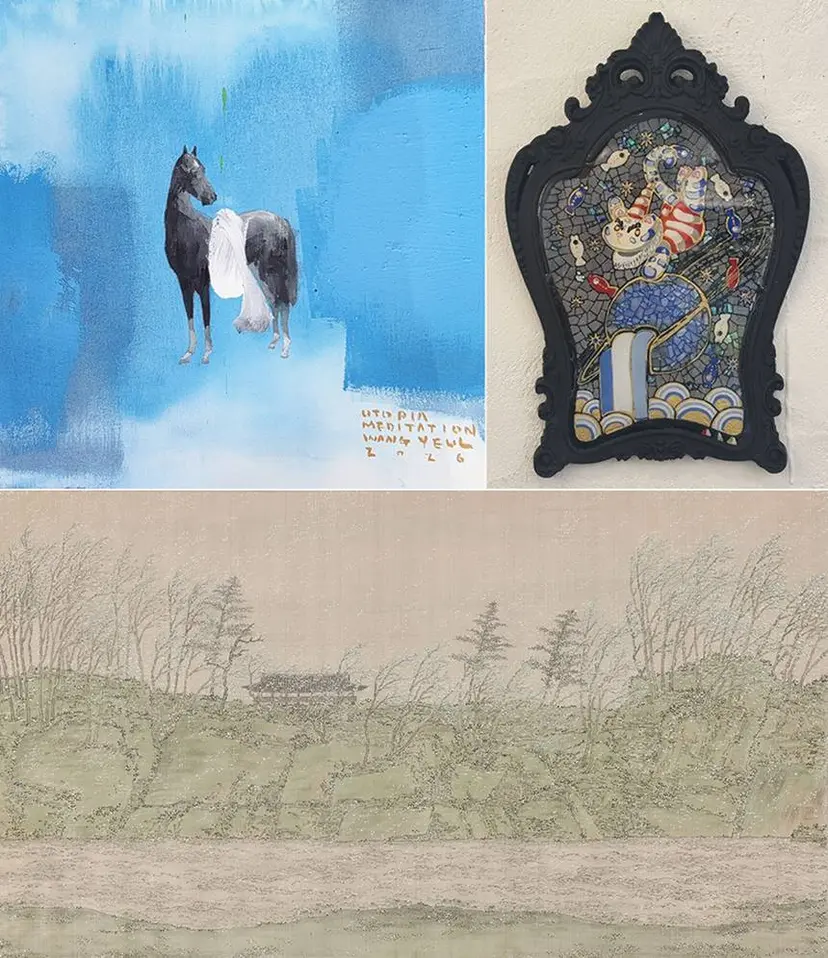
Wang Yeol is recognized for works that combine traditional oriental painting methods with symbolic metaphors to create ideal worlds and imaginative spaces within landscapes. Je Hyeon-mo is also exploring new paths in landscape painting based on traditional techniques and materials. He pursues a style of 'our painting' by combining the strengths of conceptual landscape painting and realistic landscape painting. Noh Yi-seo, who utilizes the symbolism and composition of late Joseon Dynasty folk paintings, creates works filled with messages of hope.
Into Fantasy and Imagination
A distinct trend in recent art is the work that expands imaginative space through fantastic imagery and subjects. These are attracting attention because they draw on the imagination, the most fundamental reason for the existence of art. Artists in this trend include Jo Eun-ju, Kim Ho-jun, Kim Yang-mi, Yang Ji-hoon, and Han Ah-reum.
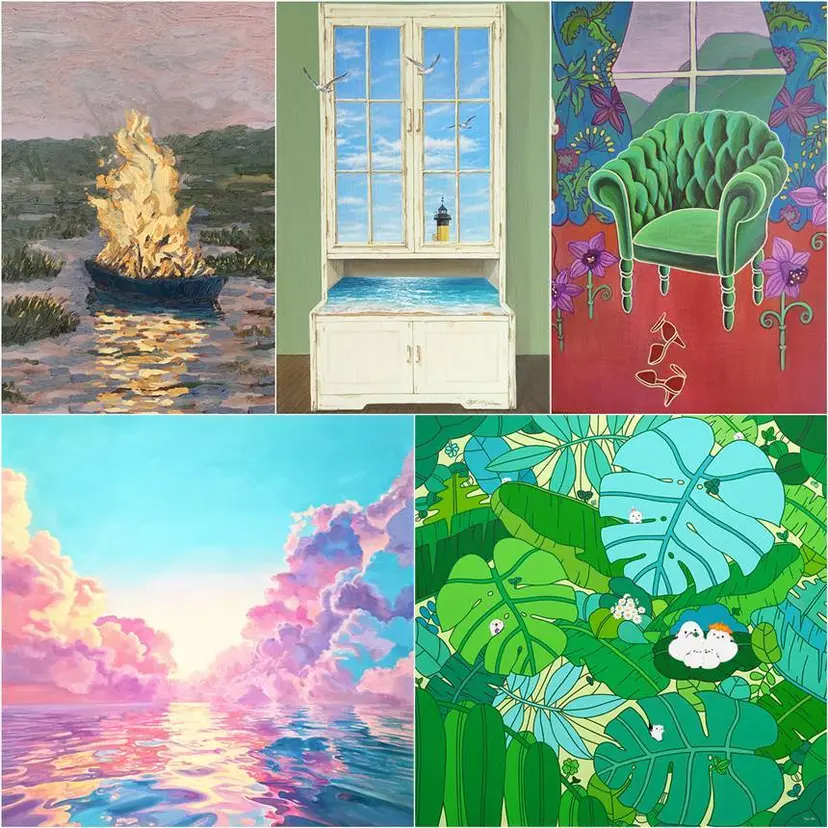
Jo Eun-ju presents works that offer a refreshing stimulus to reality through whimsical seascapes where melancholy and warmth coexist. Kim Ho-jun, who is gaining attention for paintings that imbue unique emotions felt in ordinary scenes of reality he has experienced, also displays fantastic themes. Kim Yang-mi, who presents the conflicting worlds of reality and dreams through the fantasy created by complementary color arrangements, and Yang Ji-hoon, who evokes energy from everyday life through surreal landscapes combining clouds and doors, are also notable artists in this trend. Han Ah-reum, who creates fantastic landscapes by combining design methods with painting techniques, is an artist who has secured marketability by capturing affection for trivial existence.
A New Language of Painting
Formative art is an eternal assignment in painting. Regardless of time or place, many artists have striven to create their own form, and it remains a core proposition that artists must address in their paintings both now and in the future.
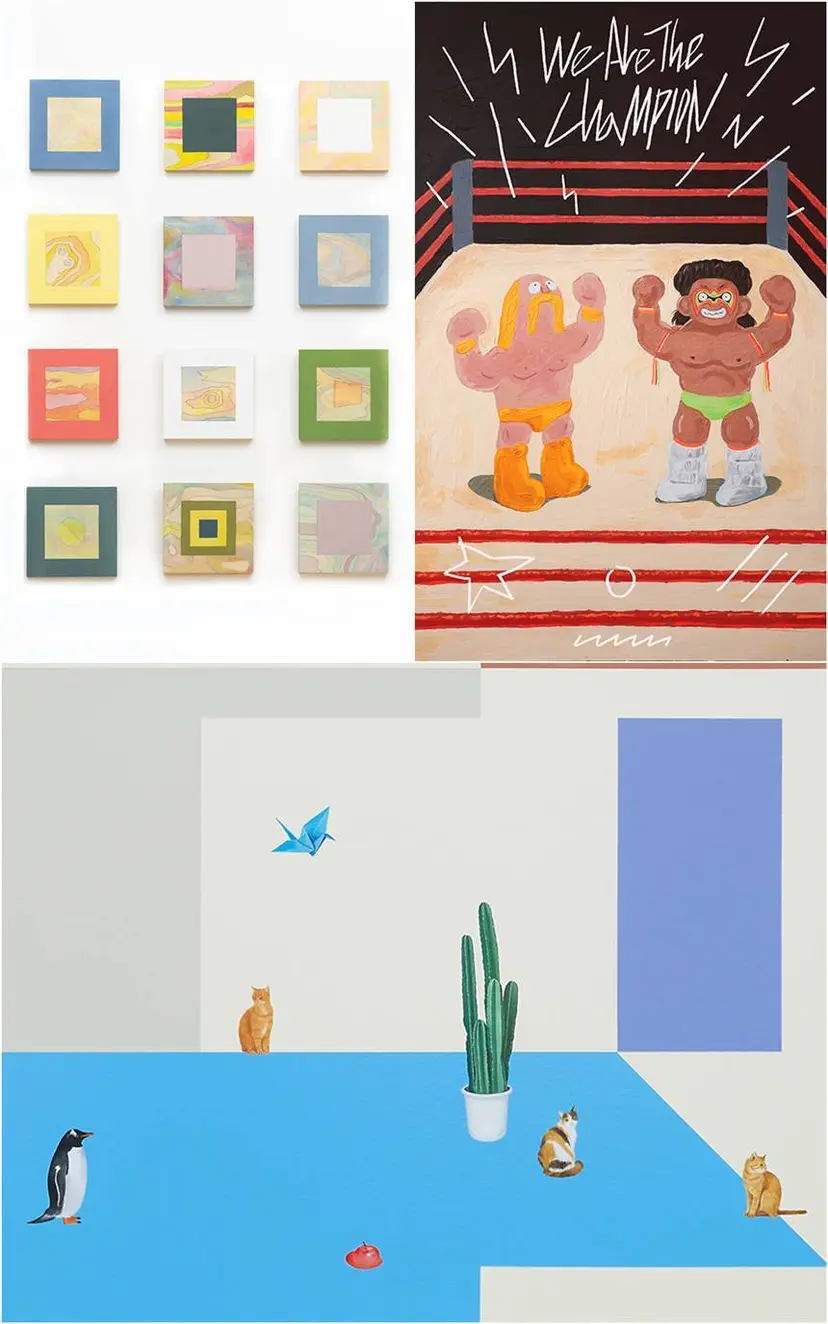
Paul Kim is finding his own formative language through the material properties of his medium and the subtle harmony of colors. His work reveals the finitude of existence through geometric screens using abstract language. Kim Bo-min, who seeks to create new spatial dimensions on the canvas through the nature of strong colors and geometric composition, expresses the duality of life through contradictory configurations. Heo Chan, who shows virtual reality through cartoonish expressions, demonstrates a new language of painting by attempting to break down the boundaries between animation and fine art.