

[비즈한국] Luxury platform BALAAN has ultimately been pushed to the brink of liquidation. Following the failure of its rehabilitation plan to meet the approval requirements at the meeting of interested parties, and the court's subsequent refusal to grant a compulsory authorization, the rehabilitation process itself has been abolished. There is a growing consensus in the industry that the possibility of BALAAN's liquidation has increased now that court protection has been lifted.
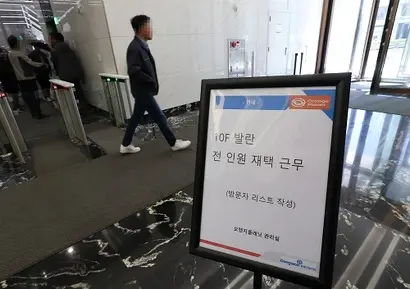
Approval Rate Stalled at 35%… Court Ends BALAAN's Rehabilitation Process
On the 6th, the Seoul Rehabilitation Court refused the compulsory authorization of BALAAN's rehabilitation plan and abolished the process. The court announced that because the rehabilitation plan was rejected at the meeting of interested parties, the rehabilitation process for BALAAN was abolished pursuant to Article 286, Paragraph 1, Subparagraph 2 of the Debtor Rehabilitation and Bankruptcy Act.
BALAAN's rehabilitation plan was rejected on the 5th at the meeting of interested parties regarding corporate rehabilitation, as the final approval rate reached only 35%. For a rehabilitation plan to be passed, consent from at least 66.7% (two-thirds) of creditors by voting rights is required. BALAAN had placed its hopes on a compulsory authorization, in which the court grants the plan by ex officio, but the court ultimately did not accept it.
BALAAN, once considered one of the top three luxury platforms in Korea, filed for corporate rehabilitation at the end of March last year. There are a total of 1,198 creditors, and the total debt amounts to 34.6 billion KRW. When filing for the rehabilitation process, Choi Hyung-rok, CEO of BALAAN, stated, "BALAAN's rehabilitation process is fundamentally different from other cases," adding, "If we can resolve the short-term liquidity issue through the rehabilitation process, there is sufficient potential for a quick recovery."
During the rehabilitation process, BALAAN had selected Asia Advisors Korea (AAK), an investment firm, as the final prospective acquirer. However, the acquisition price proposed by AAK was only around 2.2 billion KRW, and the debt repayment rate based on this amount was found to be a mere 5%.
Subsequently, BALAAN pushed for changes to repayment conditions to secure the approval rate necessary for the rehabilitation plan. During the process, it exercised the right of avoidance (the right for a company to reclaim assets unfairly spent during a crisis) to secure additional funds for repayment. Through this, it raised the debt repayment rate from 5% to 15.5%. It was a desperate measure to sway creditors and prevent bankruptcy.
They also spent time securing the approval rate by postponing the date of the meeting of interested parties multiple times. According to court records, BALAAN postponed the first meeting, originally scheduled for November 20, 2025, to December 18, and then changed the schedule a total of three times to January 15 and February 5, 2026. On February 3, two days before the meeting, they submitted a second revised rehabilitation plan and a comparison table of before and after revisions to the court, attempting to adjust conditions until the last minute, judging that the existing plan alone would not meet the approval requirements.
Despite these efforts, they failed to secure the consent of major creditors, including their largest creditor, Silicon2257720, by the final meeting date of February 5. Ultimately, BALAAN's rehabilitation process followed the path to termination along with the court's decision to refuse compulsory authorization.
Court Protection Ends, Entering Practical Liquidation Process
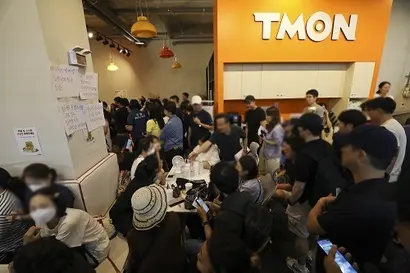
This situation drew attention as it contrasts with the case of TMON, which was brought back to life through compulsory authorization last year. TMON entered the corporate rehabilitation process following a large-scale non-payment crisis in 2024. Although it did not meet the approval rate requirements at the meeting of interested parties, it concluded the process in June 2025 through the court's compulsory authorization decision. At the time, as the acquirer, Qoo10 (via Oasis), paid the acquisition price of 11.6 billion KRW in full, the court judged that there was a high probability of the rehabilitation plan being carried out.
Within the industry, the possibility of compulsory authorization for BALAAN, similar to TMON, was raised on the grounds that the acquisition funds had already been secured and the protection of creditors' livelihoods was at the forefront. On the 2nd, BALAAN submitted a report on the full payment of the balance to the court, emphasizing that the funds from the acquirer, AAK, could be injected without any setbacks in implementing the rehabilitation plan. In addition, CEO Choi Hyung-rok appealed at the meeting of interested parties, saying, "99% of our 1,189 creditors are commercial creditors who earn their livelihoods through our platform," stressing the urgency of rehabilitation to prevent a chain reaction of financial difficulties.
However, it is analyzed that the 'principle of ensuring liquidation value' acted as a decisive obstacle in the court's refusal of compulsory authorization for BALAAN, unlike TMON. In the case of TMON, creditors would have essentially received 0 KRW in the event of bankruptcy, so authorization was possible even with a low repayment rate of 0.7%.
On the other hand, BALAAN's financial assessment yielded different results. According to the investigation report submitted by Taesung Accounting Firm, BALAAN's liquidation value was approximately 2 billion KRW, while its value as a going concern was estimated to be around -500 million KRW. This means that the more the company operates, the more its value decreases. It is interpreted that the court judged that BALAAN's rehabilitation plan would not provide creditors with greater benefits than liquidation.

As the rehabilitation process was abolished, the court's protective measures previously applied to BALAAN also ended. Consequently, the effects of the comprehensive injunction have disappeared, allowing creditors to pursue individual compulsory executions. With the debt repayment obligations that were previously deferred now revived, BALAAN's financial burden is expected to increase significantly.
Industry experts interpret that BALAAN is effectively entering the bankruptcy process. Although BALAAN could re-submit a rehabilitation plan, there are observations that it is unlikely to be accepted, given that the court has already made a refusal decision based on the priority of liquidation value.
Questions are also being raised about the company's viability. BALAAN, which once employed more than 120 people, is reported to have only about 20 staff remaining as personnel turnover has continued. The industry assesses that with such organizational scale, normal platform operations or the implementation of a rehabilitation plan would not be easy.
A BALAAN official said, "As of now, no future schedule or direction has been set," adding, "We are reviewing various possibilities and continuing discussions with AAK, the prospective acquirer."