

[비즈한국] On the afternoon of the 6th, at 7 PM, an average of 2,490 Bitcoin was deposited into the accounts of 249 Bithumb customers across the country. A total of 620,000 Bitcoin was involved. Based on the market price at the time (98 million won), this amounts to over 61 trillion won. While most customers did not sell the misallocated Bitcoin, about 80 people actually did. Although most of the assets have been recovered, the issue remains that Bithumb has yet to retrieve 125 Bitcoin (approximately 12.9 billion won). While the customer and Bithumb are discussing recovery plans for about 3 billion won of that amount, the remaining portion is expected to be difficult to recover as it has been mixed with the customers' existing coins used to purchase other cryptocurrencies.
Legal experts suggest that Bithumb will have no choice but to pursue both civil and criminal legal action. It is reported that some customers are not even responding to contact attempts by Bithumb. The legal community believes that while 'criminal punishment' is difficult, recovery through 'civil litigation' should not be impossible.
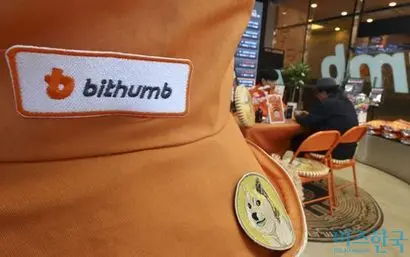
Could the Supreme Court's Ruling That 'Bitcoin Is Not Property' Change?
In the past, the Supreme Court ruled that when someone else's cash is mistakenly deposited into one's bank account and then withdrawn and used, the crime of embezzlement is established, as a custodial relationship is formed under the principle of good faith.
However, Bitcoin is different. It is not 'cash.' In 2021, regarding a defendant who sold and converted Bitcoin that had been transferred due to unknown circumstances into cash, the Supreme Court ruled for an acquittal (overturning the lower court's decision), stating that neither embezzlement nor breach of trust was established. The court acquitted the individual, who had transferred 1.4 billion won worth of mistakenly sent Bitcoin to their own account, stating that "virtual assets are not treated the same as legal tender under the law."
The court's decision not to view Bitcoin as an object of embezzlement stems from the definition of 'property' (jaemul) under criminal law. Unlike cash, which has physical substance, Bitcoin was judged to be 'digitized information' without physical form. While it may be a proprietary benefit with economic value, it is not considered property to which the crime of embezzlement applies. Because it is not considered property, the concepts of storage or embezzlement cannot be applied.
This is similar to past cases involving stocks. Whether embezzlement was established for stocks depended on whether physical paper share certificates were issued. In cases where physical certificates existed, secretly disposing of them was treated as embezzlement, but stocks without physical paper were treated as property rights, much like Bitcoin. Under this logic, the Supreme Court ruled in 2023 that "stocks held through a centralized deposit system without issued share certificates (in anticipation of listing) cannot be objects of embezzlement." However, legal experts explain that shares of listed companies, because they are held at the Korea Securities Depository and transferred via ledger entries between accounts, are considered property and can therefore be objects of embezzlement.
Possibility of Precedent Change Even in Criminal Cases
While the likelihood of criminal punishment remains low, the legal consensus is that recovery via civil action is possible. Since Bithumb specified the prize money for its random box event as 20,000 to 50,000 won per person, it can be argued that the winners were fully aware that the excess funds were unjust enrichment. If the company files a lawsuit for the return of unjust enrichment and wins, customers who do not return the funds will likely be held liable to return the sale value of the Bitcoin.
However, there are suggestions that this incident could serve as a catalyst for changing the precedent even in 'criminal cases,' similar to how stock cases evolved. This is because, over the past few years, financial authorities have required virtual asset exchanges to hold physical Bitcoin, and the concept of virtual assets as 'investment products easily convertible to cash through trading,' much like stocks, has expanded.
Nevertheless, variables remain, such as the ambiguity of the 'deposit' concept, especially since Bithumb mis-entered thousands of Bitcoin which were then actually traded. A lawyer with extensive experience in financial cases predicted: "There are many specific points regarding 'deposit' that need verification, such as confirming the discrepancy between the amount of Bitcoin Bithumb actually held and the actual trading volume. Therefore, it will likely remain difficult to view Bitcoin as property and apply criminal punishment. However, because the majority of investors view coins like stocks, and the government has been demanding guidelines from virtual asset exchanges equivalent to those of the 'stock market' over the past few years, it is possible that the court could rule differently in this case and decide that virtual assets can be seen as 'property'."