

[비즈한국] On the 5th (local time), U.S. President Donald Trump announced the official launch of 'TrumpRx (TrumpRx.gov)' at the White House. This policy, introduced with the remark, “The era of Americans paying the world’s most expensive drug prices is over,” signals changes to the entire U.S. pharmaceutical distribution structure. The impact will not be limited to the U.S.; significant repercussions are expected for the global pharmaceutical and bio industry, including South Korea.
A Government-Operated Drug Price Comparison Platform
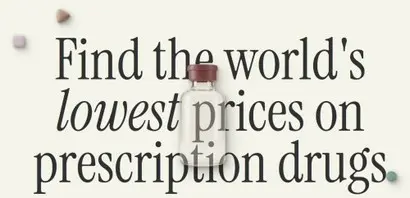
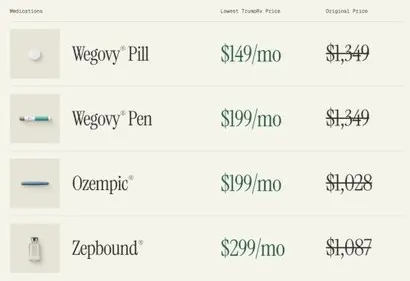
TrumpRx is a federal-level drug price information and purchasing linkage platform led by the U.S. government. However, it is not a direct retail store; instead, it provides drug prices, coupons, and discount information based on GoodRx (a private U.S. prescription drug price comparison site) and connects users to external vendors (local pharmacies, online pharmacies, manufacturer direct-sales channels, etc.). When a patient enters a drug name, they can compare prices across various vendors, and if a biosimilar is available, alternative options are also presented.
Rather than 'purchasing directly from TrumpRx,' it is closer to a system where users are guided to the lowest-priced vendor and directed to that channel to complete the transaction. A notable change in this process is the weakening of the influence of PBMs (Pharmacy Benefit Managers). Previously, PBMs operated in a structure that generated significant intermediary profits through rebates, but TrumpRx partially bypasses this stage through coupons and direct connection methods. Patients purchase drugs at lower prices, and pharmaceutical companies gain room to increase their proportion of direct sales while reducing intermediate costs. However, since rebate structures and settlement methods vary by item and contract, the scale of profit shifts may differ for each company.
The inclusion of 'Trump' in the name is also unusual. It is not merely an administrative program but a policy platform tied to the president’s personal brand, carrying significant symbolism. At the same time, it is inducing participation by offering incentives such as tariff exemptions to companies that cooperate with price cuts, while leaving the door open for tariff pressure on those that are passive. TrumpRx is closer to a policy tool designed to shake up drug prices and distribution structures simultaneously, rather than just a simple medical service.
Tailwind for Biosimilars: Lower PBM Barriers and Expanded 'Direct Sales'
The primary goal of TrumpRx is low drug prices. To achieve this, the U.S. government is concentrating policy capabilities on the expansion of biosimilars that can replace high-priced original drugs. The FDA is moving to refine the regulations and review framework related to biosimilar interchangeability, and automatic pharmacy-level substitution and the expansion of manufacturer direct-to-consumer (DTC) models are also being pursued in parallel. However, since clinical requirements for granting interchangeability vary by item, it is difficult to conclude that substitute dispensing is possible without separate switching clinical trials.
Celltrion068270 and Samsung Bioepis are cited as candidates to benefit from this trend. They already possess biosimilar portfolios and distribution foundations in the U.S. market and have secured price competitiveness. Analysts suggest that as PBM influence weakens, the structure is likely to shift toward one where actual drug prices, rather than brand power, drive prescriptions.
Furthermore, with the inclusion of provisions related to the BIOSECURE Act—which aims to exclude Chinese bio companies—in the U.S. National Defense Authorization Act (NDAA), the possibility of volume shifting to South Korean contract development and manufacturing organization (CDMO) companies as the U.S. reshuffles its 'trusted supply chain' has increased. The assessment is that opportunities are opening up simultaneously in both biosimilars and CDMOs.

Dual Pressure of Tariffs and Lower Drug Prices: A Burden for New Drug Companies
The environment is not positive for every company. The Trump administration is inducing local production by signaling that pharmaceutical companies that cooperate with price cuts will receive benefits like tariff exemptions, while those that do not may face tariff pressure. Consequently, a 'Made in USA' strategy has become a condition for survival rather than a choice. Celltrion has lowered tariff risks through its Branchburg, New Jersey production base, and Samsung Biologics207940 is also seeking to strengthen its local CDMO capabilities through the acquisition of a production base in Rockville, Maryland.
A larger variable is the drug prices themselves. By prioritizing the 'Most Favored Nation (MFN)' principle, TrumpRx aims to pull U.S. drug prices down to the level of low-price countries abroad. In this case, as average U.S. market drug prices decline, the value of technology exports (L/O) by domestic new drug development companies could be adjusted. Global big pharma will also inevitably be more cautious about introducing drug candidates with reduced expected returns.
Another concern is 'Korea Passing.' If the U.S. uses countries with low drug prices like Korea as reference countries, it is raised that global pharmaceutical companies might delay or lower the priority of launching new drugs in Korea to avoid losses.
TrumpRx is more likely to bring conflicting results depending on a company's business structure rather than having a uniform impact on the entire domestic bio industry. While opportunities for expanding U.S. market share and increasing demand for local production may open up for companies centered on biosimilars and CDMOs, firms focused on new drug development must consider the adjustment of technology values following drug price declines and changes in the investment environment. The future performance of K-Bio is expected to be largely determined by more than just technological prowess; it will depend on U.S. market response strategies, the speed of supply chain construction, adaptability to distribution structures, and price competitiveness.