

[비즈한국] The atmosphere surrounding Coupang remains unsettled. The government is reviewing sanctions following Coupang’s personal data hacking incident, yet voices defending the company are growing within the United States. Analysts suggest that U.S. President Donald Trump's recent tariff hike may have been influenced by the Coupang situation. While the South Korean government cannot realistically ignore the U.S., it faces criticism that failing to take action against Coupang would amount to “giving a free pass to an American company.”
The Wall Street Journal (WSJ) reported on January 27 (local time) that “U.S. Vice President J.D. Vance met with Prime Minister Kim Min-seok in Washington D.C. last week and warned against taking measures that would disadvantage U.S. technology companies, including Coupang.”
Coupang is 100% owned by the U.S. entity Coupang, Inc. Furthermore, Coupang is listed on the NASDAQ, and its leader, Chairman Bom Kim, is a U.S. citizen. While Coupang conducts its primary business in Korea, its practical base is effectively in the United States. Vice President Vance’s reference to Coupang as an American company is interpreted as reflecting this context.
Since last year’s personal data hacking incident, there have been strong calls from political circles and civil society to condemn Coupang. However, if the U.S. government defends Coupang on the grounds that it is an American company, the South Korean government has no choice but to be cautious regarding sanctions.
On January 27 (local time), U.S. President Donald Trump announced that he would raise the reciprocal tariff on South Korea from 15% to 25%. President Trump cited the South Korean legislature’s failure to implement agreements with the U.S. as the reason for the tariff increase. For Korea to fulfill its promised investments in the U.S., the “Special Act on Strategic Investment Management between Korea and the U.S.” must be passed. This act was proposed by the Democratic Party of Korea last November but remains pending.
Some analysts suggest that the Coupang incident influenced the tariff hike. Representative Yoon Sang-hyun of the People Power Party stated on social media on January 27, “There has been continuous criticism in U.S. political circles that the South Korean government is conducting a witch hunt against Coupang, and Coupang’s investors have been demanding retaliatory measures from the U.S. Trade Representative (USTR), such as imposing tariffs on Korean goods.” He added, “The fact that Vice President Vance directly mentioned the Coupang issue to Prime Minister Kim Min-seok, followed by the tariff hike card, shows that trade issues are being turned into diplomatic and trade pressure tools based on corporate interests.”
Jang Dong-hyuk, leader of the People Power Party, said on the 4th, “Immediately after the announcement of the tariff hike, the U.S. House Judiciary Committee posted on its official account, ‘This is what happens when you unfairly target American companies like Coupang.’ Since the Coupang situation has gone beyond the issue of a single company to become a flashpoint for trade friction, it is difficult to protect either the national interest or public safety with a clumsy, emotional approach.”
For this reason, there is frequent opinion that the government should approach Coupang with caution, as it is realistically disadvantageous to become an enemy of the U.S. Some U.S. investors in Coupang requested the USTR to investigate the South Korean government’s actions regarding Coupang last January. If the government strengthens sanctions, the demands from U.S. investors are expected to intensify, and President Trump would find it difficult to ignore those demands.
However, there is also concern that if the government takes no action at all, it will become even more difficult to regulate U.S. companies operating in Korea in the future. A business industry official stated, “If there are no sanctions against Coupang, it will remain as a precedent showing that lobbying works in the political and government circles of both Korea and the U.S.”
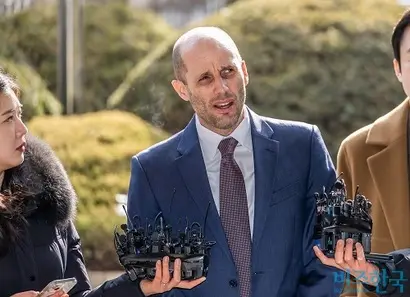
Law enforcement agencies are continuing their investigations related to Coupang. On January 30, police summoned Coupang CEO Harold Rogers on charges including obstruction of justice, and on February 3, they summoned former Coupang CEO Park Dae-jun on charges of perjury. Additionally, a special prosecutor’s team led by Ahn Kwon-seop indicted former Coupang Fulfillment Services (CFS) CEO Lim Sung-hwan and current CEO Jung Jong-chul on charges of unpaid severance pay on the 3rd.
The Blue House maintains that the tariff hike and the Coupang situation are unrelated. Minister of Trade, Industry and Energy Kim Jung-gwan told reporters upon his return from the U.S. after trade negotiations on January 31, “Discussions about Coupang never came up,” adding, “It seems the U.S. also does not view Coupang as a significant factor affecting tariff negotiations.” Prime Minister Kim Min-seok stated at a press conference on the 2nd, “Regarding Coupang, our position is to handle legal issues according to the law and based on the Korean government’s stance, while communicating to ensure it does not escalate into unnecessary bilateral trade issues or lead to misunderstandings.”
As such, the government appears intent on carrying out measures against Coupang regardless of the U.S. position. For the Lee Jae-myung administration, the task of managing conflicts with U.S. society resulting from these sanctions remains. Recently, Coupang has shown a degree of alignment with the Lee Jae-myung administration’s policies. President Lee Jae-myung noted in a cabinet meeting last January that “sanitary pads in our country are 40% more expensive than overseas.” In response, Coupang’s subsidiary CPLB significantly lowered the unit price of its private brand (PB) sanitary pads, 'Lunami.' The current price per unit for Lunami sanitary pads is 99 won for medium and 105 won for large.
However, since Coupang remains reluctant to apologize, restoring trust in the immediate future seems difficult. While Chairman Bom Kim issued an apology last December, he has made no further statements since. While CEO Rogers said upon appearing before the police in January that “we will fully cooperate with the South Korean government’s investigation, as we have always done,” there was no apology.
Even without government action, failing to restore trust could negatively impact Coupang’s performance. According to WiseApp/Retail, Coupang’s monthly active users (MAU) decreased by 3.21% from 34.28 million in December last year to 33.18 million in January this year. The retail industry is focused on whether Coupang can recover its lost trust and reclaim its former glory.