

[비즈한국] The warehouse-style pharmacy, Mega Factory Pharmacy, has entered Seoul. Carts and shopping baskets, which were never seen in traditional neighborhood pharmacies, have appeared, creating a scene where consumers compare ingredients and prices themselves before choosing their medicine. The industry is watching to see if this can break the conventional pharmacy paradigm—where patients passively receive medication from pharmacists—and introduce a new "pharmacy shopping" experience.
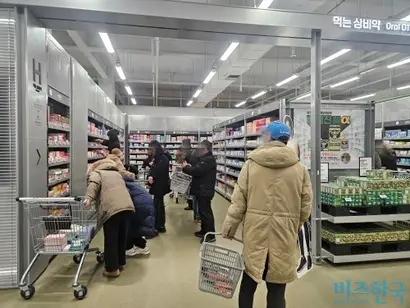
On the 2nd, the 'Mega Factory Pharmacy Seoul Branch' opened on the 3rd floor of the Homeplus Geumcheon branch in Seoul. The Seoul branch spans a contracted area of 1,740 pyeong and a dedicated area of 870 pyeong, which is about seven times larger than the Seongnam branch (130 pyeong) that first opened last June. By locating inside a large mart like Homeplus, it solved parking issues and created a one-stop shopping environment where people can handle both grocery and healthcare shopping at once. The Seoul branch carries approximately 5,000 items, including pharmaceuticals, health supplements, and medical devices.
Consumer reactions at the scene were generally favorable. Frugal shoppers, eager to buy supplements and household medicines at lower prices in an era of high inflation, flocked to the store. In addition to the general shelves, promotional booths placed throughout the store—featuring "1+1 events" and discounts on products near their expiration dates—caught the eyes of shoppers.
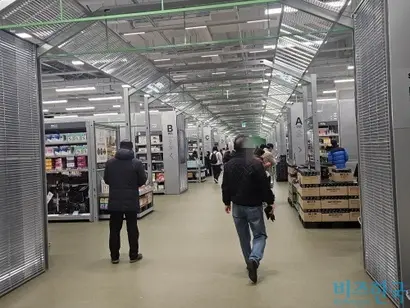
People inside the store roamed the aisles, selecting products and filling their carts or baskets with medicine and health supplements. Consumers could be seen sharing price information with acquaintances or using their phones to check internet lowest prices or the prices at their usual pharmacies.
A woman in her 30s, identified as A, said, "It depends on the item, but for children's household medicines, some seem to be 50–75% cheaper compared to more expensive places. Since everything is available here like a mart, I intend to buy the things I had only thought about purchasing." A 60-year-old woman, B, also expressed satisfaction, noting, "I bought toothpaste-type gum medication because it was about 20% cheaper, and premium vitamins also seem about 10,000 won cheaper than regular pharmacies." However, some people experienced confusion, as it was difficult to tell if the prices were truly low due to the sheer volume of items displayed in one place. A 50-year-old woman, C, voiced her difficulty, saying, "I don't really know if it's actually cheap for brands I'm unfamiliar with or products whose prices I don't usually track."
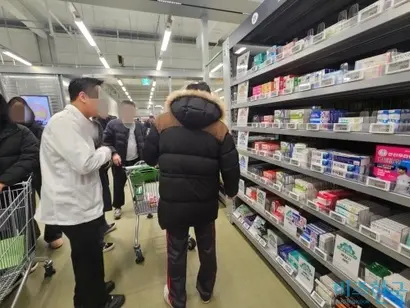
Regarding concerns about medication misuse that have been raised since the early stages of the warehouse pharmacy rollout, Mega Factory explained that they are addressing these issues through staffing and double-checks. The Seoul branch has about 20 pharmacists on-site who rotate around the store to provide direct medication guidance to consumers.
At the scene, many consumers were seen asking pharmacists who were patrolling the aisles about how to take their medications. In the case of certain cold medicines, there was also guidance from pharmacists that only two packs could be purchased at a time because they contained narcotic ingredients. A Mega Factory Pharmacy official stated, "At checkout, pharmacists provide medication guidance once more and ensure that customers do not purchase medicines with overlapping ingredients. There were no misuse issues at the Seongnam branch either." Mega Factory Pharmacy's Seoul branch is also facing criticism for potentially infringing on the prescription dispensing market of nearby pharmacies. Unlike the Seongnam branch, it handles professional-use drugs (ETC) that require a doctor's prescription, such as non-reimbursable hair-loss medication. In response, Mega Factory Pharmacy explained that there is a pediatric clinic and a dental clinic on the 4th floor of the Homeplus Geumcheon branch, making it necessary to handle their prescriptions. A Mega Factory Pharmacy official said, "The pediatric clinic offers night care until 9 PM on weekdays, but there are no night-time pharmacies nearby. Shouldn't we provide prescriptions for pediatric specialty drugs to patients who visit the clinic late at night?"
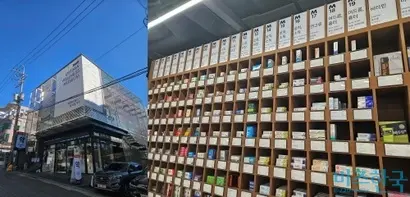
With the emergence of Mega Factory Pharmacy, some suggest that the dominance in the pharmacy market may be shifting from the supplier (the pharmacist) to the consumer. This movement toward strengthening consumer sovereignty—where customers explore information, select products, and experience the space themselves—has begun to appear even in the conservative pharmacy market. The Optima Wellness Museum Pharmacy, which recently opened in Gangnam and Jongno, Seoul, also emphasizes experiential curation, and the Medi Kingdom Pharmacy located in Yongsan Electronics Land is scheduled to begin operations later this week. Furthermore, the expansion of large-scale pharmacies is expected to continue, with reports that large pharmacies inside Lotte Mart are preparing for opening in the Gwangju and Gyeongnam regions.
However, some counter that even with the arrival of warehouse pharmacies, the role of neighborhood pharmacies remains valid. Because large pharmacies are "base-type" outlets targeting regional trade areas, their accessibility is lower, meaning they have clear limitations in responding to the immediate medicinal needs that arise in daily life. The woman in her 30s, A, remarked, "Since it's far from where I live, it won't be easy to use frequently. I only visited today because I happened to be here for something else."