

[비즈한국] Constitution Day has become a statutory public holiday again after 18 years. It is seen not just as the restoration of a holiday, but as a decision that carries political and social messages re-examining the significance of the Constitution, while potentially shifting consumption patterns during the summer vacation season.
The Ministry of Personnel Management announced that an amendment to the 'Regulations on Public Holidays,' which designates Constitution Day (July 17) as a public holiday, was passed at a Cabinet meeting on the 3rd. Consequently, Constitution Day will once again be a statutory public holiday starting this year. This comes 18 years after it was removed in 2008 due to adjustments made following the introduction of the five-day workweek.
Constitution Day commemorates July 17, 1948, when the Constitution of the Republic of Korea was promulgated, and it was designated a national day and public holiday the following year in 1949. However, after it was excluded during a review of public holidays, there had been ongoing criticism that the historical significance of the establishment of the Constitution had become diluted. The Lee Jae-myung administration decided it was necessary to evoke constitutional values such as national sovereignty and the rule of law, and had been pushing for the reinstatement of Constitution Day as a public holiday since last year.
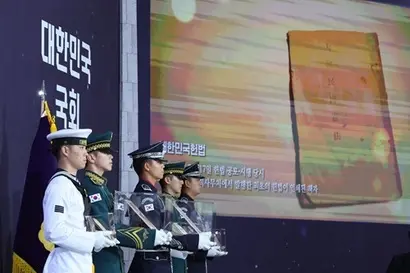
The timing of this decision is also significant. It follows the martial law crisis, which was widely criticized for seriously damaging the constitutional order and fueling intense social debate over the stability of constitutional order and the legitimacy of state power. In a situation where the exercise of power not rooted in the Constitution and the instability of the governance structure were exposed, the restoration of the status of Constitution Day—the starting point of the establishment of the Constitution—is being interpreted as a symbolic measure.
In particular, it is noteworthy that this year's Constitution Day falls on a Friday, creating a three-day weekend. Mid-July marks the beginning of the peak summer vacation season, and the restoration of the holiday makes it more likely that vacation schedules will become more flexible. This is welcome news for office workers.
The retail and tourism industries are watching to see if the Constitution Day long weekend will serve as a catalyst for advancing summer vacation demand. There is anticipation that if the vacation demand, which was previously concentrated in late July to early August, is partially dispersed, it could have a stimulative effect on consumption across the aviation, lodging, and leisure industries, as well as local commercial districts. Attention is also focused on what kind of synergy the restoration of a holiday—combining both symbolism and practicality—will create when coupled with economic activities.
With this amendment, all five major national holidays—March 1st Movement Day (March 1), Constitution Day, Liberation Day (August 15), National Foundation Day (October 3), and Hangeul Day (October 9)—are now public holidays. It remains to be seen whether the restoration of Constitution Day will go beyond merely increasing rest days to serve as an opportunity to reaffirm the basic principles of constitutional order and democracy. While the values of the Constitution are not fulfilled by a single day of commemoration, the prevailing assessment is that, at the very least, its starting point has been returned to the public sphere.