

[비즈한국] The 'Warsh Shock' has shaken global spot markets. The silver market, in particular, has experienced significant volatility.
As U.S. President Donald Trump nominated Kevin Warsh as the chair of the Federal Reserve, gold prices plummeted by nearly 10% in a single day, and Bitcoin fell below the $80,000 mark. Silver, in particular, recorded the sharpest decline in the spot market, falling more than 30% from its peak, leading to skepticism about investing in it.
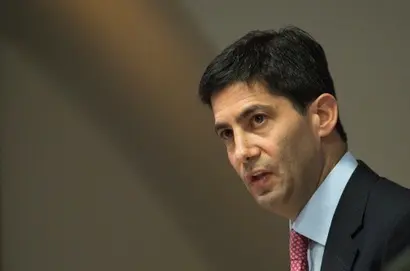
However, the prevailing view in the industry is that the investment thesis for gold and silver has not collapsed. It is argued that the speculative funds that had piled in excessively simply exited first. Gold and silver are classified as safe-haven assets, but they are also the assets that react most rapidly to changes in interest rates and liquidity environments. The logic is that they are structurally destined to be shaken first in the face of policy variables like a Fed chair nomination.
Interest in silver, which saw a deep drop, remains high. As gold prices underwent a correction amid concerns about being at a peak, the balance of silver banking products sold by major commercial banks increased significantly. The silver banking balance at Shinhan Bank has increased more than sevenfold in one year compared to the beginning of last year. Analysts suggest that as the financial burden of gold prices has grown, investment demand is shifting toward silver, which has a relatively lower unit price.
The biggest characteristic of silver is its inelastic supply structure, which makes it difficult to increase production in the short term, even when prices rise. Unlike gold, silver is not produced in bulk from large single mines. Most of it is produced as a byproduct during the mining of other metals like copper or zinc. On top of this, the use of silver is steadily increasing across high-tech industries such as solar power, electric vehicles, semiconductors, and batteries, strengthening its medium- to long-term demand base.
The nature of demand has also changed rapidly. In the past, silver demand was predominantly industrial, but recently, investment demand—centered in China—has been flowing in in earnest. As the world's largest consumer of silver, China previously focused on industrial consumption. However, the recent spread of silver investment fever among individual investors and funds is shaking up global demand structures. The silver investment boom that started in India has spread to China, making the global silver supply and demand balance even tighter.
The policy environment is also supporting the rise in silver prices. This is because China, which is embroiled in trade conflicts, is restricting silver exports, while the U.S. has designated it as a core mineral. As a structure forms where supplier nations control resources and consuming nations scramble to secure them, silver is being re-evaluated not just as a commodity but as a 'strategic asset.' This is a point that distinguishes the current period from past spikes in silver prices.
However, some suggest that investment strategies for silver need to be revised following this sharp drop. Unlike gold, silver has a strong characteristic as an industrial metal and reacts sensitively to economic cycles, so it should not be perceived solely as a 'safe-haven asset.' Even if industrial demand expands in the medium to long term, in the short term, the price of silver can be heavily shaken by a single interpretation of the interest rate path. In fact, whenever silver prices have surged, global exchanges have curbed volatility by raising margin requirements.
Therefore, experts point out that one should keep in mind not "can silver rise?" but "can I endure the volatility?" Short-term chasing of the market has become riskier, and the importance of phased entry and portfolio weight management is being highlighted. Since methods of investing in silver are divided into silver banking, exchange-traded funds (ETFs), and physical investment, choices must be made considering the tax structure, transaction convenience, and exchange rate impacts of each method.
Recently, the global financial market has seen a resurgence of geopolitical risks and uncertainty regarding monetary policy. In this environment, silver remains attractive as a complex asset that overlaps with gold and industrial metals, but one must keep in mind the fact that its volatility is also significant.
Silver investment is no longer a target to approach simply because it looks cheap. It is now time to understand why it rises and why it shakes, and then approach it by defining its role within an asset allocation strategy.